
Reviewed · CAVES & GROTTOS
Private Guided Tour to Jeita Grotto through Harissa and Byblos
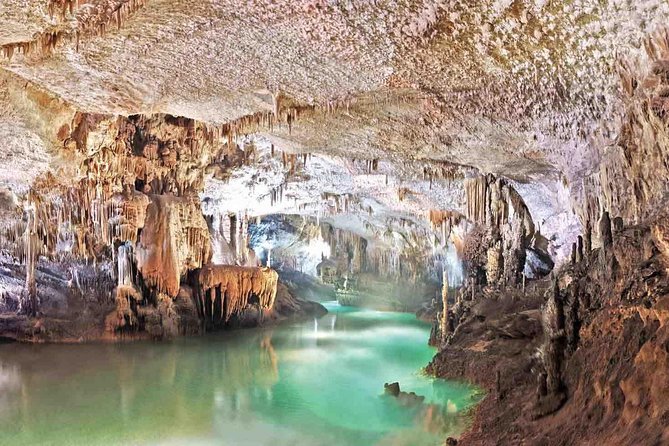
Jeita Grotto is the star here: a huge limestone cave system with crystal formations, underground water, and a boat ride through the lower gallery. The day then shifts from natural wonder to Phoenician ruins in Byblos, with a high view over the Bay of Jounieh in between.
I like the private vehicle and hotel pickup, since you avoid the work of arranging transport beyond Beirut. I also like the mix of caves, pilgrimage sites, archaeology, and sea views. The main catch is cost control: grotto, cable car, and castle tickets are not included, and lunch is on your own.
Key points to know before booking
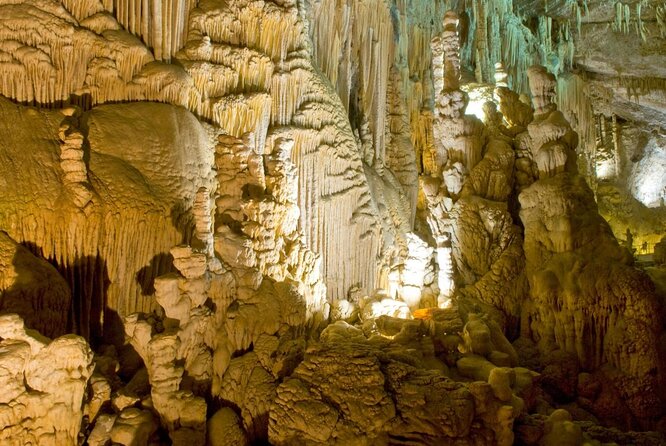
- Jeita Grotto brings the biggest wow factor: See stalactites, stalagmites, curtains, columns, ponds, and other limestone forms across two connected cave levels.
- Harissa gives you the day’s best panorama: The cable car rises to the white statue of Our Lady of Lebanon above Jounieh Bay.
- Byblos packs several sights into one stop: Visit the castle, archaeological area, old souk, and ancient port.
- Private touring keeps the pace flexible: Your group travels alone in an air-conditioned vehicle with hotel pickup and drop-off.
- Budget extra for admission and food: Jeita Grotto, the Teleferique, and Byblos Castle charge separately, while lunch is not covered.
- Guide quality matters: Hassane, Ahmad, Albert, Hussein, Khassim, Alan, and Mustafa are among the guides and drivers praised for punctuality, warmth, and useful local information.
Why this Beirut day trip works so well
This is a smart way to see several of Lebanon’s headline sights in one day without renting a car. From Beirut, you head north toward the coast and mountains, reaching places that feel very different from the capital.
The day has a useful rhythm. Jeita gives you nature and cool underground chambers. Harissa offers a short religious and scenic stop. Byblos supplies ancient ruins, a Crusader castle, narrow market streets, and a small harbor.
I would choose this tour if you have limited time in Lebanon and want variety rather than one long archaeological visit. You get roughly eight hours, private transportation, and a guide who can explain what you are seeing as you go.
The pace is still full. The listed stops add up to several hours before driving, lunch, ticket lines, and photo breaks. If you want long, slow visits at every site, this may feel tight. If you want a broad introduction to the coast north of Beirut, it makes good sense.
More Caves & Grottos in Byblos
- Jeita Grotto,Harissa&Byblos Full-Day PRIVATE-CAR Trip from Beirut
★ 5.0 · 222 reviews - Jeita Grotto – Harissa – Byblos Trip
★ 5.0 · 169 reviews - Byblos, Jeita Grotto & Harissa Day Trip -With Lunch (4G on Board)
★ 4.5 · 145 reviews
Jeita Grotto: the natural highlight
Jeita Grotto is about 300 meters above sea level and consists of two separate but connected limestone caves formed over millions of years. The scale is difficult to grasp from a short description. The upper cave extends about 2,130 meters, while the lower gallery runs about 6,200 meters below it.
Inside, water has shaped an extraordinary collection of formations. You can expect stalactites hanging from the ceiling, stalagmites rising from the floor, tall columns, curtain-like sheets, mushroom shapes, ponds, and drapery-like rock. The shapes are natural, but the lighting and enclosed spaces can make them feel almost theatrical.
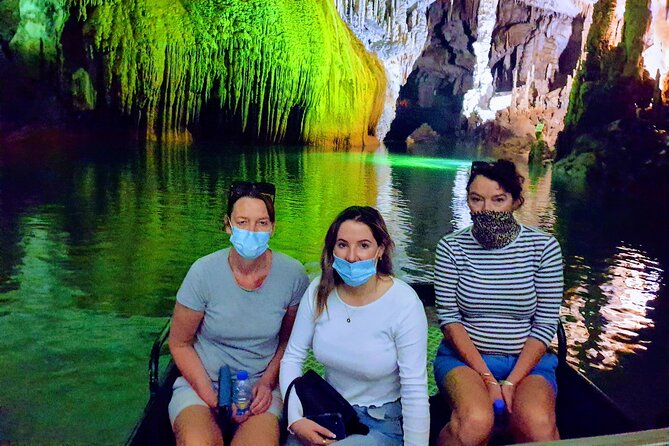
The lower gallery is crossed by an underground river and lake, and the tour includes a boat ride through the grotto. That boat segment is one of the details that makes Jeita more than a standard cave walk. You get to see the rock walls from the water rather than only from a path.
Allow about an hour and a half at the site. Wear shoes you can walk in comfortably, and remember that cave surfaces and stairs can feel different from ordinary city walking. The tour information says most people can participate, but it does not provide detailed accessibility information. If stairs, uneven ground, or enclosed spaces are a concern, ask the operator before booking.
Admission is not included. This is important when comparing the $75 tour price with other options. The private transport and guide are covered, but you need to pay the grotto entrance separately.
For many people, Jeita will be the most memorable stop. The repeated praise for the grotto is easy to understand: it offers something you cannot reproduce with a museum, church, or ruin. I would place it early in the day if you are especially keen on it, though the precise order can depend on the operator.
Harissa and the 30-minute view over Jounieh Bay
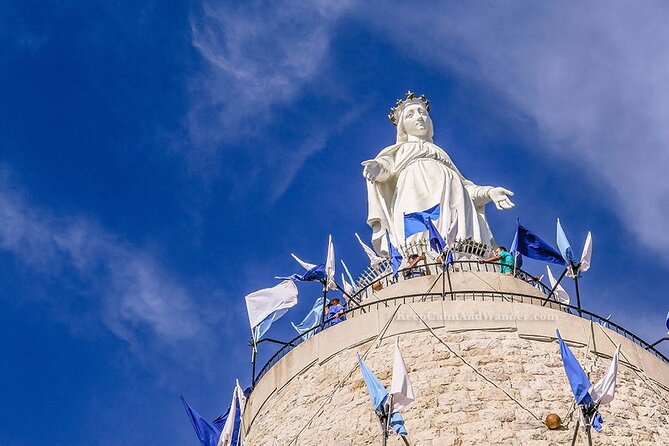
Harissa sits above Jounieh and is best known for the Shrine of Our Lady of Lebanon. The white statue, also called Notre Dame du Liban, has its arms extended toward Beirut and the bay.
The statue is made from 15 tons of bronze, rises 8.5 meters, and was inaugurated in 1908. A small chapel sits inside its base. Nearby, you can see a large cathedral made of concrete and glass, along with churches belonging to several Christian traditions.
The shrine is important as a Christian pilgrimage site, but you do not need to be religious to appreciate the setting. The high position gives you a broad view across Jounieh Bay and toward the coast. This is a short stop, listed at about 30 minutes, so treat it as a scenic and cultural pause rather than a long religious tour.
A further 15-minute stop covers the churches around Harissa. The Melkite Greek Catholic Basilica of St. Paul is among the nearby buildings. The short timing means you will likely see the main exterior features and hear an explanation from your guide rather than study every church in detail.
The Teleferique: a short ride with a big payoff

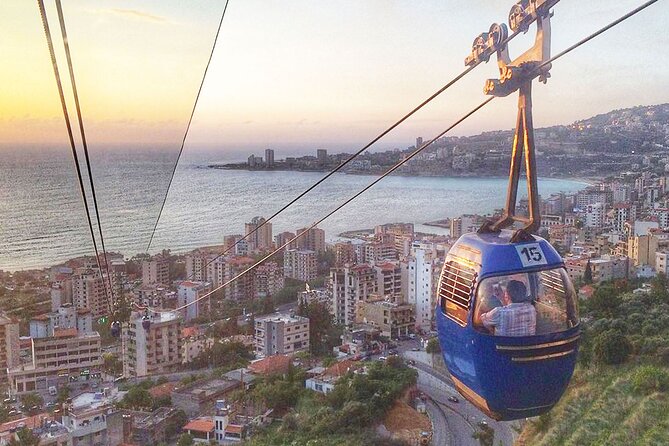
The Harissa cable car, known as the Téléferique, links the coastal area with the shrine above. The gondolas have operated since 1965 and remain one of Lebanon’s best-known attractions.
The ride is brief, listed at around 30 minutes as part of the stop, but the view is the reason to take it. From the gondola, you can look over Jounieh Bay and the city below. It gives you a different sense of the distance between the coast and Harissa than you get from the road.
The cable car ticket is not included, so bring extra money for it. If you dislike heights, this is the part of the outing to consider carefully. For most visitors, though, it adds a little drama to an otherwise straightforward viewpoint stop.
The ride also breaks up the vehicle time. After the cave visit, you are not simply getting back into the van and continuing north. You get a short aerial trip, photographs, and a change of pace.
More Caves & Grottos in Beirut:
- Semi-Private Tour to Jeita Grotto, Harissa & Byblos with Lunch
★ 5.0 · 52 reviews - Small Group Tour to Jeita Grotto, Harisa & Byblos with Hotel pickup
★ 5.0 · 49 reviews - New Guided Semi-Private Tour to Jeita Grotto, Harissa & Byblos
★ 5.0 · 47 reviews - Baalbek Temples & Ksara Caves w/pick-up,guide, entries+lunch
★ 4.9 · 34 reviews
Byblos: Phoenician history beside the sea
Byblos is one of Lebanon’s most important archaeological towns. It has been inhabited since Neolithic times and is closely tied to the spread of the Phoenician alphabet. The city’s long connection with Mediterranean trade helps explain why so many different periods appear in a relatively compact area.
The tour gives you about two hours in Byblos, followed by a separate hour for Byblos Castle. That is enough to get a strong first look, but not enough to inspect every ruin at leisure.
Your local guide in Byblos is included, which is useful here. The archaeological area contains remains from several periods, and without context, old stone walls can blur together. A good guide can explain how the town developed and point out why the location mattered.
The castle is a restored 12th-century Crusader fortress surrounded by a dry moat about 10 meters wide. Its square keep offers a good view across the archaeological site toward the sea. From the top, you can see Bronze Age dwellings below the walls, along with the ruins of the Temple of Baalat Gebal and the Temple of the Obelisks.
There is a small museum inside the castle, plus information panels about the city’s past. Castle admission is not included, so plan for another separate ticket.
I would not rush the castle. Its value is not only the stonework. The upper view helps you read the entire site, from the old settlement remains to the coast. If your guide gives you time to climb the keep, take it.
The souk and port add atmosphere after the ruins
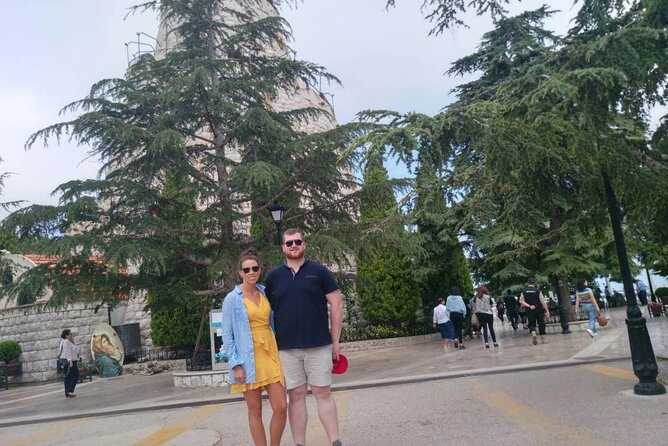
The old souk is a short walk through cobbled streets lined with shops selling souvenirs and antiques. The visit is listed at only 10 minutes, so you may have time for a quick look rather than serious shopping.
That brief stop still matters. After caves and formal ruins, the souk gives you a feel for Byblos as a living town. Look up at the old building fronts, browse without pressure, and save larger purchases for a time when you are not watching the clock.
Byblos Port is also allotted about 10 minutes. It is an ancient harbor and is traditionally regarded by Lebanese people as the oldest port in the world. Around 3000 BC, it served as a major timber-shipping center in the eastern Mediterranean.
The port is small enough to see quickly, but its setting helps make Byblos memorable. Here, the archaeological story meets the sea. You are not looking at ruins in isolation. You are seeing the place where trade, timber, writing, and Mediterranean travel shaped the town.
Private transport and guides make the day easier
The tour includes hotel pickup and drop-off in Beirut, an air-conditioned vehicle, a tour leader, and private transportation for your group. That is a real advantage in a day with several separate stops.
You do not have to work out how to get from the grotto to Harissa or from Harissa to Byblos. You also avoid joining a large group where everyone must follow the same pace. The operator can provide a vehicle suited to the group, and one review specifically praised a new air-conditioned minivan and a car seat.
The guide names connected with this company include Hassane, Ahmad, Albert, Hussein, and Khassim, as well as Alan and Mustafa on multi-day arrangements. Hassane is repeatedly singled out for warmth, punctuality, useful advice, and strong energy. Ahmad is described as considerate and able to adjust his approach when visitors want either more explanation or quiet time. Albert is praised for his passion for Lebanon and for making a family outing relaxed.
You should not assume that one specific guide will lead your tour unless the company confirms it. Still, these names give you useful questions to ask when booking. If you care about a particular language, guiding style, or vehicle size, confirm those details in advance.
The private format is especially useful for couples, families, and small groups. A family with an eight-year-old found the day manageable, and the flexible approach can help if one person wants more time at the castle while another prefers the souk or a cafe.
Is $75 good value?
At $75 per person, this is a reasonable price for a private full-day outing, especially if you are traveling with two or more people and value door-to-door transport. The price covers the vehicle, hotel pickup and drop-off, the tour leader, and a local guide in Byblos.
It does not cover the main paid admissions. Jeita Grotto, the cable car, and Byblos Castle are separate. Lunch is also extra. Add those costs before comparing this tour with a package that advertises a higher headline price but includes more entrance tickets.
The value improves if you are uncomfortable driving in unfamiliar conditions or if you want explanations at the sites. It is less compelling if you only need a driver, since you are paying for a guided private service rather than simple transportation.
Group discounts are available, though the exact rate is not provided. Ask about the discount if you are booking for several people. The experience is usually booked about nine days ahead, so early planning is sensible if your Beirut dates are fixed.
Practical advice for getting the most from the day
Start with a clear budget for the extra tickets and lunch. The tour price is not the full cost, and knowing that ahead of time keeps the day relaxed.
Wear comfortable shoes for the cave and archaeological area. The itinerary includes walking in Jeita, climbing around Byblos Castle, and moving along old cobbled streets in the souk.
Bring a phone or camera for Harissa. The view from the shrine and cable car is one of the strongest visual moments of the day. You may also want photographs from the castle keep and Byblos Port.
Give your guide feedback about pace. The schedule covers a lot, and the private format gives you a better chance of balancing photographs, explanations, shopping, and quiet time.
Free cancellation is available when you cancel at least 24 hours before the start time. Changes or cancellations within 24 hours are not accepted for a refund.
Who should book this tour?
Book it if you are staying in Beirut and want one efficient day covering Lebanon’s most varied nearby sights. It suits first-time visitors, couples, families, and anyone who prefers a private vehicle to public transport or a self-drive day.
It is also a good choice if Jeita Grotto is high on your list. The cave is the least ordinary stop, while Harissa and Byblos give the day cultural and historic range.
Think twice if you want a slow archaeological study, a long lunch, or extensive shopping. The schedule is full, and the short stops at the souk and port are designed as quick additions rather than major visits.
For most visitors, I would book it, provided I had budgeted for three separate admission charges and lunch. The combination of Jeita’s underground formations, Harissa’s view, and Byblos’s coastal ruins gives you a strong introduction to the area north of Beirut in one well-organized day.
FAQ
How long does the private tour last?
The tour lasts approximately eight hours, including the visits to Jeita Grotto, Harissa, and Byblos.
Is hotel pickup included?
Yes. Pickup and drop-off at your Beirut hotel are included.
Is this a private tour?
Yes. Only your group participates in the activity.
Is transportation air-conditioned?
Yes. The tour uses a private, air-conditioned vehicle.
Are entrance tickets included?
No. Admission to Jeita Grotto and Byblos Castle is not included. The Teleferique cable car ticket is also separate.
Is lunch included?
No. Lunch is not included in the tour price.
Is the cable car ride part of the itinerary?
Yes. The tour includes a visit to the Harissa Teleferique, but the cable car ticket must be paid separately.
What is the cancellation policy?
You can cancel at least 24 hours before the experience starts for a full refund. Cancellations or changes made less than 24 hours before the start time are not accepted for a refund.
Newest Beirut trips on the site
- Jeita Grotto, Byblos and Harissa Full-Day Tour from Beirut★ 5.0 · 23 reviews
- Paragliding Trip Over Lebanon – Jounieh Bay★ 5.0 · 257 reviews
- Paragliding activity in Lebanon★ 5.0 · 33 reviews
- First Paragliding Club in Lebanon – Since 1992★ 5.0 · 193 reviews
- Lebanon Wine Tasting Tour From Beirut★ 4.5 · 25 reviews
- Paragliding Trip Over Jounieh bay★ 5.0 · 33 reviews
- Chouwen Lake Hiking & Swimming★ 5.0 · 39 reviews
- City Sightseeing Beirut Hop-On Hop-Off Bus Tour★ 4.5 · 87 reviews
Caves & Grottos, compared.
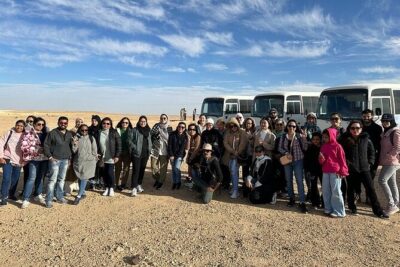
Edge of The World Riyadh with Camel Ride ,Bat Cave Visit & Dinner
Read our review →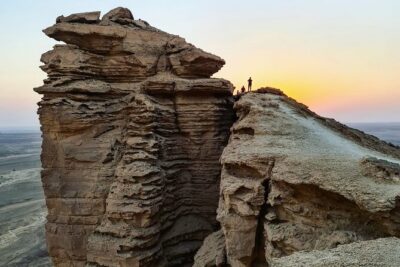
Edge Of The World Hike(Dinner under stars,village,bats cave,camp)
Read our review →
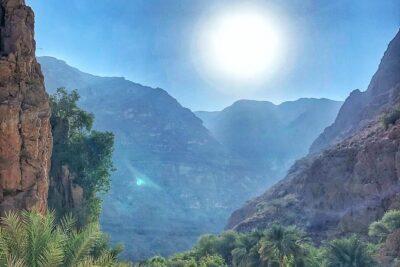
Wadi Shab and Bimmah Sinkhole Group Full Day Tour
Read our review →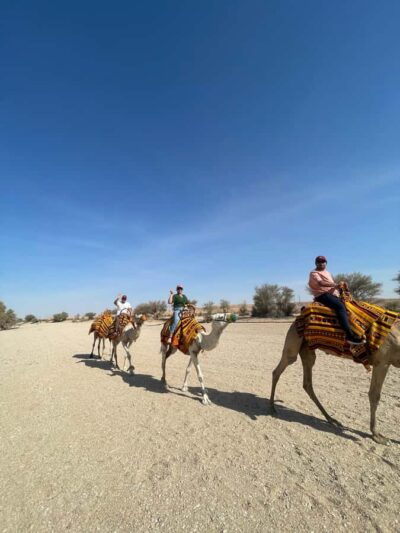
Edge of The World Riyadh,Camel Ride ,Bat Cave Visit & Dinner
Read our review →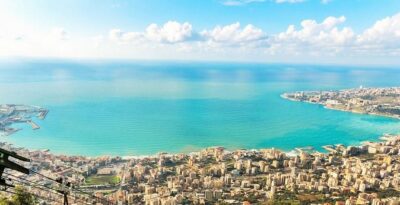
Jeita Grotto,Harissa&Byblos Full-Day PRIVATE-CAR Trip from Beirut
Read our review →
Browse the lists this tour appears in