
Reviewed · WALKING TOURS
PRIVATE Beirut Historical Walking Half Day Tour
Beirut’s story is written in layers: ancient Roman remains, Ottoman and French-era buildings, civil-war scars, and a modern city still rebuilding itself. This private tour gives you a useful first look, beginning at the National Museum and moving through the restored center before ending beside the sea at Pigeon Rocks.
I like the mix of museum time and walking, since you get both historical context and a feel for today’s streets. I also like the private format and the guide’s ability to explain Lebanon’s difficult political past through personal experience, especially when led by David or Dave L.
The main consideration is timing. The advertised tour lasts about 3 to 4 hours, yet the listed stops can easily fill more time if you linger in the museum or ask many questions. This is a focused introduction, not a slow, room-by-room museum visit.
Key points at a glance
- A seven-times-rebuilt city: Beirut’s repeated destruction and rebuilding gives the tour a clear theme from the start.
- National Museum included: See Lebanon’s archaeological collection with admission and transportation covered.
- Private guide and vehicle: Your group travels together in an air-conditioned vehicle with Beirut hotel pickup and drop-off.
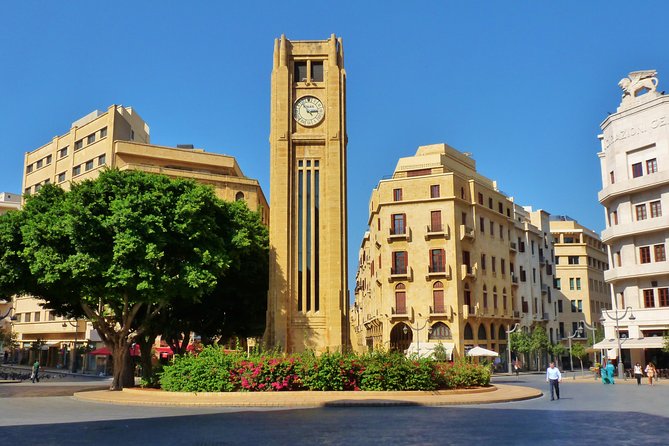
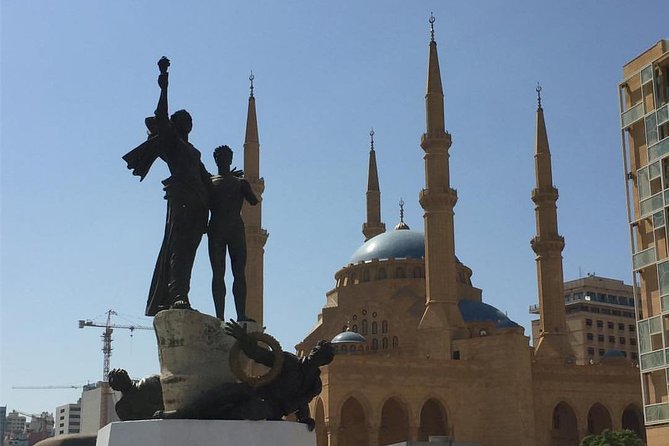
- Downtown on foot: Visit Place des Martyrs, the Mohammad Al-Amin Mosque, St. George’s Cathedral, Roman baths, Star Square, and the souks.
- History explained by David or Dave L.: The guide’s strongest role is connecting monuments to Lebanon’s civil war and modern politics.
- Sea views at the finish: Pigeon Rocks and the Corniche provide a welcome change from downtown’s stone and traffic.
Why this half-day tour works for a first look at Beirut
I like tours that give you a framework before you set off on your own. Beirut can feel confusing at first because old ruins, religious buildings, polished redevelopment, damaged structures, and busy commercial streets often sit close together without an obvious historical order.
This experience gives those pieces a sequence. You begin with archaeology at the National Museum, move to the rebuilt central district, walk among major religious and civic landmarks, and finish at the coast. The route is not only a checklist of sights. It shows how Beirut has repeatedly been damaged, repaired, and reshaped.
The city is described as having been destroyed and rebuilt seven times, with natural disasters accounting for earlier destruction and the Lebanese Civil War lasting from 1975 to 1990. The National Museum follows a similar pattern. Built in the 1940s, badly affected during the war, and revived in the 1990s, it provides an especially strong opening to the day.
The tour has earned a perfect rating from 27 posted ratings, and the praise centers on the guides rather than on luxury touches. That matters. You are paying for a private vehicle and a guide who can explain connections that are easy to miss when you simply walk from one landmark to the next.
More Historical Tours in Beirut:
- Dubai Evening Heritage Safari by Vintage G Class Al Marmoom Oasis
★ 5.0 · 1,500 reviews - Dubai Camel Desert Safari, Traditional Meal & Heritage Activities
★ 5.0 · 937 reviews - Dubai: Heritage Safari in Vintage Land Rover with Dinner
★ 4.8 · 861 reviews
Starting with archaeology at the National Museum
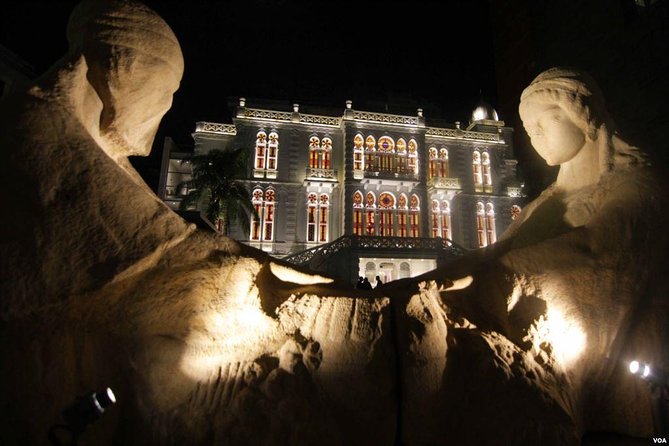
The National Museum of Beirut is the tour’s most important indoor stop. It gives you a look at Lebanon through its archaeological discoveries before you confront the more recent story of the capital.
The museum was built in the 1940s, then badly affected during the civil war, and reopened after restoration in the 1990s. That history makes the building itself part of the lesson. The obvious question is how valuable objects were protected during the fighting, and the guide can use the visit to explain what happened to the collection.
You should allow yourself enough attention here to connect the exhibits with the rest of the day. The museum is not simply a place to see old objects. It establishes that Beirut’s past reaches much further back than the modern political crises that often dominate outside coverage of Lebanon.
The tour also includes an introductory briefing about Beirut, with a map and an audio presentation mentioned as part of the opening experience. That preparation is useful because it gives you a basic sense of the city’s divisions, history, and geography before the walking portion begins.
A possible drawback is that the museum visit can feel short if you are fascinated by archaeology. The full experience is designed as a half-day overview, so you will not have unlimited time for every display. If the museum is your main reason for booking, tell the guide early that you would like to give it extra attention, knowing that another part of the route may need to be shortened.
Walking through restored Solidere and central Beirut
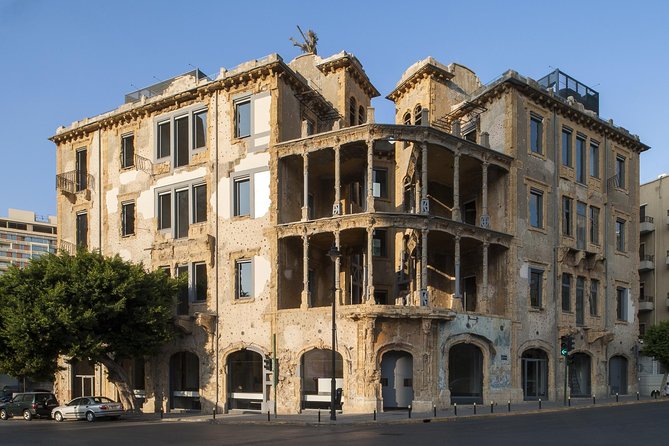
After the museum, the tour shifts from ancient objects to the city center. Downtown Beirut, often referred to as Solidere, was badly damaged during the civil war and restored during the 1990s. Its broad streets and renewed buildings show one version of Beirut’s postwar recovery.
This is where a local guide adds real value. Restored facades can look neat and polished, but they do not explain themselves. David or Dave L. can help you understand what stood here before, what was rebuilt, and why the central district feels different from other parts of Beirut.
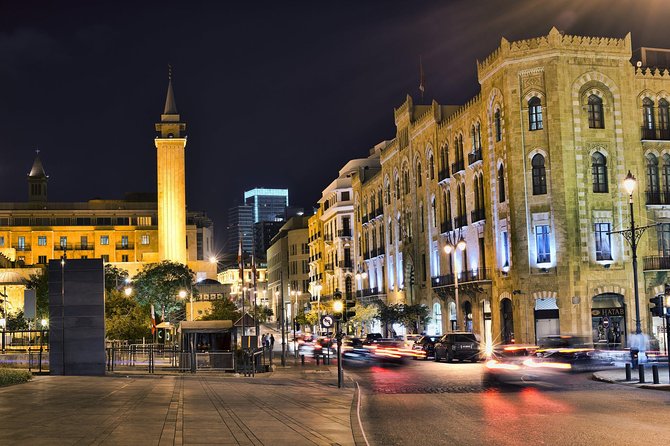
The route takes in the Parliament building and the Government Palace, giving you a look at the civic heart of the capital. You also visit the Roman baths, a reminder that ancient remains are part of the modern city rather than an isolated attraction outside it.
I particularly like this portion because it encourages you to compare old and new Beirut. You may be looking at a carefully restored square one minute and Roman stonework the next. The contrast is the point. Beirut’s past is not presented as a single, tidy story.
The walking itself is manageable for most people who can participate in a normal city walk, but you should wear comfortable shoes. The tour includes several downtown sights, and your attention will be divided between listening, looking up at buildings, and moving through public spaces.
Place des Martyrs and Beirut’s religious landmarks

Place des Martyrs is one of the key stops in the center. The square carries political and historical weight, and it helps explain why downtown Beirut is more than a shopping or dining district.
From there, the route includes the Mohammad Al-Amin Mosque and St. George Maronite Cathedral. Seeing these two major religious buildings close together gives you a quick sense of Beirut’s religious diversity. The mosque’s prominent modern form and the cathedral’s Christian identity make the area a useful place to discuss how different communities shape the city.
The tour is not built around formal religious services or extended interior visits, so your experience may depend on opening conditions and the guide’s timing. The main value is the context provided while you walk between the sites. The guide can explain what you are seeing and why these buildings matter within Beirut’s social and political life.
The Roman bath area adds another layer. You are not visiting an ancient city preserved away from modern life. Instead, the remains sit within a working capital, surrounded by government buildings, shops, religious sites, and traffic.
This section is especially good for you if you want history explained in plain language. Several comments about the tour highlight the guide’s clear explanations and entertaining discussions. The subject matter can be complicated, but the strongest part of the experience is the chance to ask questions as the city unfolds around you.
More Walking Tours in Beirut:
- Jerusalem: Guided Walking Tour of the Old City
★ 4.7 · 386 reviews - Amman Walking Tour: Hidden Gems, Culture & Street Food
★ 5.0 · 241 reviews - Middle Eastern Food & Culture Walk in Old Dubai
★ 5.0 · 206 reviews - Muharraq Cultural Walking Tour
★ 5.0 · 170 reviews
Beirut Souks and the feel of the rebuilt center
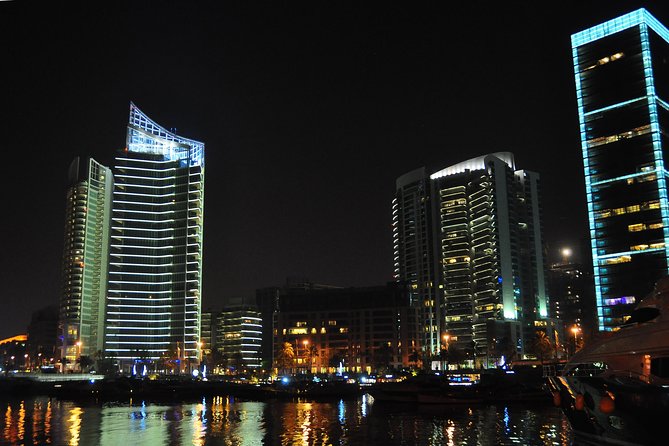
The Beirut Souks were demolished during Lebanon’s wars and rebuilt in the 1990s as an open-air shopping area in the central district. The stop is less about buying something than about seeing another piece of the reconstruction story.
You will notice a shift in mood here. After the museum, ruins, memorial space, and religious landmarks, the souks show Beirut trying to create a modern commercial center. The result is polished and planned, and that is worth observing alongside the older parts of the city.
The souks are listed as a free stop, but shopping time is not the main purpose of the tour. If you want to browse stores or sit for a long coffee, you may need to arrange extra time beyond the standard route. The guide can point out the area, but this is not a dedicated retail excursion.
I like having this stop in the itinerary because it prevents the tour from becoming a sequence of solemn war and archaeology discussions. Beirut is also a place where people shop, meet, work, and carry on. The souks show that everyday commercial life is part of the city’s recovery.
Finishing at Pigeon Rocks and the Corniche
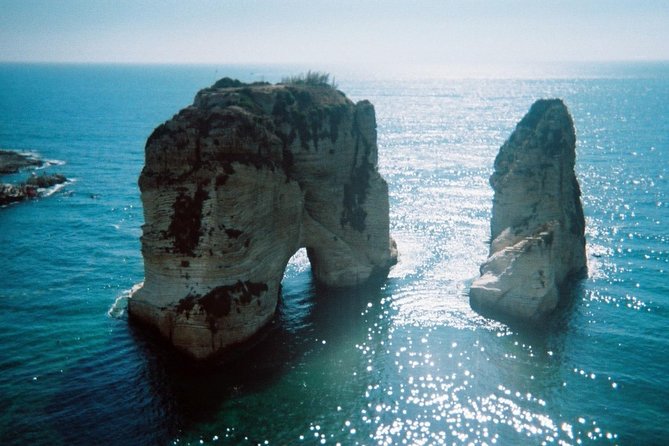
The final drive takes you to Raouche for Pigeon Rocks, one of Beirut’s best-known symbols. After the dense central district, the sea offers a welcome change of pace and a chance to take photographs.
The stop is brief, listed at about 15 minutes, so do not expect a long coastal walk. You will have time to see the offshore rock formations and take in the setting, but the visit is more of a scenic finale than a full afternoon by the water.
The Corniche follows as another short stop, with sunset noted as part of the experience. The exact light will depend on the season and the tour’s timing, so I would treat the sunset reference as a possibility rather than a guarantee. Still, the waterfront gives the day a pleasant ending and helps you see Beirut as a coastal city rather than only a place of monuments and political history.
The shift from downtown to Raouche also gives you a sense of Beirut’s geography. You have spent the walking portion among central landmarks, then move toward the open edge of the city. That change is valuable in a short tour because it adds scenery without requiring a separate coastal excursion.
The guide is the main reason to choose the private format
The guide is central to this experience. David, also referred to as Dave L., is described as having grown up in Beirut and having lived through some of the city’s turbulent periods. His personal connection can make the modern history easier to understand than a standard script would.
The strongest comments about the tour focus on his explanations of Lebanon’s political past, his use of a map, the introductory audio presentation, and his willingness to answer questions. You should expect discussion, not just a list of dates and building names.
That makes the private setup useful. Only your group participates, so you can ask for more detail about a particular district, spend longer at a sight that interests you, or move on when you have had enough. One of the useful qualities of the tour is flexibility in the plan, although the total time remains limited.
The guide also handles the driving between locations. That matters in Beirut, where door-to-door transportation saves you from arranging taxis between the museum, downtown, and Raouche. The air-conditioned vehicle is included, along with pickup and drop-off in Beirut city.
What the $93.34 price gives you
At $93.34 per person, this is not the cheapest way to take a short city tour. The value comes from combining a private experience, round-trip transport, a driver-guide, museum entry, and a route that covers several parts of Beirut in one morning or afternoon.
For a solo visitor, the price may feel high compared with a shared walking tour. For a couple, family, or small group, the private format becomes easier to justify, especially when you value hotel pickup and the ability to ask questions freely.
The price also protects your limited time. You do not need to work out transport to the National Museum, find your way through downtown, and then arrange another ride to Raouche. You can concentrate on the city while the guide handles the movement between stops.
Lunch is not included. The tour begins at 9:00 a.m., and the experience lasts about 3 to 4 hours, so plan your meal separately. Since the listed stop times can add up to longer than the advertised tour length, ask the provider how the day will be paced when you book.
Who should book this Beirut tour
I would choose this experience if you have only half a day in Beirut and want history, city sights, and a coastal view without arranging the pieces yourself. It also suits you if Lebanon’s modern political story interests you and you want a guide who can discuss it from personal experience.
It is a good fit for first-time visitors, couples, families, and small private groups. The route covers enough ground to give you an initial sense of Beirut, while the guide can adjust the discussion to your interests.
I would think twice if you want a relaxed museum morning, a long shopping stop, or a full walking tour of every downtown street. The experience moves quickly and aims for breadth. It introduces the city rather than exhausting any one subject.
The tour requires a minimum number of guests to operate, despite being private for your own group. Most people can participate, and pickup is offered from Beirut city. Free cancellation is available up to 24 hours before the start time, but changes or cancellations inside that window are not accepted for a refund.
Should you book it?
Book this tour if you want a clear, efficient introduction to Beirut and value a guide who can connect archaeology, civil war history, religious diversity, reconstruction, and daily city life. The museum, downtown walk, and Pigeon Rocks create a balanced route, while private transport removes much of the practical hassle.
Skip it if you prefer to set your own slow pace or spend most of your time in the National Museum. At $93.34 per person, the tour earns its price through private transport and David or Dave L.’s explanations, not through long stops or a luxury vehicle. For a first half-day in Beirut, that is a fair trade.
FAQ
How long does the Beirut Historical Walking Half Day Tour last?
The advertised duration is approximately 3 to 4 hours.
What time does the tour start?
The stated start time is 9:00 a.m.
Is hotel pickup included?
Yes. Pickup and drop-off are offered from locations in Beirut city.
Is this a private tour?
Yes. Only your group participates in the activity.
Is entrance to the National Museum included?
Yes. Admission fees and all listed taxes are included.
Is lunch included?
No. Lunch is not included in the tour price.
What is the cancellation policy?
You can cancel up to 24 hours before the start time for a full refund. Cancellations or changes made less than 24 hours before the experience are not accepted for a refund.
More One-Day Trips in Beirut
- Anjar, Baalbek & Ksara Day Trip – With Lunch (4G on Board)
★ 4.5 · 181 reviews - Byblos, Jeita Grotto & Harissa Day Trip -With Lunch (4G on Board)
★ 4.5 · 145 reviews - Guided Private Full Day Tour to Baalbek, Anjar and Chateau Ksara
★ 5.0 · 60 reviews - Small-Group Adventure Tour to Sidon Tyre & Maghdouche-Day Trip
★ 5.0 · 45 reviews
More Half-Day Trips in Beirut
- Dubai: Half-Day Desert Safari, Camel Ride, ATV & Dune Buggy
★ 4.9 · 19,221 reviews - Dubai: Half-Day Desert Safari, Camels, Quad Bike & Refreshments
★ 5.0 · 3,731 reviews - Dubai: Half-Day City Tour with Blue Mosque, Creek, and Souks
★ 4.8 · 3,059 reviews - Half-Day Desert Safari from Abu Dhabi
★ 5.0 · 2,207 reviews
Newest Beirut trips on the site
- Paragliding activity in Lebanon★ 5.0 · 33 reviews
- Jeita Grotto, Byblos and Harissa Full-Day Tour from Beirut★ 5.0 · 23 reviews
- Paragliding Trip Over Lebanon – Jounieh Bay★ 5.0 · 257 reviews
- First Paragliding Club in Lebanon – Since 1992★ 5.0 · 193 reviews
- Lebanon Wine Tasting Tour From Beirut★ 4.5 · 25 reviews
- Paragliding Trip Over Jounieh bay★ 5.0 · 33 reviews
- Chouwen Lake Hiking & Swimming★ 5.0 · 39 reviews
- City Sightseeing Beirut Hop-On Hop-Off Bus Tour★ 4.5 · 87 reviews
Walking Tours, compared.
Amman Walking Tour: Hidden Gems, Culture & Street Food
Read our review →
Middle Eastern Food & Culture Walk in Old Dubai
Read our review →

Historic Old Dubai & Souk Small Group Walking Tour
Read our review →
Walking Tour: Discover Souq Waqif, An Almost Free Walking Tour
Read our review →

Private Old Dubai Walking Tour: Forts, Souks, and Boats
Read our review →Browse the lists this tour appears in