
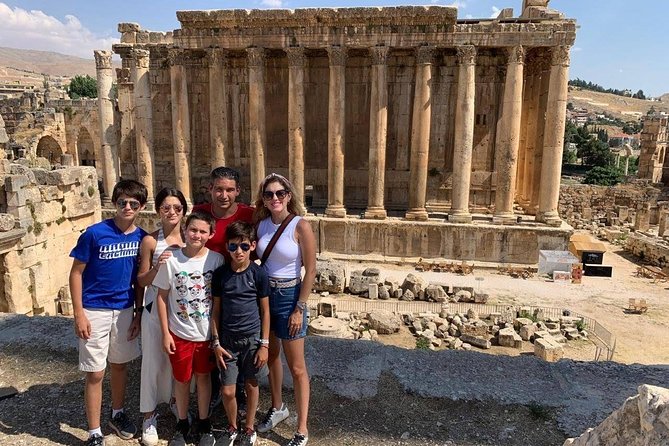
Reviewed · BAALBEK TOURS
Guided Private Full Day Tour to Baalbek, Anjar and Chateau Ksara
Baalbek gives this day its real punch: you walk among Roman columns and temple blocks built on a scale that still feels hard to grasp. Then the route adds Anjar’s Umayyad ruins and a wine tasting in the caves of Chateau Ksara, giving you three very different chapters of Lebanese history in one long day.
I like the private vehicle and hotel pickup, since the Beqaa Valley is much easier to see without arranging several separate rides. I also like the human touch of guides such as Georgette and Albert, who are described as flexible, engaged, and willing to connect ancient sites with Lebanon today. The main consideration is cost at the site: entry fees, wine tasting, and lunch are not included, so the $100 price is not the full spend.
Key things to know before booking
- Baalbek is the star of the day: Allow about three and a half hours for the city and temple complex.
- The itinerary covers three distinct eras: Phoenician and Hellenistic Baalbek, Roman construction, and the Umayyad city of Anjar.
- Chateau Ksara adds a relaxed finish: You can sample Lebanese wine while seated in an actual cave, with tasting charges paid separately.
- This is a private tour: Only your group joins the vehicle, so the pace can be more personal than on a large coach trip.
- Budget beyond the advertised price: Temple and Anjar admission, wine tasting, and lunch are extra.
- Plan for a full day: The tour lasts about eight hours and begins and ends at your Beirut hotel.
Why Baalbek makes this an exceptional day from Beirut
The trip heads from Beirut toward the Beqaa Valley and the foothills of the Anti-Lebanon range. Baalbek sits at about 1,150 meters, and its position helps explain why this was such an important religious center. Ancient routes crossed the valley, and pilgrims came to worship the gods of Heliopolis.
The city was known as Heliopolis during the Hellenistic period, or City of the Sun. Under Roman rule, it became home to one of the grandest sanctuaries in the Roman world. The site was dedicated to a Romanized version of a Phoenician religious triad: Jupiter, Venus, and Bacchus.
You need time here. The visit is planned at roughly two hours in Baalbek and another hour and a half at the temples. That split makes sense because the name Baalbek can refer to the wider city and the famous sanctuary itself. If ancient architecture is your main reason for booking, this is where the day earns its keep.
More full-day trips in Beirut:
- Jeita Grotto,Harissa&Byblos Full-Day PRIVATE-CAR Trip from Beirut
★ 5.0 · 222 reviews - Jeita Grotto, Byblos and Harissa Full-Day Tour from Beirut
★ 5.0 · 23 reviews - From Dubai: Abu Dhabi Grand Mosque & Louvre Museum Full-Day
★ 4.8 · 6,227 reviews
Walking through the Temples of Baalbek
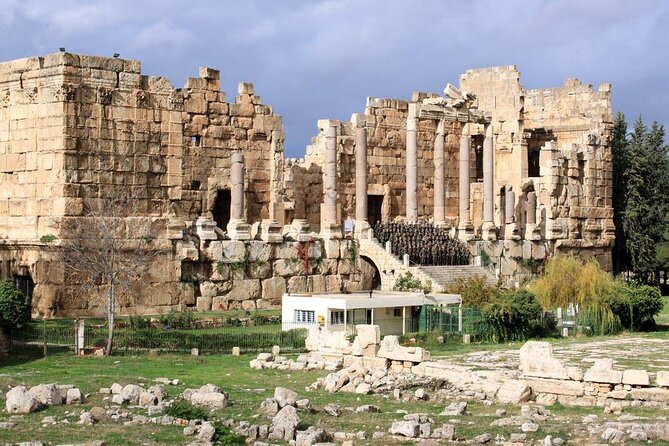
The temple complex is a lesson in sheer size. The Temple of Jupiter once had an enormous colonnade, while the Temple of Bacchus remains one of the best-preserved Roman temples in the world. Even without reconstructing every missing piece, you can see the skill and ambition behind the work.
Construction continued for more than two centuries. That long building period matters because the complex is not a single monument created in one burst. It is a huge religious center shaped over time, with courtyards, platforms, columns, carved details, and later changes layered together.
Your guide is especially useful here. A good explanation turns large stones into a story about worship, politics, engineering, and imperial power. Albert, one of the guides associated with this experience, is described as offering both historical explanation and thoughts about Lebanon in the present. Georgette is also noted for bringing energy and detail to the sites.
Admission to the main temple area is not included. That is worth remembering when comparing the headline price with your actual budget. The included professional guide and private transport remain valuable, but you should expect to pay the local entrance charge yourself.
The ground and ruins call for sensible footwear. That is simple advice rather than a special tour requirement: Baalbek is an archaeological site, and you will want to focus on the columns and carvings instead of every uneven step.
The Stone of the Pregnant Woman and Baalbek’s giant blocks
The Stone of the Pregnant Woman is a short stop, planned for about 15 minutes, but it gives you a different way to understand Roman Baalbek. This worked monolith is one of the largest ancient quarried stones known, and another huge block lies nearby.
The stones were likely meant for the Roman sanctuary. Their scale raises the obvious questions: How were they cut, moved, and placed? The site does not provide a simple answer, but seeing the block in person gives you a better sense of the engineering challenge than any photograph can.
The name has a local explanation, but the important point for your visit is the size of the stone and its connection to the temple project. This is a quick roadside-style stop within the Baalbek portion of the day, not a separate major attraction. It works best as a brief pause between the main ruins and the next part of the route.
A short visit to the Mosque of Sayeda Khawla
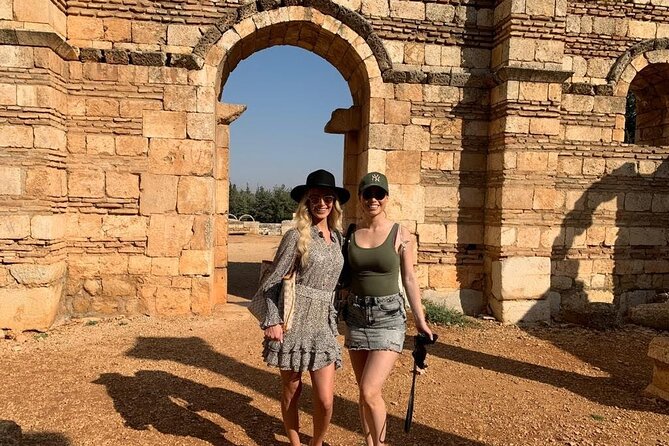
The itinerary also includes the Mosque of Sayeda Khawla in Baalbek. It marks the place where local belief holds that Sayyida Khawla, the daughter of Imam al-Hussein, was buried after the caravan of captives from Karbala passed through Baalbek.
This stop adds a religious layer to the Roman remains. Baalbek is not only an ancient archaeological site. It is also a living city with Islamic traditions and places of devotion. The mosque helps place the old sanctuary within the wider story of the area.
The available details do not give a fixed visit length or specify interior access, so your guide will determine how the stop fits into the day. If religious sites are important to you, ask the guide to explain the local tradition and the site’s role.
More one-day trips in Beirut:
- Anjar, Baalbek & Ksara Day Trip – With Lunch (4G on Board)
★ 4.5 · 181 reviews - Byblos, Jeita Grotto & Harissa Day Trip -With Lunch (4G on Board)
★ 4.5 · 145 reviews - Small-Group Adventure Tour to Sidon Tyre & Maghdouche-Day Trip
★ 5.0 · 45 reviews - Sidon, Tyre & Maghdouche Day Trip – With Lunch (4G on Board)
★ 4.5 · 44 reviews
Anjar, an Umayyad city in the Beqaa Valley
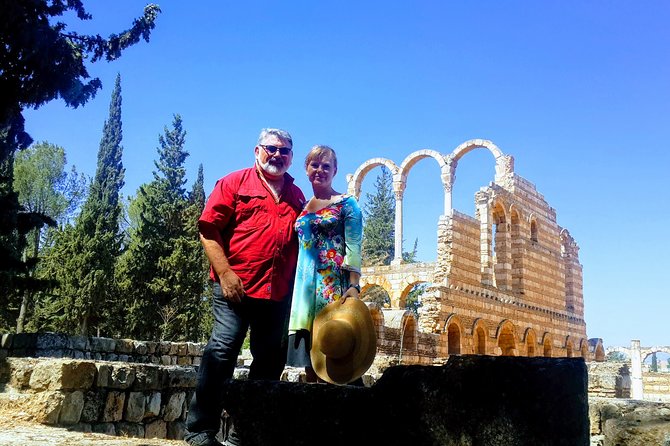
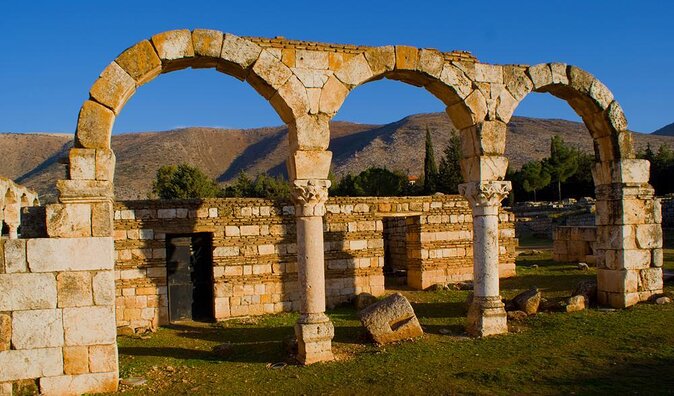
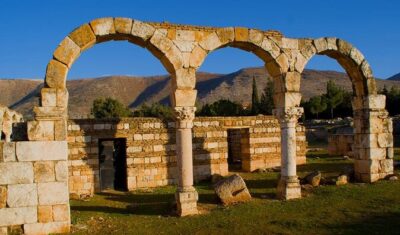
After Baalbek, the tour moves to Anjar, also called Aanjar in some references. Its ruins belong to the Umayyad period and offer a clear change from the Roman temples.
Anjar was an inland commercial center at the meeting point of two major routes. One route linked Beirut with Damascus, while another crossed the Beqaa toward Homs and Tiberias. That location helps explain why the city was planned with public buildings, religious structures, palace areas, and baths.
Archaeologists only identified the ancient city in the late 1940s. Today, you can see parts of the Umayyad palace, harems, mosque, great palace of the caliph, thermal baths, and rows of pillars. Some Roman-style architectural elements remain visible, showing how builders reused familiar forms in a later Islamic city.
The planned visit lasts about 45 minutes. That is enough for an introduction and a walk among the main remains, but it is shorter than the Baalbek stop. If Anjar is your main interest, you may find the time brisk. If you want a broad day covering major sites, the balance works well.
Anjar admission is extra. The private format helps here because your guide can focus on the buildings that interest you most instead of following a fixed group script. The tour information does not promise a certain number of stops within the ruins, so keep your questions ready and use the guide’s time well.
Chateau Ksara and wine in a Lebanese cave
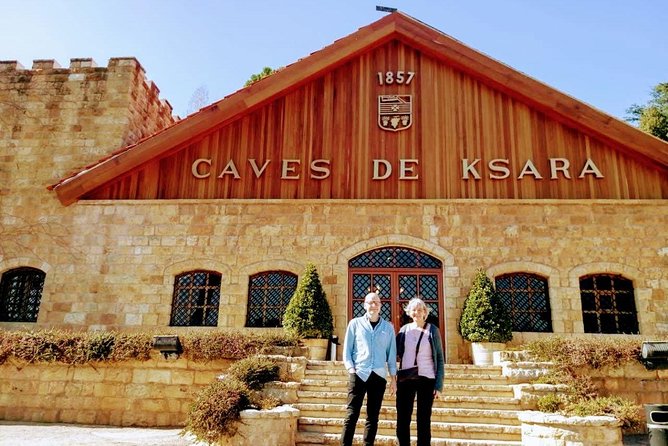
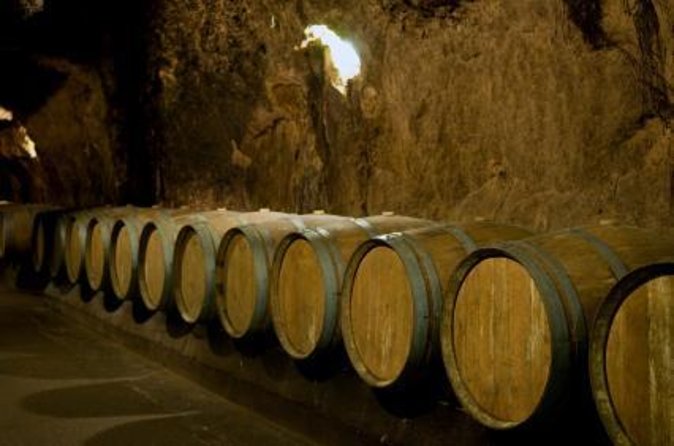
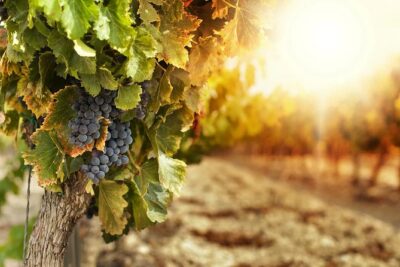
Chateau Ksara gives the day a welcome change of pace. The winery was founded in 1857 by Jesuit priests and became associated with the production of Lebanon’s first dry wine. It now produces about three million bottles each year and exports to more than 40 countries.
The visit lasts about an hour. The most distinctive detail is the chance to sample local wine while sitting in a cave. That setting gives the tasting a strong sense of place, rather than making it feel like a generic stop at a shop.
Wine tasting is not included in the tour price, so ask about the charge before you begin. The information provided does not list the number of wines, the pours, or any food pairing. I would treat this as a cultural winery visit with tasting, not as a full meal or formal wine course.
If you do not drink wine, Chateau Ksara still adds useful context to the Beqaa Valley. If wine is a key reason for booking, keep your expectations measured because the scheduled stop is about one hour and the tasting details are not specified.
What the private format changes
Private transport is one of the strongest practical features. You are picked up and returned to your Beirut hotel in an air-conditioned vehicle, and only your own group participates. That means less time waiting for strangers and more room to ask questions.
The private setup also gives the guide some flexibility. Albert is described as adjusting well during the day, while Georgette is noted for sharing information with enthusiasm. Those details matter because this route covers several major subjects, from Roman religion to Umayyad city planning and Lebanese wine.
Still, private does not mean unhurried. Baalbek, Anjar, and Chateau Ksara are spread across the Beqaa Valley, and the entire outing lasts about eight hours. You should expect a full schedule rather than a slow archaeological study.
The included guide is listed as both a tour leader and professional guide. The supplied details do not state the language options, vehicle model, exact pickup time, or restaurant arrangements. Confirm those points when booking if they affect your plans.
Is $100 per person good value?
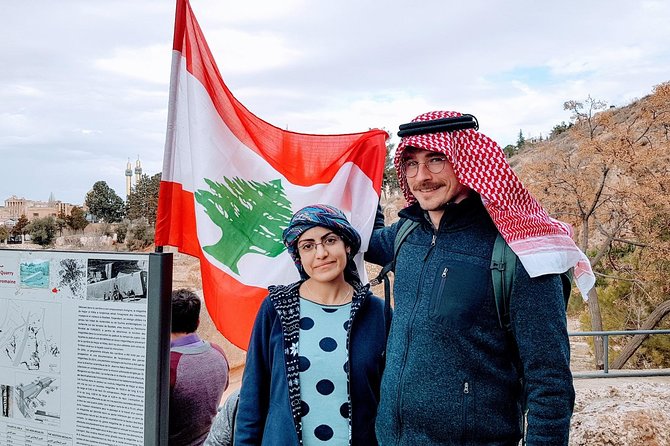
At $100 per person, the tour sits in a sensible range for a full day with private transport, hotel pickup and drop-off, and a guide. The value is strongest if you are staying in Beirut and want to see Baalbek without arranging your own driver, route, and timing.
The price does not cover everything. You need to set aside money for:
- Baalbek temple admission
- Anjar admission
- Chateau Ksara wine tasting
- Lunch
That list is important. The tour is not an all-inclusive day trip, and the final amount will be higher than the advertised $100. On the other hand, the core transport and guide costs are already handled, which reduces the planning work.
You also receive a private experience rather than a large shared group. For two or more people, that can make the price easier to justify, especially if you value hotel pickup and the ability to ask for explanations along the way.
Who will enjoy this route most?
I would choose this tour if you want to see Baalbek but prefer a guided day rather than independent travel. It suits first-time visitors to Lebanon who want a clear introduction to several major sites without changing hotels or managing intercity transport.
It is also a good fit for anyone interested in how different periods overlap in one region. Baalbek brings Phoenician, Hellenistic, and Roman layers. Anjar shifts the focus to the Umayyad period. Chateau Ksara connects the valley to modern Lebanese wine production.
Families and mixed-interest groups may appreciate the variety. A person interested in temples can spend time at Baalbek, while someone more interested in contemporary food and drink may look forward to Ksara. The route gives you more variety than a day devoted only to ruins.
I would hesitate if you want a slow, highly specialized archaeological visit. The itinerary includes several major stops in eight hours, and Anjar receives less time than Baalbek. I would also think twice if you want every expense covered in advance, since admissions, tasting, and lunch are separate.
Practical advice for making the day work
Wear shoes that can handle archaeological ground and bring what you need for a long day away from Beirut. The tour includes air-conditioned transport, but you will still spend time outside at the ruins.
Keep some flexibility in your schedule. The listed stop times add up to more than five hours, leaving the rest of the eight-hour day for driving, pickup, drop-off, and transitions between sites.
If wine is not part of your plans, you can still use the Chateau Ksara stop to learn about the winery and the Beqaa Valley’s wine industry. If wine is important to you, remember that the tasting is an added charge.
The cancellation rule is straightforward: cancel at least 24 hours before the start time for a full refund. Changes or cancellations made less than 24 hours before the start time are not accepted for a refund.
Should you book this Baalbek and Beqaa Valley tour?
Book it if you want a practical, well-filled day from Beirut that combines Roman monumental architecture, Umayyad ruins, and Lebanese wine. The private vehicle, hotel pickup, and guides such as Albert and Georgette give the day a personal feel, while Baalbek supplies the major visual reward.
Skip it if you want a very slow visit to each site or dislike paying admission and tasting fees separately. For most people with one free day in Beirut, though, the route offers a strong mix of history, scenery, religion, and food culture for the price. Just budget for the extras and accept that this is an active eight-hour outing.
FAQ
How long does the tour last?
The tour lasts approximately eight hours.
Where does the tour begin and end?
Pickup and drop-off are offered at your Beirut hotel.
Is this a private tour?
Yes. Only your group participates in the private tour or activity.
What transportation is provided?
The tour includes comfortable private transportation in an air-conditioned vehicle.
Is a guide included?
Yes. A tour leader and professional guide are included. Guides named in the supplied information include Georgette and Albert.
Are admission fees included?
No. Admission fees for the Baalbek temple complex and Anjar are not included in the tour price.
Is the Chateau Ksara wine tasting included?
No. The wine tasting at Chateau Ksara is not included and must be paid for separately.
Is lunch included?
No. Lunch is not included in the tour price.
Newest Beirut trips on the site
- Jeita Grotto, Byblos and Harissa Full-Day Tour from Beirut★ 5.0 · 23 reviews
- Paragliding Trip Over Lebanon – Jounieh Bay★ 5.0 · 257 reviews
- Paragliding activity in Lebanon★ 5.0 · 33 reviews
- First Paragliding Club in Lebanon – Since 1992★ 5.0 · 193 reviews
- Lebanon Wine Tasting Tour From Beirut★ 4.5 · 25 reviews
- Paragliding Trip Over Jounieh bay★ 5.0 · 33 reviews
- Chouwen Lake Hiking & Swimming★ 5.0 · 39 reviews
- City Sightseeing Beirut Hop-On Hop-Off Bus Tour★ 4.5 · 87 reviews
Baalbek Tours, compared.
Guided Small-Group Tour to Baalbek, Anjar and Ksara with Lunch
Read our review →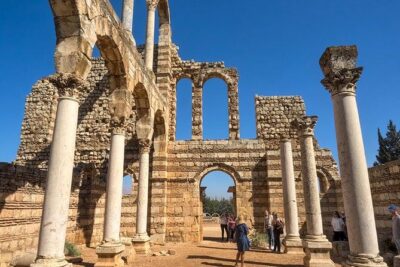
Anjar, Baalbek & Ksara Day Trip – With Lunch (4G on Board)
Read our review →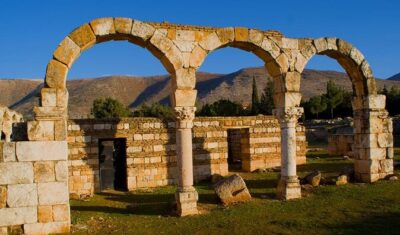
Private Anjar and Baalbek Tour from Beirut with Departure Ticket
Read our review →
Lebanon tour Baalbek ruins & Ksara w/pick-up, lunch,guide+entries
Read our review →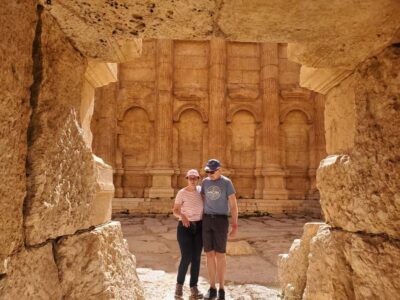
Baalbek Temples & Ksara Caves w/pick-up,guide, entries+lunch
Read our review →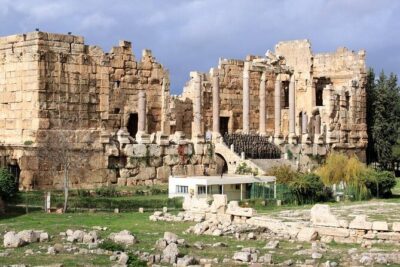
Small Group Tours to Baalbek, Anjar & Chateau Ksara with lunch and Tickets
Read our review →Browse the lists this tour appears in