
Reviewed · BAALBEK TOURS
Small Group Tours to Baalbek, Anjar & Chateau Ksara with lunch and Tickets
Baalbek gives this day its real punch. You walk among colossal Roman temples built over more than two centuries, then pair that ancient site with the Umayyad ruins at Anjar and a wine tasting at Château Ksara. It is an unusually full introduction to Lebanon’s Bekaa Valley.
I like the small-group format, capped at 15 people, and the fact that hotel pickup, a local Lebanese lunch, and an air-conditioned vehicle are included. I also like the range of the stops: Roman religion, early Islamic architecture, and modern Lebanese wine all fit into one outing.
The main drawback is the long day. You leave Beirut at 8:00 a.m. and spend much of the roughly nine-hour tour on the road or moving between sites. The schedule is efficient rather than leisurely, and the winery tasting fee is not included in the advertised price.
Key points to know before booking
- Baalbek is the main event: Allow about 90 minutes for one of the best-preserved Roman temple complexes in the region.
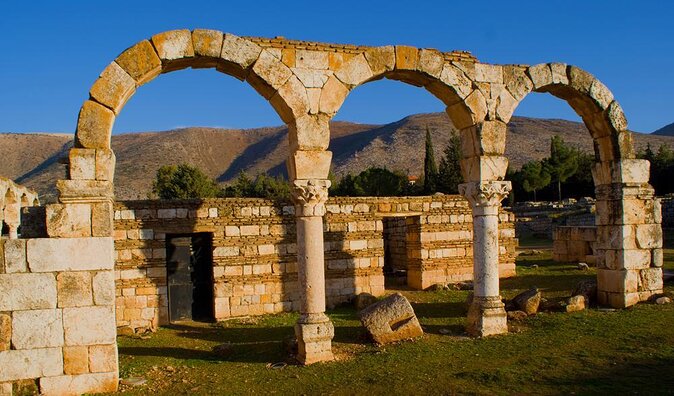
- Anjar adds a different period: Its Umayyad palace, mosque, baths, and arcades show a planned inland trading center.
- Château Ksara includes cellar access: You can learn about Lebanese wine production and see the winery’s cave.
- Lunch is part of the deal: A local Lebanese restaurant meal is included, a useful saving on a long touring day.
- Transport is made easy: Hotel pickup and drop-off come with a climate-controlled private minivan.
- The group stays fairly small: A maximum of 15 people leaves more room for questions than a large coach tour.
Why this Beirut day trip works so well
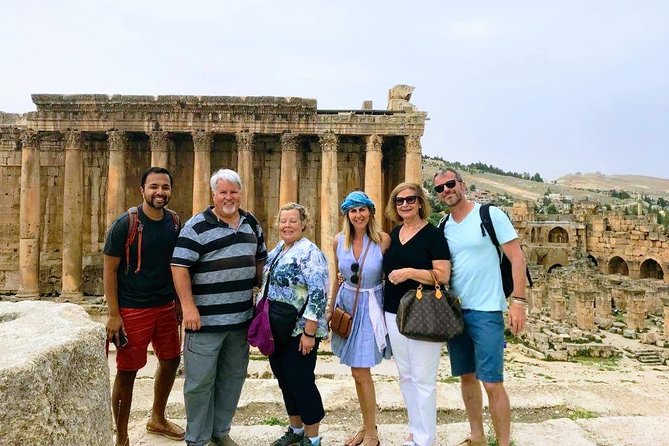
This tour is built around contrast. Baalbek takes you into the monumental world of Roman imperial architecture. Anjar shifts the focus to the Umayyad period, when the Bekaa Valley served as a crossroads between Beirut, Damascus, Homs, and Tiberiade. Château Ksara then brings you into Lebanon’s wine industry, with a history reaching back to 1857.
I like this structure because it avoids making the day a string of similar ruins. You get temples, a palace city, food, and wine. The stops also make sense geographically, since all three are in or near the Bekaa Valley rather than scattered across the country.
The price is $75 per person, which is strong value if you would otherwise need to arrange transport, entry tickets, a guide, and lunch separately. Baalbek and Anjar admission are included, as is the meal. You should still allow for the separate winery tasting cost, since Château Ksara admission or tasting is not included in the quoted price.
A small-group tour also matters here. Baalbek rewards explanation. Without context, the enormous stones can become a parade of impressive columns and broken walls. With a guide, you can better understand the Roman Triad of Heliopolis, the role of Jupiter, Venus, and Bacchus, and the engineering behind the site.
A few more Beirut trips worth comparing
- Guided Small-Group Tour to Baalbek, Anjar and Ksara with Lunch
★ 5.0 · 511 reviews - Anjar, Baalbek & Ksara Day Trip – With Lunch (4G on Board)
★ 4.5 · 181 reviews - Baalbek – Anjar – Ksara Trip From Beirut
★ 4.5 · 80 reviews
Leaving Beirut at 8:00 a.m.
Hotel pickup keeps the morning simple. You do not need to find a meeting point in central Beirut, and the tour includes a return transfer at the end of the day. The vehicle is a private, air-conditioned minivan, an important comfort in a nine-hour outing.
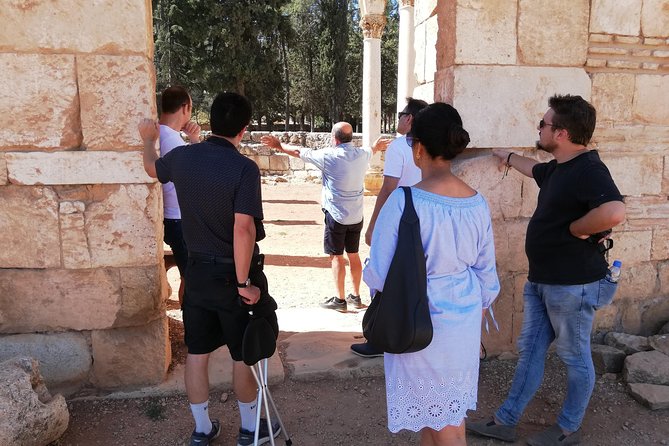
The maximum group size is 15. That is not a private tour, but it is small enough for a guide to handle questions without turning every stop into a head-counting exercise. If you enjoy asking about archaeology, religion, or wine production, this format should suit you better than a large bus.
The exact driving time can vary, and the day covers a lot of ground. I would treat the vehicle time as part of the experience rather than a flaw. You are crossing from Beirut toward the Bekaa Valley, and the transport removes the need to manage directions, parking, and site connections yourself.
The early start is useful. Baalbek is the longest and most important stop, so reaching it early in the day gives you the best chance of enjoying the complex before fatigue sets in. Wear comfortable shoes and bring water. Those are sensible habits for any full day among large archaeological sites.
Baalbek and the Roman temples
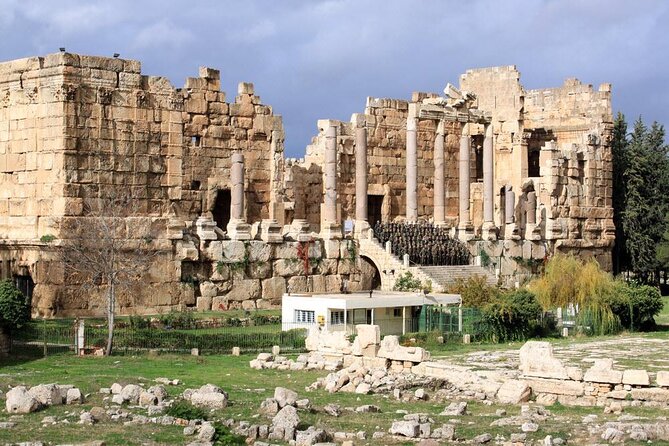
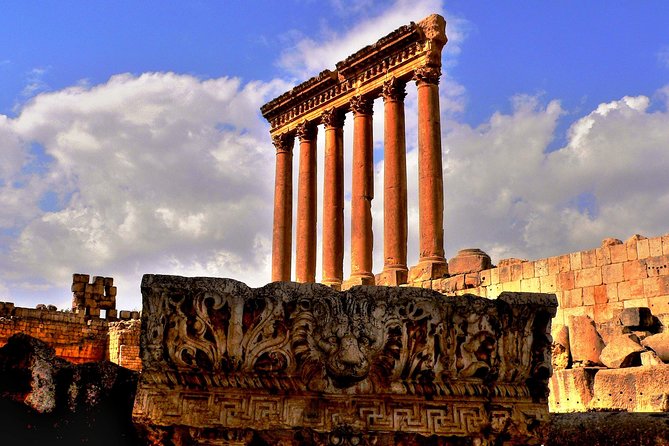
Baalbek deserves the longest look, and the scheduled 90 minutes gives it that. The sanctuary sits at about 1,150 meters, near the southwestern slope of the Anti-Lebanon range and beside the fertile Bekaa plain.
The scale is the first thing you notice. Roman builders worked here for more than two centuries, creating one of the ancient world’s grandest sanctuaries. The complex was dedicated to a Romanized version of a Phoenician religious tradition, known as the Triad of Heliopolis: Jupiter, Venus, and Bacchus.
The Temple of Jupiter is especially useful for understanding Roman ambition. Huge columns and massive masonry show that this was not a small local shrine. It was a major pilgrimage center, designed to impress people who arrived from across the Roman world.
The Temple of Venus offers a different feel, with its distinctive form and connection to the local religious tradition. Bacchus is also important to the site, and the presence of three major deities helps explain why Baalbek became such a large and elaborate sanctuary.
This is where a strong guide can make the difference. One guide connected with the tour, Natasha, is an archaeologist. If she is leading your group, you can expect more than a quick list of dates and names. Her background is particularly useful at a place where construction phases, reused stone, and religious changes can be hard to sort out on your own.
Do not expect unlimited time. Ninety minutes is enough for a guided introduction and a good look at the key monuments, but it will not allow you to examine every corner slowly. If Baalbek is your main reason for visiting Lebanon, a dedicated full-day visit would give you more breathing room. If you want a broad day covering several important sites, this timing is sensible.
The Mosque of Sayeda Khawla
The stop at the Mosque of Sayeda Khawla adds a living religious site to the ancient Roman setting. It is associated with Sayyida Khawla, the daughter of Imam al-Hussein, who is believed to have been buried there.
According to local belief, she died when the caravan of captives from Karbala passed through Baalbek. That tradition gives the stop a clear connection to Shia Muslim history and to the religious identity of the city today.
The mosque also reminds you that Baalbek is not simply an archaeological park. It is a present-day city with active religious traditions layered over its Roman and Phoenician past. The supplied schedule does not give a separate duration for this stop, so treat it as a brief addition within the Baalbek visit rather than a long standalone tour.
A completely different sort of day out of Beirut:
- Guided Small-Group Tour to Jeita, Harissa, Byblos with Lunch
★ 5.0 · 361 reviews - Paragliding Trip Over Lebanon – Jounieh Bay
★ 5.0 · 257 reviews - Jeita Grotto,Harissa&Byblos Full-Day PRIVATE-CAR Trip from Beirut
★ 5.0 · 222 reviews - First Paragliding Club in Lebanon – Since 1992
★ 5.0 · 193 reviews
The Stone of the Pregnant Woman
The Stone of the Pregnant Woman is a short stop, scheduled for about 15 minutes, but it delivers a memorable look at Roman building materials. This worked monolith is one of two enormous blocks quarried near the temple complex.
The stone is associated with the colossal construction program at Baalbek. Even when you cannot see the completed building purpose, the block makes the engineering problem plain: ancient builders were moving and placing pieces of stone on a scale that still seems hard to grasp.
Fifteen minutes is enough here. You can see the monolith, hear why it matters, and return to the minivan without cutting into the main temple visit. It is a good example of the tour’s approach: several focused stops rather than long, unstructured stretches at one site.
Anjar’s Umayyad city plan
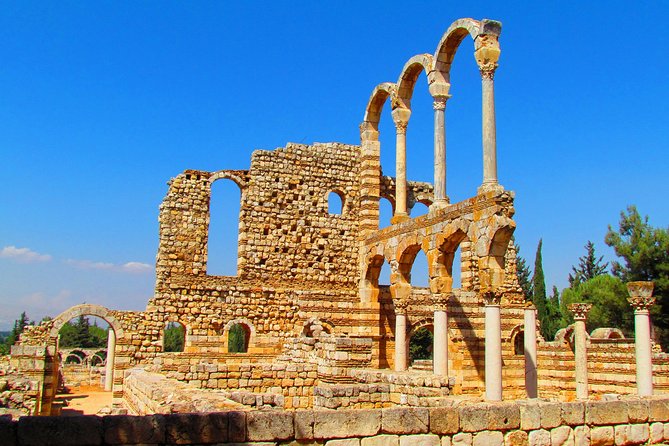
Anjar changes the tone of the day. Its ruins date to the Umayyad period and offer a look at an inland commercial center rather than a Roman sanctuary.
The site stood at the meeting point of important routes. One route connected Beirut with Damascus, while another crossed the Bekaa toward Homs and Tiberiade. That position helps explain why a planned city was built here, even though its visible remains can feel more restrained than Baalbek’s massive temples.
You will see the walls of the Umayyad palace, the harems, a mosque, the caliph’s great palace, thermal baths, and long lines of columns. Some architectural elements show Roman influence, which makes Anjar a useful place to see how later builders worked with earlier design traditions.
The ruins were only identified by archaeologists at the end of the 1940s. That relatively recent discovery gives Anjar a different character from a site that has been famous for centuries. You are looking at the remains of a city that had been largely lost from view, not just another well-known monument.
The scheduled visit lasts about 45 minutes. That is enough for the main layout and the most important structures, though it will feel brisk if you want to study every wall. The contrast with Baalbek is the real value. At Baalbek, the focus is religious grandeur. At Anjar, the focus is urban planning, trade, administration, and court life.
Lunch at a local Lebanese restaurant
Lunch is included, and that matters on a long day. You do not have to spend time choosing a restaurant, calculating delays, or settling the group’s meal arrangements while trying to stay on schedule.
The meal is described as local Lebanese food, and the strongest feedback about the tour repeatedly points to the lunch as a highlight. One account describes it as sumptuous, while another singles out the excellent food along with the organization of the day.
The exact menu is not specified, so do not book expecting a particular dish. Instead, think of lunch as a chance to try a proper Lebanese meal in the Bekaa Valley rather than relying on snacks from the road.
Ziad is named as a driver associated with the experience, and he has been noted for taking care of the group during lunch and making sure the meal was served properly. Driver quality can make a surprising difference on a full-day outing, especially when the schedule includes several stops and a long return to Beirut.
Château Ksara and Lebanese wine
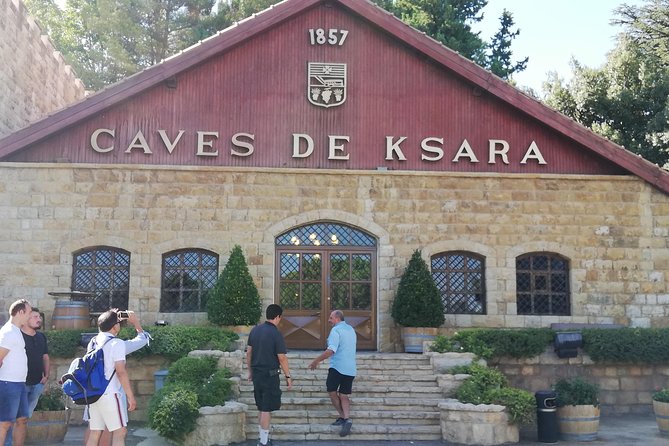
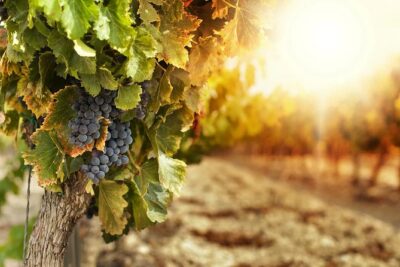
Château Ksara provides the final major change of subject. The winery was founded by Jesuit priests in 1857 and developed Lebanon’s first dry wine. It now produces about three million bottles each year, with its wines sold in several countries.
The one-hour visit is more than a tasting room stop. You are taken behind the scenes to learn how Lebanese wine is made and to see the on-site cave. That production element gives the visit some substance, even if wine is not your main interest.
The tasting itself is not included in the $75 price, so budget for that separately. The tour data does not state the tasting cost or the exact number of samples. You should confirm those details when booking if the winery is a major reason for choosing this outing.
Château Ksara is a good final stop because it is less demanding than another archaeological site. After Baalbek and Anjar, a winery visit offers a slower hour and a chance to connect the region’s soil, farming, and food culture with the meal you have already enjoyed.
Guides, transport, and the pace of the day
The experience includes a local guide and a tour leader, though the exact staffing can vary. Names connected with the tour include Natasha, an archaeologist, Khalil, who has led site visits at Baalbek, and Ziad, a driver noted for looking after the group. These names are useful to know, but you should not assume that one particular person will lead every departure.
The minivan is climate-controlled, and hotel pickup and drop-off are included. That makes the tour practical for anyone who wants to see inland Lebanon without arranging a rental car or navigating the route alone.
The pace is active. You will move from one major stop to another, with set times of 90 minutes at Baalbek, 15 minutes at the Stone of the Pregnant Woman, 45 minutes at Anjar, and one hour at Château Ksara. Lunch and driving fill out the rest of the nine-hour day.
The tour suits you best if you have limited time in Beirut and want a broad introduction to Lebanon’s ancient sites and wine culture. It is less suited to you if you prefer slow photography, long independent exploration, or a single-site archaeological study.
Who should book this tour?
I would book this day if you want to see Baalbek but also want more than a round-trip ruin visit. Anjar gives the day historical range, and Château Ksara adds a food and wine element that makes the route feel more connected to present-day Lebanon.
It is also a strong choice if you are uncomfortable driving outside Beirut. The hotel transfers, small vehicle, guide, and included lunch remove several practical hurdles.
Families, first-time visitors, and people with only a few days in Lebanon should find the format useful, assuming they are comfortable with a long day. Most people can participate, and the maximum group size is 15.
You may want another option if you need extensive free time, have mobility concerns not addressed in the tour information, or do not want to pay separately for the wine tasting. Baalbek alone could fill a day for someone focused on Roman architecture.
Should you book it?
For $75, this is a well-priced way to combine three major experiences from Beirut. The strongest reasons to book are Baalbek’s exceptional scale, the small group, the included Lebanese lunch, and the ease of hotel transfers.
The main trade-off is pace. You are buying range, not a slow study of each site. If that sounds right, this tour gives you Roman temples, an Umayyad city, a local meal, and Lebanese wine in one organized day. Free cancellation is available up to 24 hours before departure, while poor weather may lead to a different date or a full refund.
FAQ
How long does the tour last?
The tour lasts about nine hours, with an 8:00 a.m. start.
Does the tour include hotel pickup and drop-off?
Yes. Hotel pickup and drop-off are included.
What sites are visited?
The tour visits the Temples of Baalbek, the Mosque of Sayeda Khawla, the Stone of the Pregnant Woman, the Umayyad ruins of Anjar, and Château Ksara.
Is lunch included?
Yes. Lunch at a local Lebanese restaurant is included.
Are admission tickets included?
Admission to the Temples of Baalbek and the Umayyad ruins of Anjar is included. Admission or tasting at Château Ksara is not included.
How many people can join the tour?
The tour has a maximum group size of 15 people.
Is transportation provided?
Yes. Transportation is provided in an air-conditioned private minivan.
Can I cancel for a full refund?
Yes, if you cancel at least 24 hours before the experience starts. Cancellations made less than 24 hours before the start time are not refunded.
Newest Beirut trips on the site
- Jeita Grotto, Byblos and Harissa Full-Day Tour from Beirut★ 5.0 · 23 reviews
- Paragliding Trip Over Lebanon – Jounieh Bay★ 5.0 · 257 reviews
- Paragliding activity in Lebanon★ 5.0 · 33 reviews
- First Paragliding Club in Lebanon – Since 1992★ 5.0 · 193 reviews
- Lebanon Wine Tasting Tour From Beirut★ 4.5 · 25 reviews
- Paragliding Trip Over Jounieh bay★ 5.0 · 33 reviews
- Chouwen Lake Hiking & Swimming★ 5.0 · 39 reviews
- City Sightseeing Beirut Hop-On Hop-Off Bus Tour★ 4.5 · 87 reviews
Baalbek Tours, compared.
Guided Small-Group Tour to Baalbek, Anjar and Ksara with Lunch
Read our review →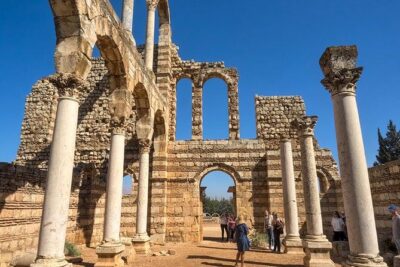
Anjar, Baalbek & Ksara Day Trip – With Lunch (4G on Board)
Read our review →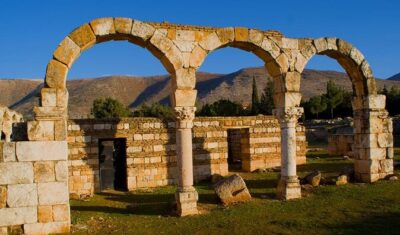
Private Anjar and Baalbek Tour from Beirut with Departure Ticket
Read our review →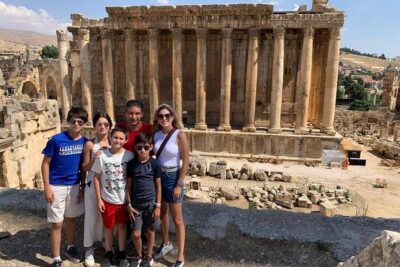
Guided Private Full Day Tour to Baalbek, Anjar and Chateau Ksara
Read our review →
Lebanon tour Baalbek ruins & Ksara w/pick-up, lunch,guide+entries
Read our review →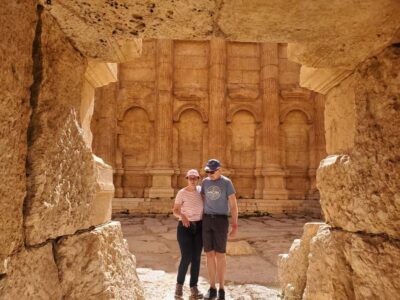
Baalbek Temples & Ksara Caves w/pick-up,guide, entries+lunch
Read our review →Browse the lists this tour appears in