
Reviewed · BETHLEHEM TOURS
Jerusalem and Bethlehem Tour from Jerusalem
Jerusalem and Bethlehem in one day is a demanding plan, but this tour makes the most important Christian and Jewish sites possible without asking you to arrange several complicated connections. You’ll look over the Old City from the Mount of Olives, walk through its tight stone lanes, and visit the Church of the Holy Sepulchre before crossing into Bethlehem.
I like the way the tour combines the Western Wall with the main Christian sites, and I like having a local Bethlehem guide for the second part. Guides named Rami, Ruth, Yuri, and Hilik Levite have received especially warm praise for clear explanations and patient service. The main drawback is the pace: two and a half hours of walking on cobbles and flagstones can be tiring, and Bethlehem access may involve a wait or a change of vehicle.
Key points to know before booking
- Two holy cities in one day: See Jerusalem’s Western Wall, Via Dolorosa, Mount Zion, and Church of the Holy Sepulchre, then continue to Bethlehem.
- A guide makes the Old City manageable: The narrow lanes are easy to lose yourself in, while a good guide helps connect each place to its religious setting.
- Bethlehem has its own logistics: Bring your passport and expect Palestinian Authority regulations, a possible short walk without the vehicle, and perhaps a vehicle change.
- Walking is the real workout: The Old City portion includes uneven cobbles, steps, and enclosed streets. Comfortable shoes and water matter.
- The group size can vary: The advertised maximum is 54 people, though some departures have been much smaller, including one group of 11 in a spacious minibus.
- Lunch is not included: A meal stop may be offered, but the quality and value can vary. Bring water and budget separately for food.
One day, two very different holy places
This tour is built for you if your time in Jerusalem is short and your priority is seeing major religious landmarks rather than wandering at leisure. In roughly eight hours, you cover a great deal of ground.
The Jerusalem portion is mostly on foot. That is the right way to experience the Old City, but it also means you should not picture a relaxed coach tour with frequent stops. The streets can be uneven, the lanes can be crowded, and the schedule leaves little room for sitting down.
The Bethlehem portion adds an international border crossing to the day. The tour warns that you may need to walk briefly without your vehicle and change vehicles after entering Palestinian-controlled territory. That sounds minor on paper, but it can affect the timing. You should arrive ready for a practical, sometimes imperfect day rather than a tightly choreographed excursion.
A few more Bethlehem trips worth comparing
- From Tel Aviv: Jerusalem and Bethlehem Guided Day Trip
★ 4.3 · 1,316 reviews - Day Tour to Jerusalem and Bethlehem from Tel Aviv
★ 4.5 · 720 reviews - From Jerusalem: Half-Day Bethlehem Guided Tour
★ 4.7 · 568 reviews
Mount of Olives: the first great view of Jerusalem
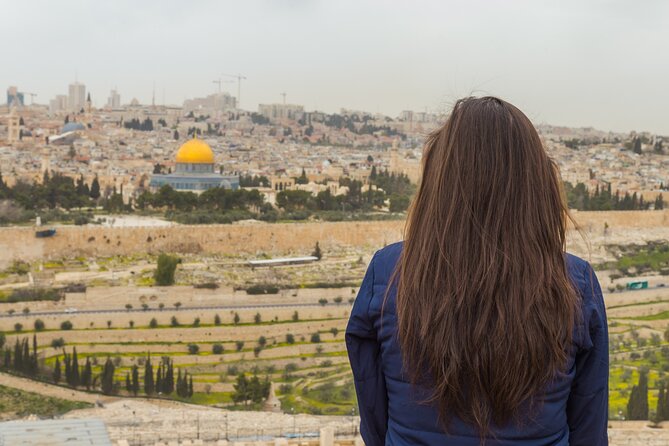
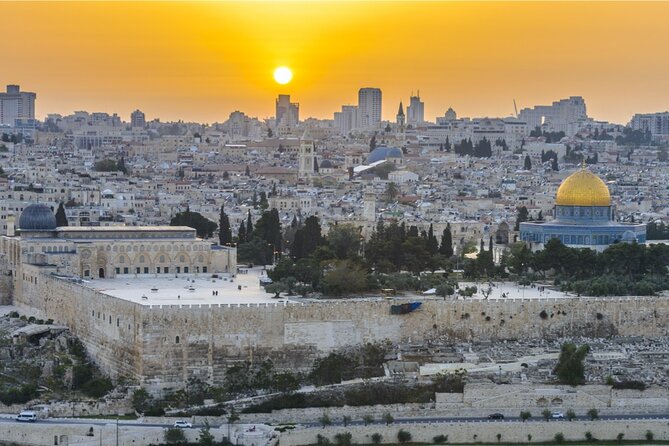
The Mount of Olives gives you an important orientation before you enter the Old City. From here, you can see Jerusalem spread below, with the Old City walls and the Temple Mount area forming the visual center.
The mountain is also a sacred place in both the Old and New Testaments. Today, it is known for its cemetery and religious associations as much as for its view. I find this stop useful because it gives physical meaning to places you will visit later. From above, the city feels readable. Once you enter the Old City, the lanes become much less so.
You get about 20 minutes here. That is enough for the main view and an explanation, but not enough for a long walk around the mountain. If you want quiet time for photographs or reflection, use it efficiently.
The Western Wall and the weight of the Second Temple
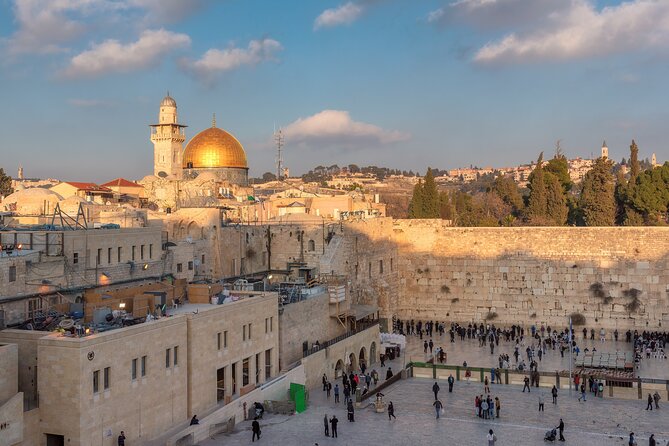
The Western Wall is one of Judaism’s most sacred sites. It is part of the retaining wall associated with the Second Temple complex expanded under King Herod.
Your visit is brief, around 20 minutes, and admission is free. The important thing is not the ticket price but the setting. This is an active place of prayer, so you should approach it with respect and follow any instructions from your guide.
The folded prayers placed between the stones are one of the details many people come hoping to see. The wall is not simply an old monument. It remains a living place of worship, which gives the stop a different character from a museum visit.
Your guide should help explain the layout and customs without turning the visit into a lecture. The best guides keep the focus on the place itself and allow you a moment to take it in.
Mount Zion, King David’s Tomb, and Dormition Abbey
The tour then moves to Mount Zion, where you visit King David’s Tomb and Dormition Abbey. These stops are close enough to fit into a short section of the day, but each carries a different religious meaning.
King David’s Tomb is regarded as one of Judaism’s most sacred sites. The biblical account places David’s burial in the City of David, although the traditional site visited here is on Mount Zion. Your stop lasts about 15 minutes, so expect an introduction and a chance to look around rather than a long, private visit.
Dormition Abbey is one of Jerusalem’s most impressive churches by size and location. Its position on Mount Zion gives it a strong connection to the Old City views you have already seen. The visit is scheduled for around 15 minutes and admission is free.
I like this part of the route because it breaks up the major headline sites with places that can be overlooked on a first visit. The drawback is that the schedule is tight. If you are deeply interested in church architecture or biblical interpretation, you may want more time than this tour can provide.
A completely different sort of day out of Bethlehem:
- Jerusalem and Bethlehem Day Tour from Jerusalem
★ 4.5 · 258 reviews - Travel to Bethlehem Half Day Guided Tour from Jerusalem & TelAviv
★ 5.0 · 239 reviews - Ashdod Shore Excursion: Jerusalem and Bethlehem – for cruise ship guests only
★ 4.5 · 149 reviews - From Ashdod Port: Jerusalem and Bethlehem Day Trip
★ 4.0 · 111 reviews
Walking the Via Dolorosa to the Church of the Holy Sepulchre
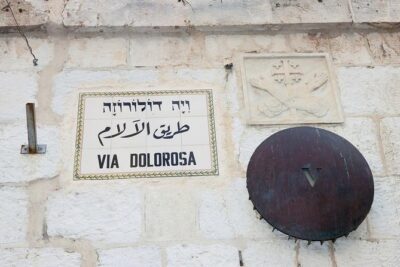
The Old City is where the tour becomes most physical. You follow the Via Dolorosa, the route associated with Jesus’ path to crucifixion, through narrow lanes and uneven paving.
This is not a straight ceremonial walkway. It is an urban route through the living Old City, with stone walls, enclosed passages, shops, and changing levels underfoot. The streets can be tiring, especially during the roughly two and a half hours spent exploring the area.
The reward is the Church of the Holy Sepulchre, the Christian site traditionally identified with Calvary, Jesus’ burial, and the Resurrection. This is the central Christian stop of the Jerusalem portion and usually the place where the day feels most intense.
The church has had a difficult past, including destruction, neglect, fires, and earthquake damage. It is now cared for by Greek Orthodox, Armenian Apostolic, and Roman Catholic custodians, with each tradition responsible for its own areas.
You have about 30 minutes inside. That may be enough to see the main features, but lines can affect what you manage to visit. One person on a departure was disappointed that a long wait meant missing part of the Bethlehem experience later in the day. This is a good reminder that religious sites do not always run on a tour schedule.
Wear shoes with good grip. Bring water. Do not count on a convenient coffee break during the Old City walk.
Crossing into Bethlehem
The move from Jerusalem to Bethlehem is one of the tour’s most practical parts. You must bring your passport, and the tour is subject to Palestinian Authority regulations.
A short unaccompanied walk may be required at the crossing, and you may change vehicles after entering Palestinian territory. These arrangements are not necessarily difficult, but they can feel confusing if you expect to remain with the same driver from hotel pickup to hotel return.
This is where the local Bethlehem guide matters. The Jerusalem guide may not lead every part of the Bethlehem visit, and the handoff can shape your experience. A well-run transfer keeps the group together and explains what is happening. One departure had a smooth crossing and a group of 11 in a comfortable minibus, while other schedules were affected by waiting time.
I would keep your passport accessible, avoid packing your day too tightly, and treat the border process as part of the experience rather than an annoying interruption. You do not control the timing.
Bethlehem’s shepherds’ field and Manger Square
In Bethlehem, the route includes Christian landmarks connected with the Nativity. You may see the shepherds’ field area, Manger Square, and the Church of the Nativity.
Be clear about the shepherds’ field wording before you book. The experience may provide a distant view rather than a close visit to the field itself. If this site is especially important to you, ask the operator what the current stop includes.
Manger Square provides the main public setting for Bethlehem’s Nativity sites. It is a useful place to understand how the religious center fits into the modern town rather than treating the Church of the Nativity as an isolated monument.
The Bethlehem guide is meant to add local context and help with movement through the town. Guides such as Rami, Ruth, Yuri, and Hilik Levite have been singled out for patience, organization, and clear explanations. Guide assignments can change, so you should not book on the assumption that a particular person will lead your departure. Still, the difference between a guide who keeps you informed and one who is distracted is especially noticeable on a day with border procedures and changing vehicles.
Church of the Nativity: the emotional center of Bethlehem
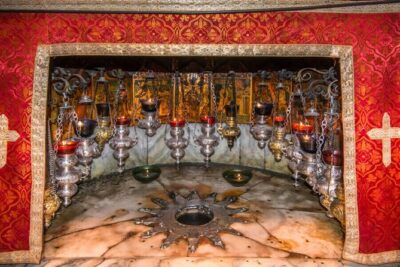
The Church of the Nativity is a fourth-century church traditionally associated with Jesus’ birthplace. For many people, this is the reason to cross into Bethlehem.
Your actual time at the church may depend on the line and the day’s timing. A long wait can cut into other stops, and a crowded visit may feel less peaceful than you imagined. At the same time, the wait is part of the reality of visiting a major pilgrimage site. Your guide can help you understand what you are seeing, but no guide can guarantee immediate entry.
I would set your expectations carefully. The value lies in reaching a place with enormous religious importance and understanding its setting. It is less about checking every corner of the church and more about recognizing why this site has drawn pilgrims for centuries.
Lunch, group size, and the real value of the price
At $118 per person, the tour offers good value if you want Jerusalem and Bethlehem in one day and would otherwise need to arrange transport, guides, and border logistics yourself. Hotel pickup and drop-off are included, along with a professional guide and a local guide for Bethlehem.
Food and drinks are not included. A lunch stop may be part of the day, but you should not assume that the meal is included in the price or that every departure uses the same restaurant. One meal stop received criticism for poor service and mediocre food, while another person enjoyed lunch at Rachel’s Kibbutz and found it a good value. I would bring snacks and water, then treat the lunch stop as convenient rather than a feature worth paying extra for.
The tour is described as small-group, but the official maximum is 54 people. That is a wide range. Some departures have been much smaller, with 11 people in a roomy minibus, while a full departure would feel less personal. If group size is important to you, confirm it before booking instead of relying only on the small-group label.
The strongest value comes from the guide service. You get a structure for a complicated day, explanations at sites that can otherwise feel confusing, and help with the Bethlehem transfer. If you already have transport and prefer to move slowly, the value is less clear.
Who will enjoy this tour most
I would choose this tour if you have one free day, want the major biblical sites, and prefer a guided route to handling the Old City and Bethlehem independently.
It suits first-time visitors who want an introduction to Jerusalem’s major religious landmarks. It also works well for people who feel more comfortable crossing into Bethlehem with organized transport and a local guide.
You should think twice if you dislike fixed schedules, long walks, border procedures, or busy pilgrimage sites. The Old City portion requires moderate physical fitness, and cobblestones, flagstones, steps, and narrow streets can be hard on anyone with limited mobility.
The tour is operated bilingually. English is available daily, Spanish on Sunday, Tuesday, and Friday, French on Monday, Thursday, and Saturday, and German on Wednesday. Check the language schedule before reserving.
Hotel pickup and drop-off are offered, and the tour begins at 9:00 am. Service animals are allowed under the stated conditions, with a companion required for a person with a disability. Free cancellation is available if you cancel at least 24 hours before the start time.
Should you book the Jerusalem and Bethlehem day tour?
Book it if your goal is maximum coverage in one day. You will see the Western Wall, Mount of Olives, Mount Zion, Via Dolorosa, Church of the Holy Sepulchre, and key Bethlehem sites without arranging the transport yourself.
Go in knowing that the day is active, the Old City walk is uneven, lunch is extra, and the Bethlehem crossing can change the schedule. Ask about the current itinerary for the shepherds’ field and expected group size if those details matter to you.
For a first look at Jerusalem and Bethlehem, $118 is a fair price for the transport, guides, and access to two difficult-to-combine destinations. For a slower, more reflective visit, split the sites across several days instead.
FAQ
How long is the Jerusalem and Bethlehem tour?
The tour lasts approximately eight hours.
What time does the tour start?
The stated start time is 9:00 am.
Is hotel pickup and drop-off included?
Yes. Hotel pickup and drop-off are included.
What sites are visited in Jerusalem?
The route includes the Western Wall, the Church of the Holy Sepulchre, the Mount of Olives, Dormition Abbey, and King David’s Tomb. You also follow the Via Dolorosa through the Old City.
Does the tour visit the Church of the Nativity?
Yes. The Bethlehem portion includes the fourth-century Church of the Nativity, along with Manger Square and other Christian landmarks.
Do I need my passport?
Yes. Passports are required for the tour.
Will I need to change vehicles in Bethlehem?
A vehicle change may be required after entering Palestinian territory. A short unaccompanied walking portion at the crossing may also be necessary.
Is lunch included?
No. Food and drinks are not included in the tour price.
What languages are available?
The tour is bilingual and is available in English daily, Spanish on Sunday, Tuesday, and Friday, French on Monday, Thursday, and Saturday, and German on Wednesday.
Newest Bethlehem trips on the site
- Private Day Tour: Jericho, Mount of Temptation, Hisham’s Palace and Bethlehem★ 5.0 · 28 reviews
- Private Day Tour: St. George’s Monastery, Wadi Qelt, Mar Saba, and Bethlehem★ 5.0 · 38 reviews
- Hebron and Bethlehem Private Tour★ 5.0 · 23 reviews
- Jericho and Bethlehem Private Tour★ 5.0 · 24 reviews
- Half Day Private Tour of Bethlehem★ 5.0 · 38 reviews
- Ashdod Port Shore Excursion: Jerusalem and Bethlehem Day Tour from Ashdod Port★ 3.5 · 31 reviews
- 2024 Jerusalem & Bethlehem from Ashdod Port Small Groups★ 5.0 · 30 reviews
- Private Day Trip of Jerusalem and Bethlehem from Amman★ 4.5 · 25 reviews
Bethlehem Tours, compared.

Day Tour to Jerusalem and Bethlehem from Tel Aviv
Read our review →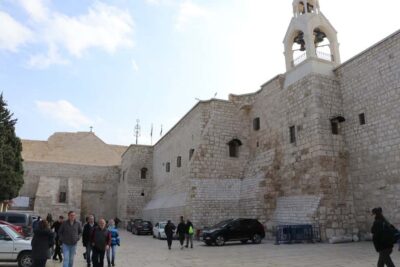
Jerusalem and Bethlehem Day Tour from Jerusalem
Read our review →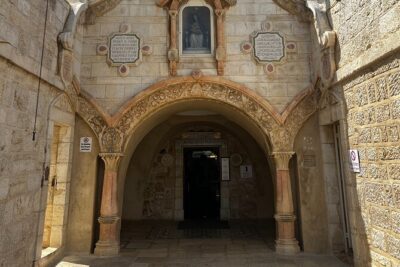
Travel to Bethlehem Half Day Guided Tour from Jerusalem & TelAviv
Read our review →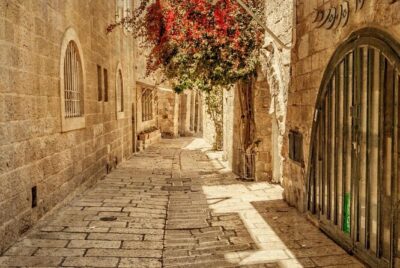
Ashdod Shore Excursion: Jerusalem and Bethlehem – for cruise ship guests only
Read our review →
From Ashdod Port: Jerusalem and Bethlehem Day Trip
Read our review →
Bethlehem, Jericho, and Qasr El Yahud Day Trip from Jerusalem
Read our review →Browse the lists this tour appears in