
Reviewed · FOOD TOURS
Interactive Saudi Cuisine and Cultural Experience
The most engaging part of this Riyadh experience begins before dinner. You learn to arrange a traditional Saudi shemagh and try hama, Arabic jewelry, then move through spices, coffee, smoked water, honey, and food with the story behind each one. It gives you a useful cultural frame before you start eating.
I like the hands-on format, especially blending your own Medina spice mix to use at the table and take home. I also like the way the evening connects food with customs, from dining etiquette to incense, rather than treating Saudi cuisine as a simple meal.
The main consideration is the price: at $216, this is not a casual dinner. The value depends on how much you want guided cultural instruction and a hosted evening. Unusual dietary restrictions may also be hard to accommodate.
Key details before you book
- Traditional dress comes first: Learn how to fit a shemagh and try hama jewelry before sitting down to dinner.
- You make a spice blend: Test your sense of smell, identify ingredients, and prepare a Medina spice mix to use and keep.
- The meal focuses on Najd: Expect a multi-dish regional feast, with the origins and customs tied to each dish.
- Arabic coffee and smoked water add context: You watch traditional preparation methods instead of simply receiving a finished drink.
- Aseer honey closes the meal: Taste several award-winning honeys, choose a favorite, and pair it with dessert.
- Suliman leads the evening: His storytelling and guidance are central to making the food and customs easier to understand.
Starting the evening at Najd Village
The experience begins at 7:30 pm at Najd Village on King Abdul Aziz Branch Road in the Alyasmin area of Riyadh. It ends at the same meeting point, so you are not left figuring out a second location after dinner.
This is a seated cultural meal with activities built around it, not a walking tour. That matters in Riyadh, where a fixed evening venue can be easier to manage than a series of distant stops. You should plan to arrive ready for a roughly two-and-a-half-hour program.
The maximum group size is 50 people. That is large enough for a social evening, but it is not a private tasting. If the group reaches its limit, some demonstrations may feel less personal, especially during the clothing and spice activities. The upside is that the format is designed for shared participation, with fellow diners becoming part of the experience.
A mobile ticket is available, and confirmation comes at booking. You do not need to print a paper voucher. The activity begins and ends at the meeting point, with no transport included in the information provided.
More Food Tours in Riyadh:
- Dubai: Old Town, Creek, Museums, Souks, & Street Food Tour
★ 4.8 · 10,816 reviews - Dubai: Old Town, Souks, Street Food, Guided Tour & Abra Ride
★ 4.9 · 7,170 reviews - Dubai: Old Town, Souks, Street Food, Guided Tour & Abra Ride
★ 5.0 · 1,664 reviews
Learning the shemagh and hama
Your first lesson covers traditional Saudi dress. You learn how to arrange a shemagh, the head covering commonly associated with Saudi clothing, and how to wear hama, Arabic jewelry.
This is a smart opening because it gives you something physical to do before the meal begins. Instead of sitting down as a passive audience, you take part in a small piece of local dress and presentation. It also helps you notice the care given to clothing in formal Saudi settings.
The clothing lesson is likely to appeal most to first-time visitors who want a basic introduction to local customs without needing prior knowledge. Families and groups can also enjoy the light, social nature of trying the pieces together.
You should keep your expectations sensible. This is an introductory lesson, not a full course in Saudi dress. The provided details do not specify which jewelry pieces are used or whether every participant wears a complete outfit. Think of it as a practical cultural welcome, not a costume session.
Following the old spice routes through smell
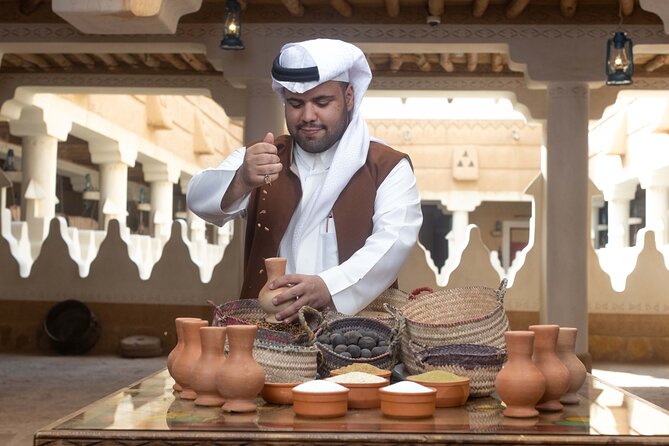
The next section turns your attention to spices. You learn about ancient spice routes, test your sense of smell, and identify different seasonings in a game-like activity.
I find this one of the strongest parts of the evening because smell makes food memory immediate. You are not just told that spices matter in Saudi cooking. You are asked to recognize them, compare them, and think about how they shape a dish.
You then blend your own Medina spice mix. The blend is intended for use with the meal and comes home with you as a souvenir. That gives this part more value than a demonstration alone. You leave with a small, edible reminder of the evening and a way to repeat part of it later.
The activity is also a useful introduction to the role of trade in Saudi food culture. The program refers to ancient spice routes, linking the ingredients on the table to movement and exchange across the region. You will not get a full history course in a short dinner, but you do get a clear reason to pay attention to the seasoning in front of you.
If you have a poor sense of smell, do not worry about turning the game into a test you must win. The point is to take part and learn how the ingredients are used.
Watching smoked water take shape
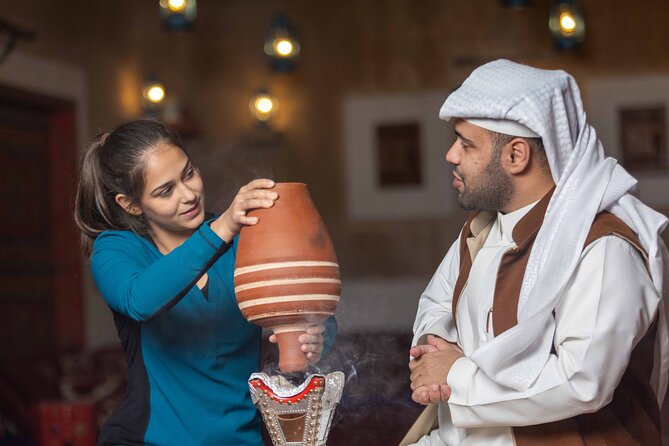
One of the more unusual demonstrations covers traditional smoke-infused water from the south of Saudi Arabia. You watch the ancient preparation technique before tasting or using the finished result as part of the evening.
This is exactly the kind of detail that separates a cultural meal from a standard restaurant booking. Smoked water is not an everyday explanation most visitors would encounter on their own, and the demonstration shows how older methods can carry flavor, ritual, and regional identity.
The program does not specify every step or ingredient, so I would not book this expecting a technical cooking class. You are watching and learning rather than preparing every item yourself. Still, the demonstration adds a regional note before the dinner shifts toward Najd cuisine.
The contrast is useful. You begin with a southern technique, then eat a meal tied to Najd, and later taste honey from Aseer. In a single evening, you get food references from several parts of the kingdom. That does not replace visiting those regions, but it gives you a wider sense of Saudi food traditions.
A few more Riyadh trips worth comparing
- Riyadh: Edge Of The World, camels &Stargazing with 4×4
★ 4.7 · 1,050 reviews - Edge of The World Riyadh with Camel Ride ,Bat Cave Visit & Dinner
★ 5.0 · 778 reviews - Riyadh: 4×4 Trip to the Edge of the World at Sunset
★ 4.9 · 719 reviews - Edge Of The World Hike(Dinner under stars,village,bats cave,camp)
★ 4.5 · 675 reviews
Making Arabic coffee the traditional way
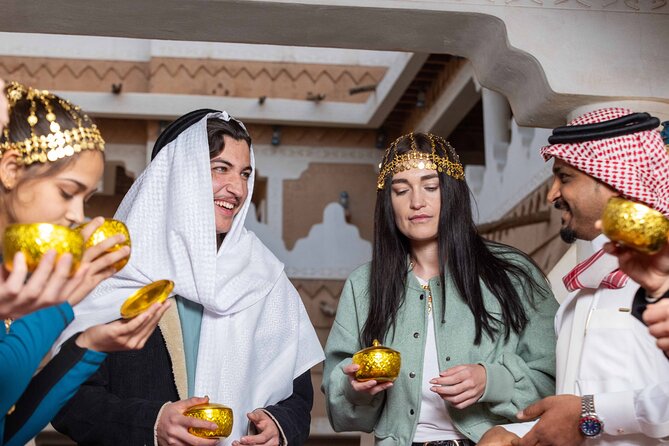
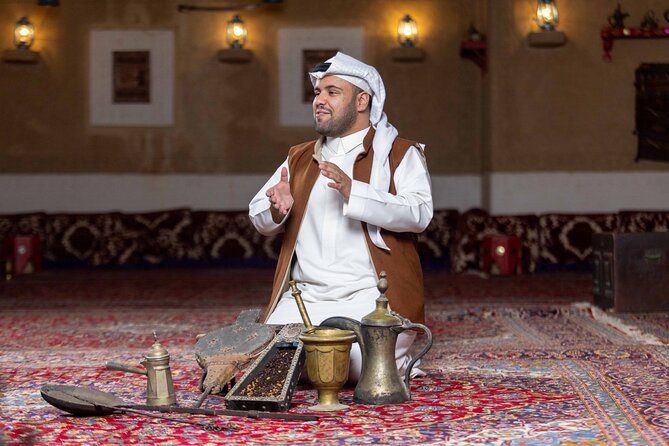
Arabic coffee follows the smoked water demonstration. You learn the steps needed to prepare it, with the process explained rather than hidden behind a restaurant counter.
Coffee has an important place in Saudi hospitality, and learning how it is made helps you understand why it is offered as more than a caffeine break. The preparation becomes part of welcoming people, sharing time, and following local manners.
This lesson pairs well with the later instruction on dining etiquette. The program is not only asking you to taste food. It is showing you how drinks, serving customs, and behavior fit together around a meal.
You should expect an introduction, not a barista workshop. The supplied details do not list the exact coffee equipment, bean type, serving order, or length of the lesson. What you receive is a guided look at the traditional steps and their place in Saudi culture.
Sitting down to a multi-dish Najd feast

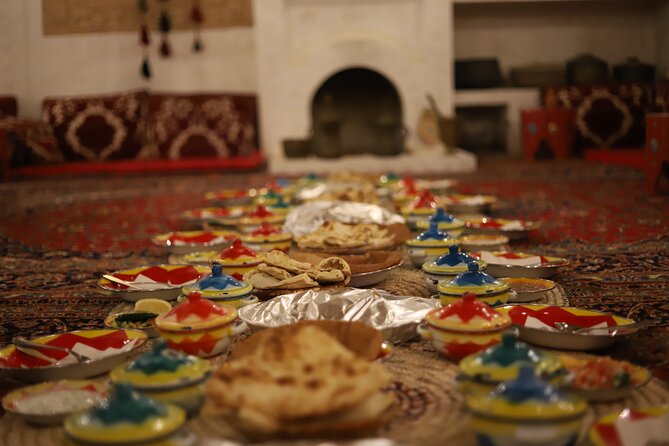
The central meal is a substantial Najd regional feast. Each dish comes with an explanation of its origins and history, followed by guidance on Saudi dining etiquette.
Najd gives the dinner a clear regional focus. Rather than presenting a vague collection of dishes labeled simply Saudi, the meal points you toward one area and its food traditions. That focus makes it easier to remember what you eat and where it fits.
The number and names of the dishes are not specified, so you should not expect a published tasting menu with exact portions. You can expect several dishes and enough food to make dinner the main event of the evening. The description presents it as a meal designed to fill you up, not a few tiny samples.
I like the way the food explanations happen at the table. You learn the story of a dish while looking at it, smelling it, and preparing to eat it. That is more useful than hearing a long talk before any food arrives.
The dining etiquette lesson is equally practical. Saudi meals can include customs that are unfamiliar to first-time visitors, and a short explanation helps you participate with more confidence. The focus is on making the meal comfortable, not on catching you out for doing something incorrectly.
Food restrictions deserve attention before booking. Most people can participate, but unusual dietary needs may be difficult to handle. If you require a strict diet, contact the provider before paying rather than assuming substitutions will be available.
Tasting Aseer honey with dessert
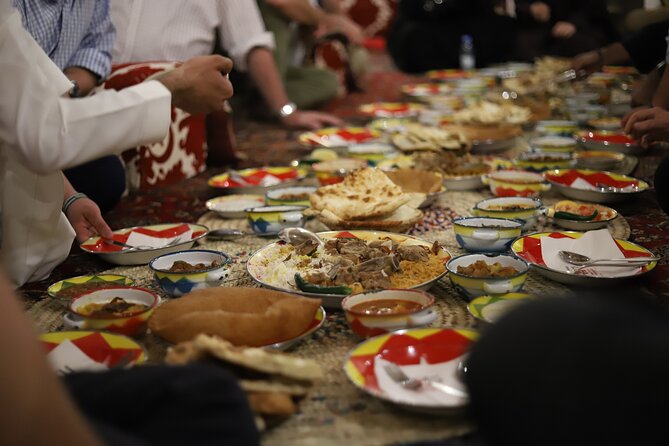
After the main feast, you taste award-winning honeys from the Aseer region. You then select your favorite honey to enjoy with dessert.
This is a pleasing way to finish the food portion because it asks you to compare several flavors rather than simply placing one sweet item on the table. Honey can vary in aroma and taste, and choosing a favorite gives you one more small decision in an evening built around participation.
The Aseer connection also adds another regional layer. The main feast points to Najd, while the honey brings in the southwest of Saudi Arabia. You are not just sampling dessert. You are using food to travel between regions without leaving Riyadh.
The phrase award-winning describes the honeys, but the supplied details do not name the producers, awards, floral sources, or number of samples. You should treat this as a guided tasting, not a specialist honey course.
If you enjoy buying edible souvenirs, the spice blend is the clearer takeaway because it is specifically prepared for you to keep. The honey is chosen to accompany dessert during the experience.
Ending with tea and incense
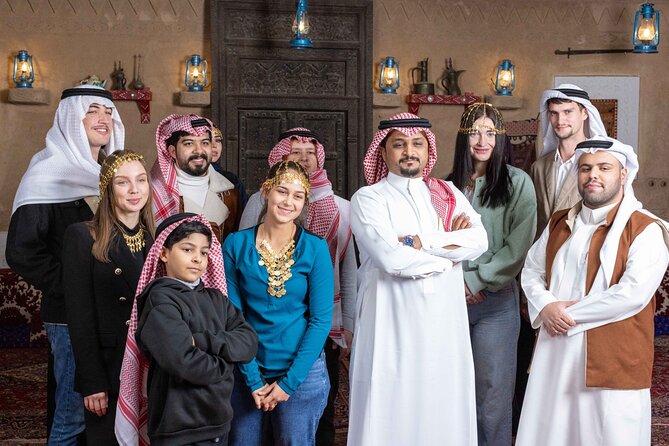
The final section combines traditional tea and incense. You learn about both before heading home to the same meeting point.
This closing works because it slows the evening down. After the clothing lesson, smell test, demonstrations, and large meal, tea and incense shift attention from eating to atmosphere and custom. Incense also links the final moments back to the evening’s repeated emphasis on scent, from the spice game to smoked water.
The details do not say that you make the incense yourself, so expect a class or introduction rather than a full workshop. The same applies to the tea. You learn about traditional practice and finish with a drink, but the exact tea type and method are not provided.
For me, this ending makes the program feel like a cultural evening rather than a dinner with a few facts added between courses. It also gives you time to ask questions if the format allows, although the activity does not promise a private guide or individual session.
Is $216 a fair price?
At $216, this experience costs much more than an ordinary meal in Riyadh. You are paying for the hosted program, the demonstrations, guided explanations, participation in the clothing and spice activities, the multi-dish feast, drinks, dessert, and the chance to spend the evening in a group setting.
The value is strongest if you are visiting Saudi Arabia for the first time and want several introductions in one booking. You learn about dress, spices, coffee, smoked water, food customs, honey, tea, and incense in a single two-and-a-half-hour session. Arranging all of that independently would be difficult, even if a separate restaurant meal cost less.
The price is less convincing if your main goal is simply to eat Najdi food. A food-focused visitor who already understands local customs may prefer a regular restaurant and spend the difference on additional meals. This activity earns its higher price through explanation and participation, not just through the quantity of food.
The group limit of 50 also affects the value. You get a social, organized evening, but not the intimacy of a small private class. If direct access to the guide matters most to you, ask about the expected group size when booking.
Who will enjoy this Riyadh experience?
I would recommend it most to first-time visitors who want a structured introduction to Saudi Arabia. It is especially useful if you have only a short stay in Riyadh and want food and culture covered in one evening.
It also suits people who learn best by doing. You arrange a shemagh, try hama jewelry, identify spices, blend a mix, watch coffee and smoked water preparation, choose honey, and learn dining customs. That variety keeps the evening moving.
Families and mixed-interest groups may find it a good fit because the program is not only a meal. Someone interested in food can focus on the Najd dishes and spice blend, while another person may care more about dress, coffee, or incense.
I would be more cautious if you dislike group activities, need a quiet fine-dining setting, or require highly specific dietary adjustments. The evening is organized around participation, explanations, and shared dining, and unusual restrictions may not be easy to meet.
The guide matters here. Suliman is named as the host, and the supplied comments give particular weight to his storytelling, hospitality, and ability to explain Saudi culture. A good guide is important in an experience built around context, and his role appears to be one of the program’s strongest features.
Booking, timing, and cancellation
The activity starts at 7:30 pm and runs for about 2 hours and 30 minutes. It begins and ends at Najd Village, King Abdul Aziz Branch Road, Alyasmin, Riyadh 13322, Saudi Arabia.
Booking confirmation is provided at the time of purchase, and a mobile ticket is accepted. The experience requires a minimum number of participants. If that minimum is not reached and the activity is canceled, you are offered another date or experience, or a full refund.
You can cancel for a full refund up to 24 hours before the local start time. Cancellations or changes made less than 24 hours before the start are not refunded or accepted. Keep that cut-off in mind before booking a fixed evening around it.
Should you book it?
Book this experience if you want a guided first look at Saudi culture that uses food as its main doorway. The best reasons are the spice blending, the Najd feast with explanations, the Arabic coffee lesson, and the chance to learn customs from Suliman rather than sorting out each detail alone.
Skip it if you only want a cheap dinner, a private meal, or a precise menu that can handle complex dietary needs. At $216, the experience makes sense when you value the full cultural program and the convenience of covering many subjects in one evening.
For a first night in Riyadh, I can see the appeal. You leave with a spice blend, a better sense of Saudi table customs, and a set of food memories that reach beyond one restaurant meal.
FAQ
Where does the experience begin?
It begins at Najd Village, King Abdul Aziz Branch Road, Alyasmin, Riyadh 13322, Saudi Arabia.
What time does the activity start?
The activity starts at 7:30 pm.
How long does the experience last?
It lasts approximately 2 hours and 30 minutes.
Where does the activity end?
It ends back at the meeting point at Najd Village.
What food region is featured during dinner?
The main meal is a multi-dish feast focused on Najd regional cuisine.
Will I learn how to wear traditional Saudi clothing?
Yes. The program includes a lesson on fitting a traditional Saudi shemagh and trying hama, Arabic jewelry.
Do I get to make anything during the experience?
Yes. You identify spices and blend your own Medina spice mix to use with the food and take home.
Can dietary restrictions be accommodated?
Most people can participate, but unusual dietary restrictions may be difficult to accommodate.
What is the cancellation policy?
You can cancel at least 24 hours before the local start time for a full refund. Cancellations and changes made less than 24 hours before the start are not accepted or refunded.
Newest Riyadh trips on the site
- Riyadh: Red Sand Dunes (Safari trip)★ 4.1 · 28 reviews
- Riyadh Edge of The World and Bat Cave Visit by Bus★ 4.7 · 27 reviews
- Riyadh: Full-Day Riyadh Exploration Tour with Optional Lunch★ 4.2 · 28 reviews
- Riyadh: Desert Sand Dunes (VIT-Qude bike + Camel Ride)★ 4.9 · 69 reviews
- From Riyadh: Tuwaiq Mountains and Najd Plateau Day Trip★ 4.5 · 44 reviews
- Riyadh: Edge of The World with dinner & Campsite Shared Tour★ 4.6 · 98 reviews
- Edge of the World★ 5.0 · 78 reviews
- Red Sand Adventure 4×4 (Camel Ride ,Quad Biking, Heritage House)★ 5.0 · 135 reviews
Food Tours, compared.
Old Town, Creek, Museums, Souks, & Street Food Tour
Read our review →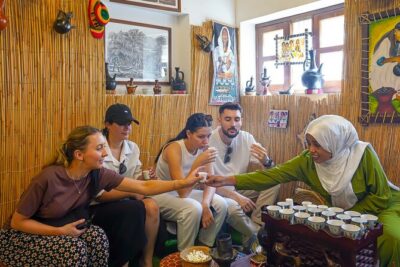
Old Town, Souks, Street Food, Guided Tour & Abra Ride
Read our review →Old Town, Souks, Street Food, Guided Tour & Abra Ride
Read our review →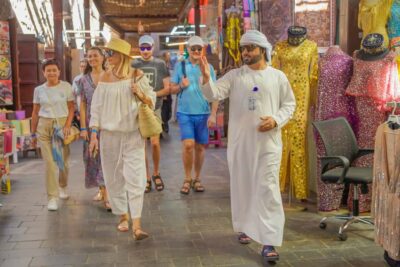
Old Town, Street Food, Creek, Souks, & Emirati House
Read our review →
Dubai’s Best Desert Safari: Live Show & Gourmet BBQ Dinner
Read our review →
Dubai Harbour Super Yacht Experience with gourmet & Drinks
Read our review →
Dubai Premium Desert Safari with Live shows & Gourmet Dinner
Read our review →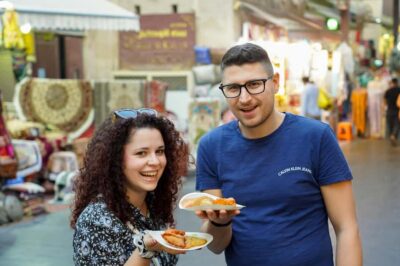
Old Dubai: Premium Guided Tour with Street Food & Abra Ride
Read our review →Browse the lists this tour appears in