
Reviewed · DESERT SAFARIS
Half Day Desert Tour
Bahrain’s southern side packs an unusual mix into a short drive: a Formula One circuit in the desert, a tree surrounded by sand, 4,000-year-old burial mounds, working pottery studios, and camels close enough for a good photo. This four-hour tour is less about one grand monument and more about seeing how modern Bahrain, ancient Dilmun, oil, religion, and desert life fit together.
I like the maximum of six people, which keeps the van small and gives you room to ask questions. I also like the local guiding style associated with Maher, Fadel, and Alya, with time for conversation rather than a hurried list of facts. The main consideration is that this is a driving-heavy outing, and the schedule gives some stops only 10 or 15 minutes.
The key reasons to consider this Bahrain tour
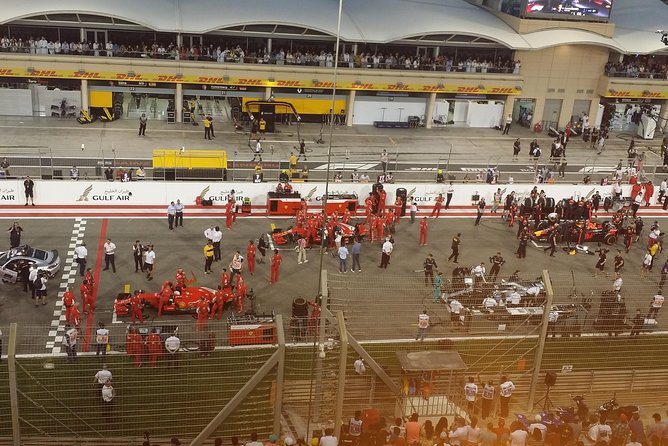
- Formula One in the desert: Stop at Bahrain International Circuit, the first circuit built in a desert setting, unless a race closure prevents access.
- A real look at local craft: A’ali’s pottery workshops preserve a working tradition linked with the Dilmun period.
- Ancient graves in open country: The Dilmun burial mounds offer a direct look at Bahrain’s archaeological past.
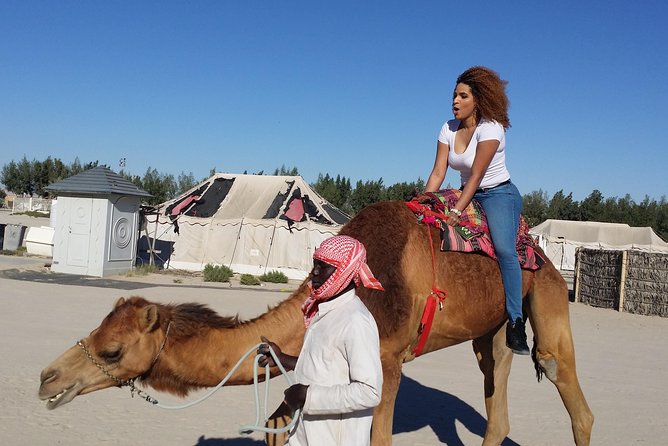
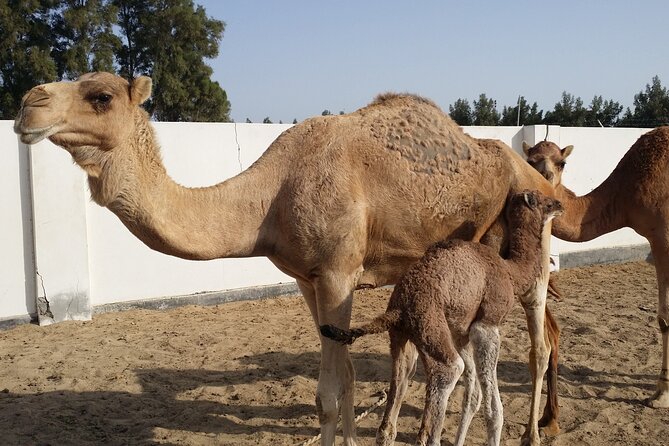
- A close camel encounter: The Royal Camel Farm in Zallaq is one of the most appealing stops for families and photographers.
- A compact group: With no more than six people, you get a more personal ride than on a large coach.
- A useful half-day format: You see southern Bahrain and still have most of the day free for Manama.
Why this four-hour route works
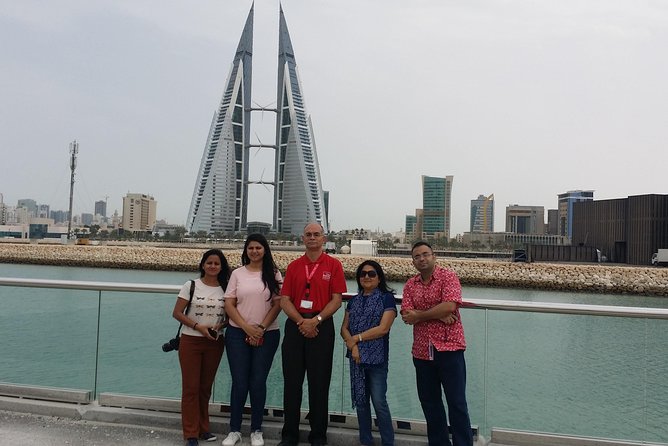
This is a good choice if you want context before spending the rest of your day in Manama. Bahrain is small enough for a half-day outing, but its most distinctive sights sit away from the central city. A local guide handles the driving and the order of stops, allowing you to see several different sides of the country without arranging separate taxis.
The tour costs $76 per person. That is not a bargain-basement outing, but the price includes an air-conditioned vehicle, bottled water, a professional local guide, live commentary, local fees, taxes, and pickup and drop-off from selected hotels. For a small group of up to six, the value is strongest when you want transportation and interpretation in one package.
You also get a practical benefit: the rest of your day remains open. You can pair the tour with Manama’s markets, museums, waterfront, or another planned activity rather than giving an entire day to sightseeing outside the capital.
The experience is not private. If the group fills, you will share the vehicle with up to five other people. That keeps the cost below a private tour, but it also means the route and timing are shared. Some flexibility is possible. One group had already visited the camel farm and was able to replace it with a dhow boat-building stop, so it is worth asking the guide politely if a change makes sense on the day.
More Desert Safaris in Bahrain:
- Manama: Bahrain City and Desert Tour with Transfers
★ 4.8 · 187 reviews - Bahrain City and Desert Tour
★ 5.0 · 115 reviews - Half-Day Desert Tour
★ 4.5 · 68 reviews
Bahrain International Circuit in 25 minutes
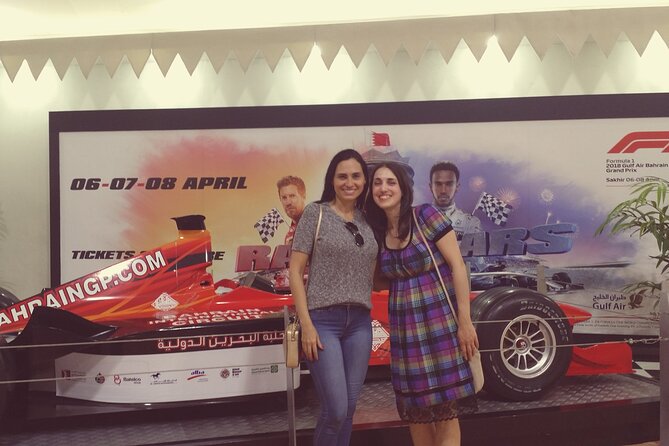
The first stop is Bahrain International Circuit, the first motor-racing circuit built in the desert. You have about 25 minutes here, and admission is listed as included.
For Formula One fans, this gives the tour an immediate modern reference point. The circuit is not simply a racetrack in isolation. It shows how Bahrain has placed itself on the international sporting map while building major facilities in a stark desert setting. You can take photographs and get a feel for the scale of the venue.
There is one important limitation. During the Formula One race, the circuit is closed. The tour still runs, but you should not expect access to the site during that period. If the circuit is a major reason for booking, check the race calendar and current operating conditions before paying.
The oil well that changed Bahrain
The next stop takes about 10 minutes and focuses on Bahrain’s first oil well, drilled in 1932 on the western side of the Arabian Gulf. The oil museum is currently closed, so this is primarily an outdoor photo and explanation stop rather than a museum visit.
That distinction matters. The stop is brief, but the guide can connect the well to Bahrain’s modern development and to Awali, the company village visited later in the route. You get a short piece of industrial history rather than a full exhibition.
Do not book this tour expecting every stop to offer an indoor attraction. Much of the interest comes from seeing places in context and listening to the guide in the vehicle or at the roadside.
The Tree of Life after 15 minutes
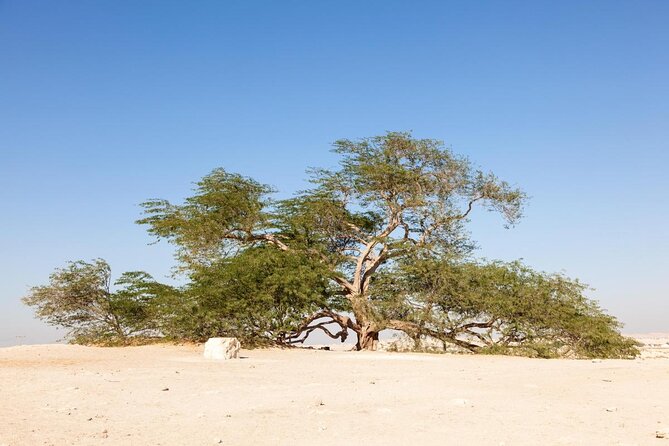
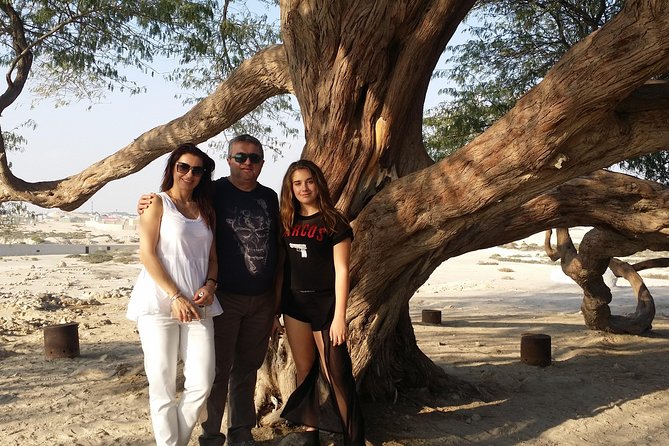
The Tree of Life is one of Bahrain’s most memorable natural sights because it grows alone in the middle of the desert. The tour allows roughly 15 minutes here.
The stop is simple. You see the tree, take photographs, and hear the local explanation of its age and survival. The tour describes it as more than 400 years old. Its isolation gives the place its appeal, but the experience depends partly on your expectations. This is not a large park or a long walk. It is a short visit to a single, striking tree.
I like the contrast with the nearby modern circuit and oil site. Within a short drive, you move from engineered speed to an old tree and then to ancient graves. That variety is the real strength of the route.
More half-day trips in Bahrain:
- Discover Bahrain in half day
★ 5.0 · 65 reviews - Dubai: Half-Day Desert Safari, Camel Ride, ATV & Dune Buggy
★ 4.9 · 19,221 reviews - Dubai: Half-Day Desert Safari, Camels, Quad Bike & Refreshments
★ 5.0 · 3,731 reviews - Dubai: Half-Day City Tour with Blue Mosque, Creek, and Souks
★ 4.8 · 3,059 reviews
Dilmun burial mounds and A’ali pottery
The burial mounds receive about 30 minutes, making this one of the more substantial stops. The graves are described as more than 4,000 years old and linked to Bahrain’s Dilmun past. You may also see a pottery-making workshop in the same general part of the tour.
These mounds can be easy to underestimate if you arrive without background. They are not presented as a grand palace with rooms to enter. Their value lies in the sheer age of the burial grounds and in the reminder that Bahrain was an important center long before the oil era.
The nearby A’ali pottery workshop adds a human element. Pottery makers still practice an old craft associated with the Dilmun civilization, and the stop gives you a chance to see the work rather than only hear about it in a museum. Several guests singled out the pottery workshop as the most memorable part of the morning, which makes sense if you prefer living traditions to quick photo stops.
The time is still limited. You will not have a long, unhurried craft lesson, and the exact workshop activity may vary. But this is one of the places where a local guide adds real value by explaining what you are seeing and helping the stop feel connected to Bahrain’s past.
Driving through Awali and West Riffa
The route continues through Awali, a village associated with Bahrain’s national oil company, BAPCO. You spend about 10 minutes passing through rather than touring a formal attraction.
This is a useful example of how the outing works. You are not simply collecting monuments. You are also seeing places shaped by Bahrain’s oil industry and modern administration. The drive gives the guide a chance to explain how the village fits into the country’s story.
The route also passes through West Riffa, described as Bahrain’s political capital. Again, expect a drive-through view rather than a scheduled walking visit. Keep your camera ready, but listen more than you photograph here. The information supplied about this section is brief, so its value depends on the guide’s commentary.
The Cathedral of Our Lady of Arabia
The cathedral stop lasts about 10 minutes. The Cathedral of Our Lady of Arabia is described as the biggest and newest Roman Catholic church in the Gulf region.
For a short tour, this is an unexpected addition. It broadens the picture of Bahrain beyond oil, desert, racing, and ancient graves. The church also reflects the country’s role as a place where different communities and religious traditions exist side by side.
Ten minutes is enough for a brief look and photographs, but not a full religious or architectural visit. Dress and behave respectfully, especially if services or worship are taking place. The tour provides the stop as part of the wider route rather than as a detailed church tour.
Camels at Zallaq for 20 minutes
The Royal Camel Farm, in Zallaq’s camel farm and endurance village area, is the final listed stop. You have around 20 minutes to see the camels at close range and take photos.
This is likely to be the most immediately appealing stop for children and anyone who enjoys animals. One guest described camel interaction as the most delightful part of the outing, and the route is designed to get you close enough for a personal photograph. The experience is more direct than simply spotting camels from a moving vehicle.
You should keep your expectations realistic. The information provided does not promise a camel ride, feeding session, or a formal demonstration. Think of it as a close visit to a working camel setting, with time to look and photograph.
The farm also gives the route a pleasant change of pace. After archaeological sites, industrial history, and city drives, the camels bring you back to the desert setting that shapes much of southern Bahrain.
The guide matters more than the timetable
The strongest part of this experience is likely to be the person in the driver’s seat. Maher is repeatedly associated with patient explanations, humor, cultural insight, and good organization. Fadel is described as able to answer questions across the route, while Alya is also named as a guide who handled communication and the experience well.
Guide availability is not guaranteed, so you should not book on the assumption that one particular person will lead your tour. Still, the operator’s style appears to favor conversation. That matters in Bahrain, where the meaning of a pottery workshop, an oil village, or a burial mound is not always obvious from a quick look.
The guide may also adjust the conversation to your interests. Families, first-time visitors, and people curious about daily life can ask about local customs, traditions, and modern Bahrain. One of the most useful features of a small group is the ability to ask those questions without addressing a full bus.
Transport, timing, and practical limits
Pickup is offered from selected hotels, with drop-off included as well. Airport pickup and pickup from remote areas more than 10 kilometers outside central Manama cost extra. There is no pickup from ports, so cruise passengers need to arrange their own way to the meeting point or confirm an alternative before booking.
The vehicle is air-conditioned, which is important for a route with several outdoor stops. Bottled water is included, and a face mask is listed among the inclusions. Children must be accompanied by an adult, and most people can participate.
The tour is advertised at approximately four hours. Since the stops are spread across southern Bahrain, part of your time is spent driving. That is not wasted time if you use it for questions and commentary, but you should not expect four hours of walking or hands-on activity.
Wear comfortable clothing suitable for warm outdoor stops and bring sun protection. The supplied details do not specify walking distances, so anyone with mobility concerns should ask the operator for current information before booking.
Confirmation is provided at booking. Free cancellation is available up to 24 hours before the start time for a full refund. Changes or cancellations inside that window are not accepted for a refund.
Who will get the most from this outing
I would choose this tour if you have one or two free days in Bahrain and want a guided introduction beyond Manama. It suits first-time visitors particularly well because it joins together several subjects that can otherwise feel scattered: Dilmun archaeology, oil, crafts, religion, motorsport, and desert life.
It also works well for solo visitors and couples who want company without joining a large coach. The six-person limit gives you a better chance to speak with the guide and may make it easier to request a sensible substitution if you have already seen one of the stops.
Families should find the camel farm and Formula One circuit appealing, though the burial mounds and oil well may hold less interest for younger children. The short stop times help keep the outing moving, but the amount of driving may still test very young children.
I would look elsewhere if you want a private vehicle, a slow photography trip, a dedicated archaeological tour, or a full visit inside the oil museum. The museum is closed, the tour is shared, and several stops are brief. This is a broad introduction, not a specialist day.
Should you book the Half Day Desert Tour?
Book it if you want a well-organized way to see southern Bahrain without giving up your entire day. The combination of a tiny group, air-conditioned transport, local commentary, pottery, ancient burial grounds, camels, and the Formula One circuit offers good variety for $76, especially when you value convenience and conversation.
Before booking, confirm hotel pickup, ask about the current circuit access, and remember that the oil museum is closed. If you want the most personal experience, ask whether a private tour is available. For a compact first look at Bahrain beyond the capital, this half-day route makes a sensible choice.
FAQ
How long does the Half Day Desert Tour last?
The tour lasts approximately four hours.
How many people can join the tour?
The tour has a maximum of six travelers. It is not a private tour.
Is hotel pickup included?
Hotel pickup and drop-off are included from selected hotels. Airport pickup and pickup from remote areas more than 10 kilometers outside Manama cost extra. There is no pickup from ports.
Is the Bahrain International Circuit always open during the tour?
No. The circuit is closed during the Formula One race, so access may not be available at that time.
Is the oil museum open?
No. The oil museum is currently closed, though the tour still visits the area of Bahrain’s first oil well.
What is included in the price?
The price includes bottled water, live commentary, a professional local guide, transport in an air-conditioned vehicle, local fees and taxes, selected hotel pickup and drop-off, and a face mask. Any additional request by the guest is not included.
Newest Bahrain trips on the site
- Bahrain City Tour-Private Tour★ 5.0 · 47 reviews
- From Manama: Bahrain Guided Trip★ 4.9 · 36 reviews
- Bahrain in a Day from City Lights to Desert Landscapes★ 4.9 · 34 reviews
- Bahrain Full-Day Highlights Tour:Manama,Desert&Tree of Life★ 5.0 · 21 reviews
- Bahrain Must-Try Food Tour (Manama Souq)★ 5.0 · 64 reviews
- Best Bahrain Tour – Select 1 of 9+ Private & Shared Tours★ 5.0 · 116 reviews
- Discover Bahrain in half day★ 5.0 · 65 reviews
- Full Day With Traditional Bahraini Lunch★ 5.0 · 110 reviews
Desert Safaris, compared.

Desert Safari, Quad Bike, Camel Ride & Al Khayma Camp
Read our review →
Desert Safari, Quad Bike, Camel Ride and Sandboarding
Read our review →
Red Dune Safari, Quad Bike, Camel Ride, BBQ Dinner
Read our review →
Dubai Red Dunes ATV, Camels, Stargazing & 5* BBQ Al Khayma Camp
Read our review →
Desert Safari with BBQ Dinner & Quad Biking Options
Read our review →
Half-Day Desert Safari, Camel Ride, ATV & Dune Buggy
Read our review →
Desert Safari, Camel Ride, Sandboarding, Quad Bike
Read our review →
Dubai Desert Safari – Camel Ride, Sandboarding & 30 Min Quad
Read our review →Browse the lists this tour appears in