
Reviewed · MUSEUMS
Dubai: Al Shindagha Museum Entry Ticket
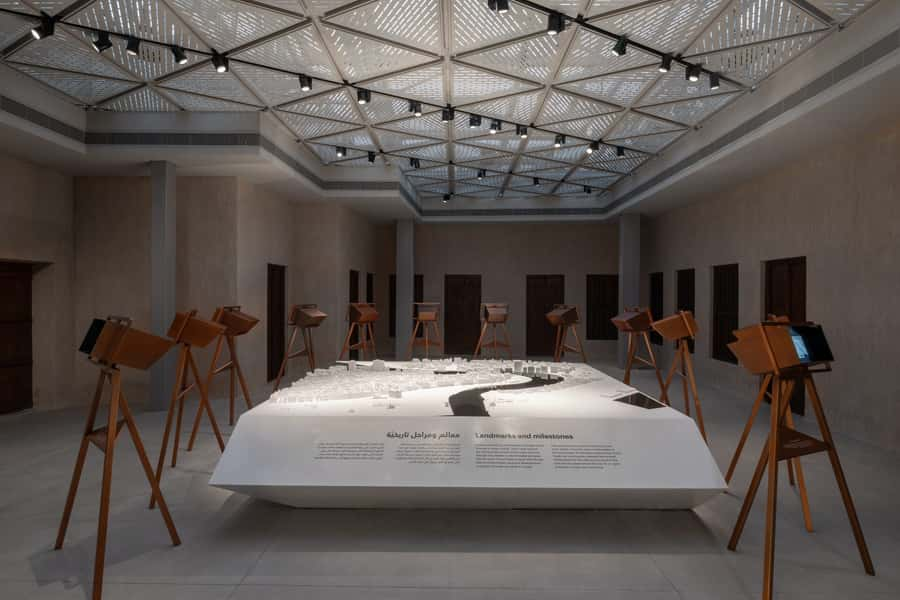
Al Shindagha Museum tells Dubai’s story through the homes, work, beliefs, and inventions that shaped it. The most rewarding part is the chance to move between more than 20 heritage houses, rather than treating the city’s past as one polished display.
I like the museum’s location beside Dubai Creek, where the setting connects naturally with the story of Dubai’s rise. I also like the mix of old buildings and modern interactive exhibits, including virtual reality and hands-on presentations. The main drawback is simple: there is a great deal to see, so a short visit may feel rushed.
I would set aside several hours if possible. The ticket is valid for one day, and the museum includes English, Arabic, Chinese, Russian, and French tour-guide support. A guide named Peter has received especially warm personal feedback, though a particular guide may not be guaranteed with every visit.
Key points to know before you go
- The museum spreads across Al Shindagha: You explore a historic neighborhood beside Dubai Creek, not just one gallery.
- Sheikh Saeed Al Maktoum Residence is a main stop: The former home of Dubai’s ruling family gives the museum a strong personal and political center.
- The exhibits cover everyday life: Look for houses devoted to perfume, jewelry, food, healthcare, faith, crafts, poetry, navigation, and the sea.
- Modern technology supports the old stories: Interactive installations and virtual reality help explain how Dubai changed.
- The $13 ticket can cover a full day: Value is strongest if you give the museum enough time rather than making a quick stop.
- The visit suits many ages: The Children’s Pavilion and multi-sensory displays give families more than static historical rooms.
Why Al Shindagha belongs on your Dubai plan
Dubai is often presented through skyscrapers, shopping centers, and grand engineering projects. Al Shindagha Museum gives you another way to understand the city. It focuses on the people, skills, trade routes, beliefs, and natural setting that helped modern Dubai take shape.
The museum occupies the Al Shindagha district on the banks of Dubai Creek. That location matters. Creek-side trade, movement by water, contact with other regions, and life in a demanding climate all form part of the story told inside the houses.
I like this approach because the museum is not limited to famous rulers or major buildings. It also looks at ordinary knowledge: how people made things, prepared food, cared for one another, traveled, worked at sea, and expressed themselves through poetry and adornment.
The museum presents the past as a process of adaptation. You see how progress came from practical choices and human skill, not just from oil wealth or modern construction. That makes the experience useful for anyone who wants context before visiting other parts of Dubai.
More Museum Visits in Dubai
- Dubai: Museum of the Future Admission Ticket
★ 4.3 · 21,464 reviews - Dubai: Old Town, Creek, Museums, Souks, & Street Food Tour
★ 4.8 · 10,816 reviews - Museum of the Future Tickets
★ 3.5 · 792 reviews
Entering a museum made of many houses
Al Shindagha is best understood as a group of connected heritage spaces. The experience begins at the Visitors Center, then continues through a large collection of exhibit houses. The provided information describes the museum as having 21 houses in one place and also refers to 22 unique exhibit houses, including Sheikh Saeed Al Maktoum Residence.
That count difference should not affect your planning. The useful point is that you are not walking through a single compact hall. You are visiting a broad museum district with more than 20 distinct areas, each built around a subject or period of Emirati life.
This format gives you variety, but it also creates a planning issue. If you spend too long at every display, you may not see the full range. If you hurry, you will miss the small details that make the houses worthwhile. I would begin by checking the layout and deciding which themes matter most to you.
The museum uses multi-sensory installations, interactive technology, workshops, tours, and training programs as part of its wider visitor experience. The ticket itself includes entry, while specific workshops or special activities may require separate arrangements if offered during your visit.
Sheikh Saeed Al Maktoum Residence and Dubai’s ruling family
One of the most important stops is Sheikh Saeed Al Maktoum Residence. It was originally the home of the Al Maktoum family and of Sheikh Saeed Al Maktoum, who ruled Dubai until 1958. He was also the grandfather of Sheikh Mohammed bin Rashid.
This house gives the museum a clear human center. Instead of learning about Dubai’s leadership only through dates and formal displays, you can connect that story with a residence. The building helps explain the setting in which decisions about Dubai’s future were made.
I would not treat the residence as the entire museum. It is an anchor, but the wider collection shows that Dubai’s growth depended on far more than its ruling family. Trade, maritime work, craft, food, faith, health, and community life all receive their own attention.
For first-time visitors, this is a good place to establish the basic story. Then the other houses can add detail and show how public decisions connected with daily life.
Dubai Creek and the birth of a city
The Dubai Creek: Birth of a City house focuses on the waterway that helped Dubai develop. The Creek is not just a scenic backdrop. It is central to the museum’s explanation of settlement, exchange, and movement.
The Trade and Journeys house expands this theme. It points toward the links between Dubai and the wider region, showing how travel and commerce shaped the city’s outlook. The Navigation house adds another practical layer by looking at how people found their way across land and sea.
These subjects work well together. I recommend treating them as one part of your visit, even though they are separate houses. First consider the Creek as a place of settlement and exchange. Then look at trade, journeys, and navigation as the skills that allowed people to reach beyond it.
The museum’s use of interactive displays is particularly useful here. Trade routes and movement can be difficult to understand through text alone. Digital or visual installations may help you see connections that would otherwise remain abstract.
A completely different sort of day out of Dubai:
- Dubai: Burj Khalifa Levels 124 & 125 Entry Ticket + Options
★ 4.3 · 90,891 reviews - Dubai: Desert Safari, Quad Bike, Camel Ride & Al Khayma Camp
★ 4.9 · 68,962 reviews - Dubai: Desert Safari, Quad Bike, Camel Ride and Sandboarding
★ 4.9 · 43,505 reviews - Dubai: Safari, Quad Bike, Camel Ride, and Buffet Dinner
★ 4.9 · 33,424 reviews
Life on land, water, and in the natural world
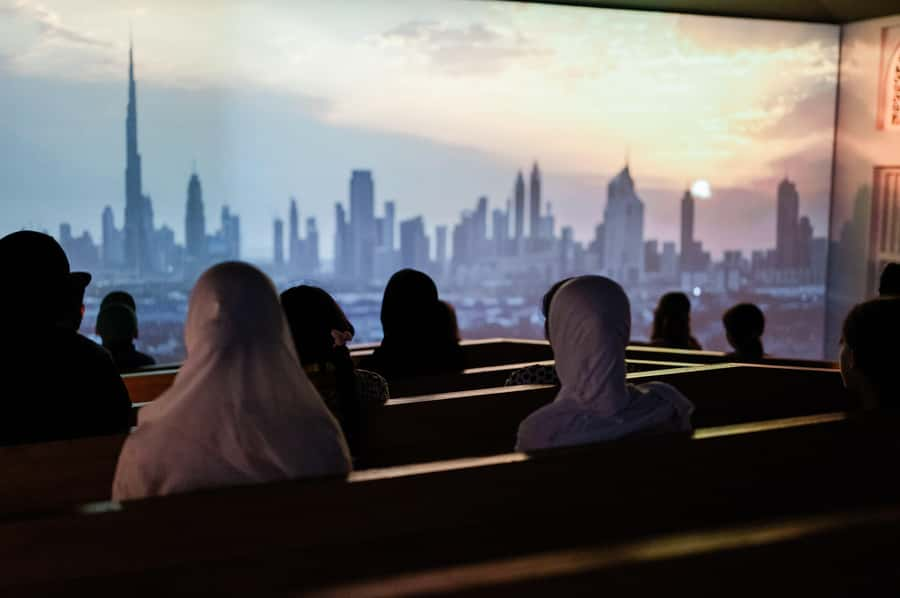
Several houses shift attention from commerce and leadership to the environment around Dubai. Life on Land, Water, Fauna and Flora, and Culture of the Sea explore different sides of the setting in which Emirati communities developed.
These exhibits help correct a common misunderstanding about Dubai’s past. The region was not simply an empty space waiting for modern construction. People had to understand the land, manage limited resources, work with the sea, and respond to local plants and animals.
Culture of the Sea is especially important within this group. It connects the water with work, travel, food, and identity. Navigation and trade then extend the story into movement and exchange.
I would give these houses more time than their titles might suggest. They provide the environmental context needed to understand why particular crafts, foods, tools, and occupations mattered. You might find that they are less immediately flashy than the technology displays, but they make the wider story more coherent.
Perfume, jewelry, crafts, and personal style
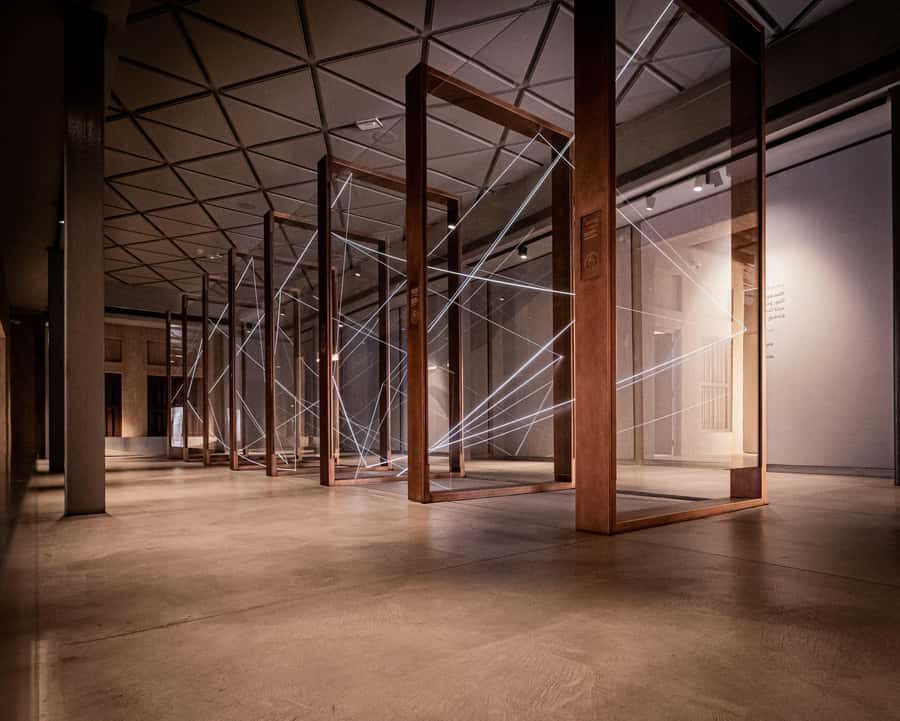
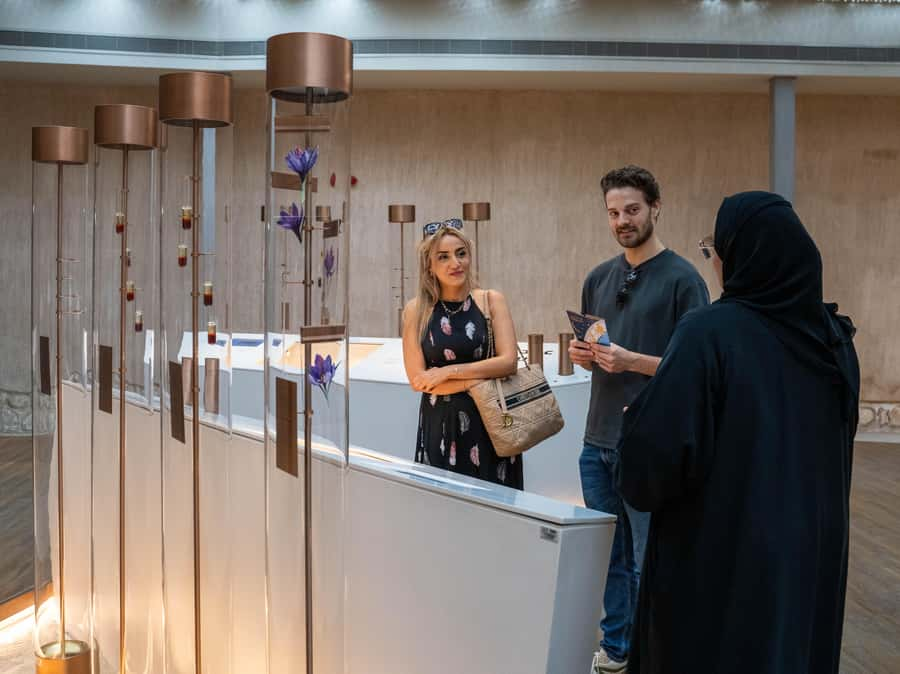
The Perfume House, Traditional Jewelry, Traditional Crafts, and Beauty and Adornment focus on objects that carry both practical and cultural meaning.
Perfume is an especially effective subject for a museum because it connects material, memory, presentation, and social custom. Jewelry can reveal taste, status, workmanship, and personal identity. Beauty and Adornment broadens the picture by showing how appearance and presentation fit into community life.
Traditional Crafts brings the focus to skilled making. This is where the museum’s emphasis on human ingenuity becomes concrete. You can think about the time, patience, and knowledge needed to produce useful or decorative objects before modern industrial systems changed daily work.
These houses should appeal to visitors who enjoy design and material culture. They also give families a way to engage with the past through recognizable objects rather than long political explanations. If you are photographing details, check the museum’s rules on site before taking pictures.
Food, healthcare, faith, and community
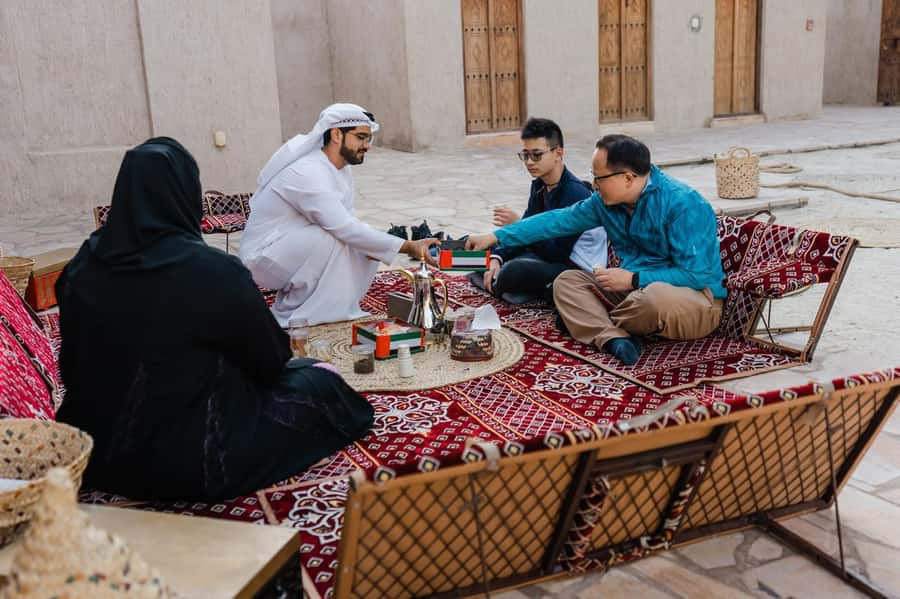
The museum also deals with subjects that make the past feel close to home. Traditional Food, Traditional Healthcare, People and Faith, and the Community Hall examine how communities looked after their bodies, homes, beliefs, and relationships.
Food is a practical entry point into culture. It shows what ingredients were available, how meals were prepared, and how people gathered. Traditional Healthcare offers a different kind of practical knowledge, focusing on ways people addressed illness and wellbeing before contemporary medical systems.
People and Faith brings attention to belief and daily practice. The Community Hall then shifts the focus toward shared life and social connection. Taken together, these houses explain that heritage is not only found in grand architecture. It also lives in habits, care, worship, and conversation.
This section may be especially useful if you are visiting Dubai with children or with relatives who want more than trade and government history. The themes are easy to connect with, even when the specific customs are unfamiliar.
Poetry, expression, and the Children’s Pavilion
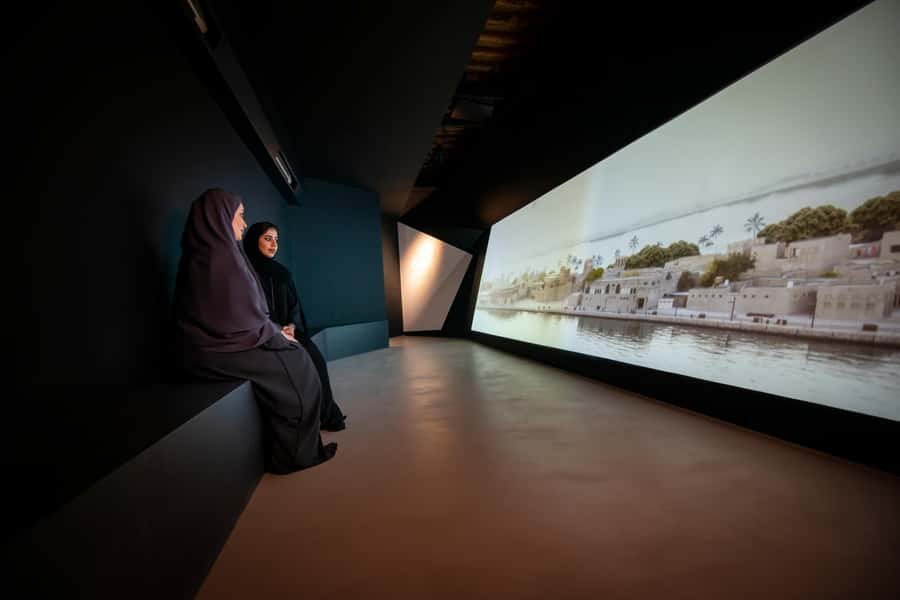
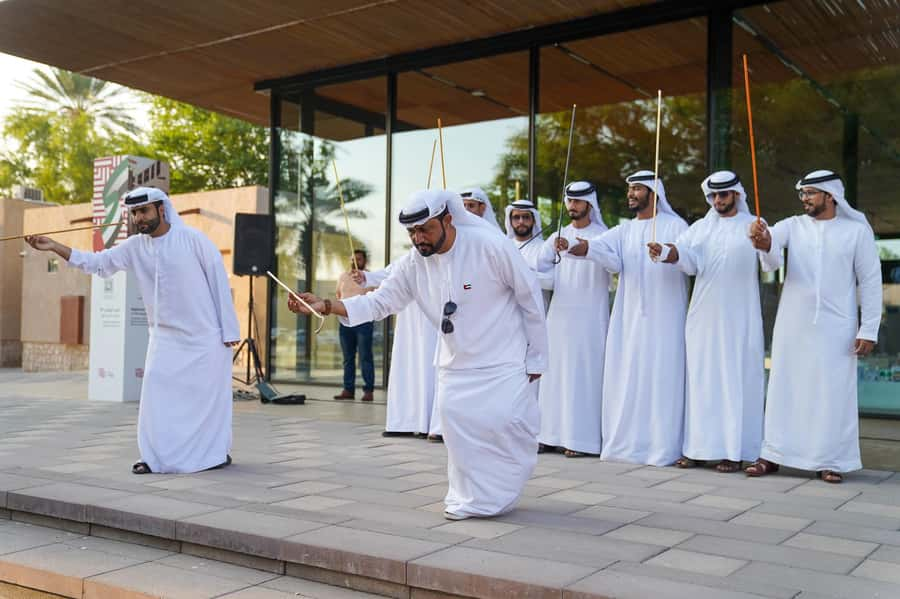
Expressions and Poetry show how Emirati identity has been communicated through creative work. These houses add an emotional and artistic side to the museum, balancing the more practical subjects of navigation, food, and crafts.
Poetry has a significant place in Arab cultural life, so its inclusion gives the museum room to discuss ideas and feelings that cannot be reduced to objects. Expressions can be read more broadly as a look at how people represent themselves and their communities.
The Children’s Pavilion gives younger visitors a more direct way into the material. A museum spread across many houses can be demanding for children, especially if they are expected to read every panel. A dedicated children’s space and interactive displays make the visit easier to share as a family.
I would still avoid trying to see everything at top speed. Choose a few houses that match your children’s interests, then add other sections if energy and attention hold up.
Modern technology inside historic surroundings
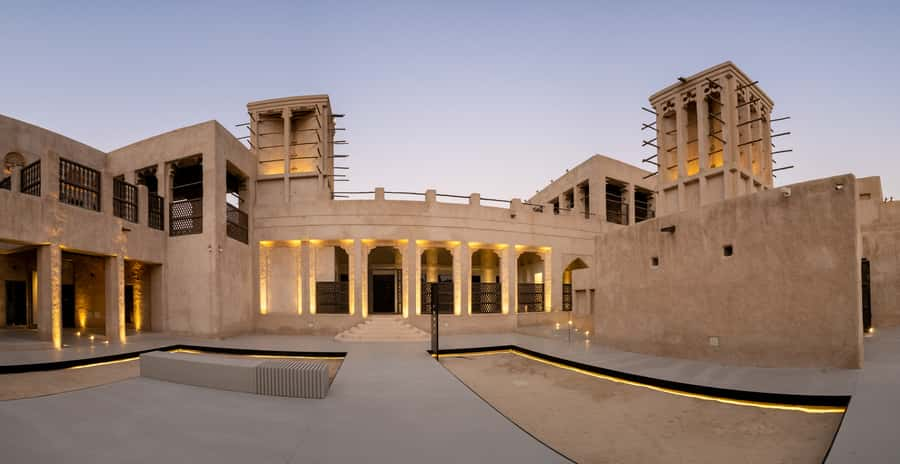
One of the museum’s strongest features is the contrast between heritage architecture and current presentation methods. The exhibits use multi-sensory interactive installations and virtual reality technology to bring subjects into clearer focus.
That approach can make the museum feel more accessible than a traditional collection of cases and labels. You are not left to construct every connection from written information. Visual and digital elements can show movement, place, process, and change.
The technology is not a replacement for the historic houses. Its value comes from helping you understand them. A virtual reality presentation about travel, trade, or the sea can add scale and motion to subjects that are difficult to picture in a room.
Still, technology is not the reason to buy the ticket on its own. The best experience combines the digital displays with the buildings, themes, and Creek-side setting. If you prefer quiet historic interiors and minimal screens, some sections may feel more modern than expected.
How long should you spend there?
The ticket is valid for one day, and that is useful because the museum has so many separate houses. The duration gives you freedom to set your own pace rather than forcing the entire visit into a fixed tour schedule.
A quick visit can introduce you to the architecture and a few major themes. It will not give you a fair sense of the museum’s full range. I would plan several hours if Al Shindagha is a priority, especially if you want to see the residence, Creek exhibits, sea culture, crafts, food, faith, and the Children’s Pavilion.
The museum may also work well as part of a broader day around Dubai Creek. Its location makes it a natural choice for people who want to combine modern Dubai with an older part of the city. The supplied details do not specify transportation, walking times between houses, opening hours, or a fixed tour timetable, so check those points before setting a strict schedule.
Guide languages, access, and the $13 value
The entry price is $13 per person. For a museum with more than 20 heritage houses and a full-day validity period, I consider that a fair price, provided you plan to spend enough time there.
The value is weaker if you only have a short gap between other activities. In that case, you may see only a small part of the museum. The price makes more sense when you use the day to explore several themes and take time with the interactive displays.
Tour-guide support is available in English, Arabic, Chinese, Russian, and French. That range helps international visitors follow the cultural and historical context without relying entirely on translated labels. A guide named Peter has been singled out for making one visit especially enjoyable, but you should not assume he will lead your particular visit.
The museum is wheelchair accessible. Free cancellation is available up to 24 hours before the visit, and you can reserve now while paying later. These policies are useful if your Dubai schedule is still changing, but the main decision should remain the amount of time you can give the museum.
Who will enjoy Al Shindagha most?
I would recommend this experience to you if you want to understand Dubai beyond its modern skyline. It suits history-minded visitors, families, architecture fans, and anyone interested in the daily life behind national identity.
It is also a good choice if you prefer to explore independently. The ticket does not require a tightly scripted excursion, and the one-day validity lets you choose your own pace. Guide languages add support if you want more explanation.
You may enjoy it less if you are looking only for a short, high-impact attraction or a single spectacular building. The museum rewards patience and curiosity. Its strength is the range of subjects and the way they connect, not one isolated display.
Should you book this museum ticket?
Book it if you can spare several hours and want a grounded look at how Dubai developed through trade, family life, craft, the sea, faith, food, and community. The Creek-side location, Sheikh Saeed Al Maktoum Residence, and modern interactive displays give the visit a useful balance of place, history, and technology.
Skip it if your schedule allows only a very brief stop or if you have no interest in cultural museums. For everyone else, $13 is sensible value, particularly when you use the full day and explore more than the headline residence.
FAQ
Where is Al Shindagha Museum located?
Al Shindagha Museum is located in the historic Al Shindagha neighborhood on the banks of Dubai Creek in the Emirate of Dubai, United Arab Emirates.
How much does the entry ticket cost?
The listed price is $13 per person.
How long is the ticket valid?
The ticket is valid for one day.
What is included in the ticket?
The ticket includes entry to Al Shindagha Museum.
How many heritage houses can I visit?
The museum is described as having 21 houses, while another description refers to 22 unique exhibit houses including Sheikh Saeed Al Maktoum Residence. In practical terms, you can expect more than 20 heritage houses.
Can I visit Sheikh Saeed Al Maktoum Residence?
Yes. Sheikh Saeed Al Maktoum Residence is included among the museum’s heritage houses. It was originally home to the Al Maktoum family and Sheikh Saeed Al Maktoum.
Which guide languages are available?
Guide languages include English, Arabic, Chinese, Russian, and French.
Is the museum wheelchair accessible?
Yes, the museum is wheelchair accessible.
Can I cancel my booking for a refund?
Yes. You can cancel up to 24 hours in advance for a full refund.
Newest Dubai trips on the site
- Dubai Desert Safari with Camel Ride, Show, BBQ and Transfers★ 5.0 · 46 reviews
- Dubai Desert Excursions with BBQ Dinner & Live Entertainment★ 5.0 · 25 reviews
- Dubai Desert Safari with Belly Dance, Fire Show and Tanura Show-The Full Package★ 5.0 · 95 reviews
- Dubai Evening4x4Desert Safari BBQ Dinner,4 Live Shows,Camel Ride★ 5.0 · 141 reviews
- Dubai: Desert Safari with Camel Ride & Dune Bashing★ 4.0 · 22 reviews
- Private Evening Desert safari with BBQ Dinner & Entertainment★ 5.0 · 45 reviews
- Dubai Desert Safari with BBQ and 4WD Land Cruiser Dune Bashing★ 5.0 · 133 reviews
- Polarize Dune Buggy 1000cc in Red Dunes Desert★ 5.0 · 26 reviews
Museums, compared.
Old Town, Creek, Museums, Souks, & Street Food Tour
Read our review →
Abu Dhabi Grand Mosque & Louvre Museum Full-Day
Read our review →
Abu Dhabi City Tour, Grand Mosque, Emirates Palace & The Louvre
Read our review →

Abu Dhabi Day Tour with Grand Mosque & Louvre Museum
Read our review →
Future Museum, Burj Al Arab, and Dubai Frame Tour
Read our review →Browse the lists this tour appears in