
Reviewed · DESERT SAFARIS
Sunset desert safari tour in Salalah(private tour)
The most unusual part of this Salalah day trip is how it links frankincense country with the enormous Rub al Khali. You begin among ancient trees and caravan routes, then finish on tall orange dunes as the sun drops across southern Oman. I like the mix of archaeology and open desert, and I like that a private vehicle gives your group room to stop for photos and questions.
I also like the choice of English or Italian guiding. Mohammed and Mohamed are praised for careful driving and clear explanations, while Ibrahim has been especially helpful for Italian speakers. The main drawback is the long amount of driving. Eight hours sounds generous, but the stops account for about six and a half hours, so the rest is spent on the road.
Key points to know before booking
- Wadi Dawkah starts the day with frankincense trees: You see the trees that helped shape Oman’s trade and culture.
- Ubar adds a real archaeological stop: The ancient site recalls the frankincense caravans that crossed this region.
- Black camels provide an unusual Thumrait pause: This is a quick, distinctly local part of the route.
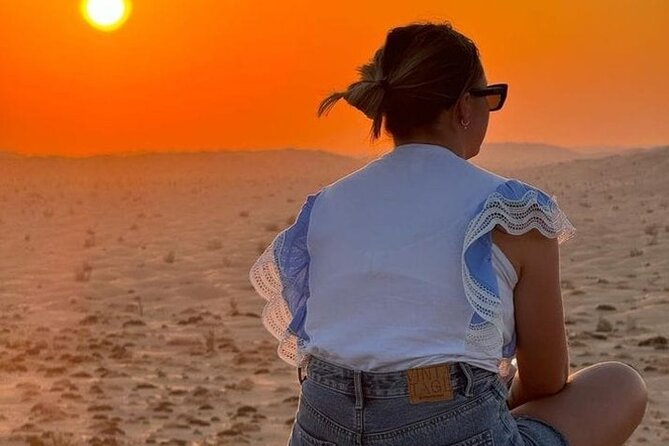
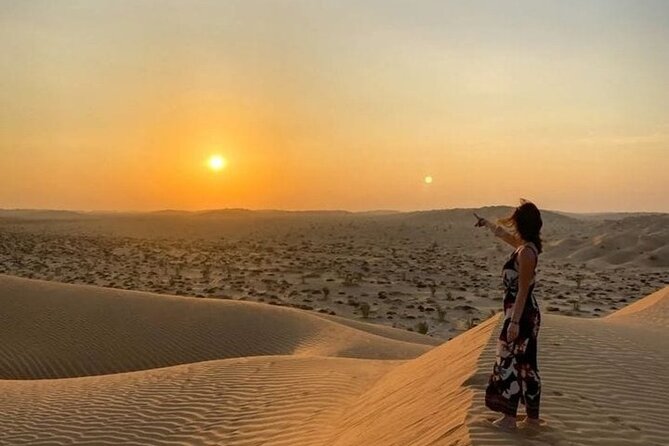
- The Rub al Khali sunset is the grand finish: Expect huge dunes, quiet, and plenty of time for photographs.
- Private touring changes the pace: Only your group takes part, with more flexibility than a large coach excursion.
- The $125 price buys a full day, not just a sunset drive: You are paying for a long route, private transport, guiding, and several very different stops.
Why this Salalah route feels different
Many desert outings begin and end with sand. This one gives you a fuller picture of Dhofar, the southern Omani region around Salalah. You start at Wadi Dawkah, where frankincense trees grow in a dry valley, then pass through Thumrait and continue to the remains of Ubar, an old stopping point for frankincense caravans.
Only after those cultural and historical stops do you reach the Rub al Khali. That order matters. By the time you arrive at the dunes, you have some context for the trade routes and the plant that once made this part of Arabia famous.
I like this progression because it prevents the desert from feeling like a single photo stop. You get trees, mountains, farms, a village, archaeology, camels, and sand in one long afternoon. It is a good choice if you want more from Salalah than a quick drive to watch sunset.
The private format is another advantage. Only your group participates, so you can ask questions without holding up a busload of people. Guides such as Mohammed and Mohamed have been praised for safe driving on the highway and among the dunes. Ibrahim is a useful name to note if you need Italian, since he speaks it well and has guided Italian-speaking groups.
The tradeoff is distance. Ubar is about 170 kilometers north of Salalah, and the Empty Quarter is far beyond the city’s usual coastal sights. You should enjoy long drives and broad views from the window. This is not a compact excursion with one short transfer between attractions.
More Desert Safaris in Oman
- Sunset Desert Safari Salalah Tour in Rub Al Khali – Empty Quarter
★ 5.0 · 91 reviews - Salalah: Sunset Desert Safari – Rub Al Khali – Empty Quarter
★ 4.6 · 79 reviews - Empty Quarter Desert Sunset tour
★ 5.0 · 55 reviews
Wadi Dawkah and the frankincense trees
The first stop lasts about an hour and a half at Wadi Dawkah. The valley is part of the UNESCO-listed Land of Frankincense area, and the attraction here is simple: ancient frankincense trees set against a dry, rugged setting.
These are not neatly planted garden trees. Their branches are twisted and irregular, with shapes that look especially striking against the mountains and bare ground. Some are believed to be centuries old. Your guide explains the tree’s place in Omani life and the value of frankincense in the region’s past.
This stop gives you a useful introduction to the rest of the day. Frankincense was not merely a pleasant scent. It helped support a trading network that connected southern Oman with distant markets. The tree also remains part of Omani identity, so you are looking at both a natural feature and a piece of local culture.
Allow yourself time to study the trees rather than rushing straight to photographs. Their shapes are the point. The setting can feel stark, particularly compared with Salalah’s greener areas during the khareef season, but that contrast is part of the appeal.
You receive about 90 minutes here, and admission is included. That is enough time for an explanation, a walk around the trees, and photographs without turning the stop into a long hike. If you have limited mobility, the information provided says most people can participate, but no detailed surface or walking-distance information is given. Ask the operator if you need a precise answer before booking.
Thumrait, karak tea, and black camels
The route continues to Thumrait, where the planned stop lasts about an hour. The town provides a change of scene, and the day includes local Omani karak tea. Karak is a strong, spiced milk tea, and taking time for it gives the trip a more human scale after the open valley.
The stop also offers a chance to see black camels. These are not the pale dromedaries most people picture when they think of Arabia. Their darker coloring makes them an unusual sight, and the chance to encounter them adds a local detail that a standard dune ride might skip.
The information does not promise a formal camel activity, camel riding, or a guaranteed close encounter. Think of this as a stop to see the animals, not a camel safari. That distinction matters if you are booking mainly for an animal experience.
I like the balance here. You are not being hurried from one major attraction to another. Tea and camels make the middle of the day feel connected to ordinary life in the region. At the same time, Thumrait is not presented as a large sightseeing center, so keep your expectations focused on the local pause rather than a long list of attractions.
Ubar and the old frankincense road
The third stop is the Ubar Archaeological Site, also written as Wubar, at Al Shisr. The journey from Salalah is long, but this is the stop that gives the desert route its historical weight.
Ubar was once linked to the frankincense caravans that crossed southern Arabia. The remains offer a glimpse of an old stopping point where trade, water, and movement through the desert came together. You will not be visiting a complete ancient city. The value is in seeing the site in its remote setting and understanding how people once crossed this difficult region.
Plan for about an hour and a half here, with admission included. Your guide can help connect the visible remains to the wider story of frankincense routes. That explanation is important because the ruins alone may not be easy to interpret.
This is also where the tour’s long driving time starts to make more sense. Ubar is not a convenient add-on near Salalah. Reaching it takes commitment, but it lets you visit an archaeological site connected to the very product you saw growing at Wadi Dawkah.
If you prefer a relaxed day with time to look closely, the 90-minute allocation works well. If you want a rapid list of sights, the road time may feel excessive. I would choose this tour for the connection between places, not simply for the number of stops.
More Desert Safaris in Salalah:
- Luxury Overnight Desert Safari in Salalah
★ 4.7 · 31 reviews - Dubai: Desert Safari, Quad Bike, Camel Ride & Al Khayma Camp
★ 4.9 · 68,962 reviews - Dubai: Desert Safari, Quad Bike, Camel Ride and Sandboarding
★ 4.9 · 43,505 reviews - Dubai: Red Dune Safari, Quad Bike, Camel Ride, BBQ Dinner
★ 4.9 · 32,185 reviews
Entering the Rub al Khali before sunset
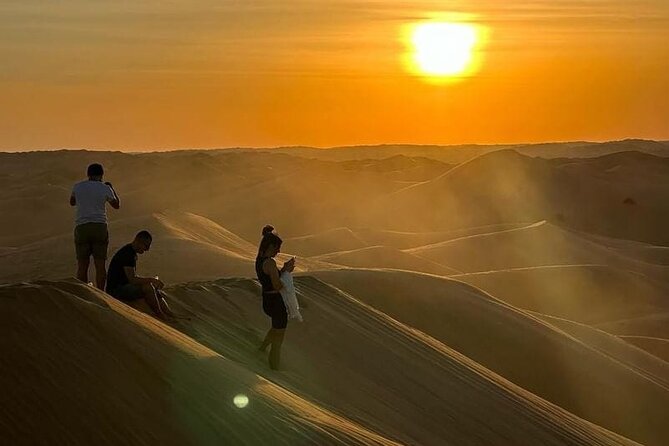
The final stop lasts about two and a half hours in the Empty Quarter, or Rub al Khali. This is the part most people picture when they hear desert safari: broad dunes, wind-shaped ridges, silence, and a sunset with little to interrupt the view.
The Rub al Khali is described as the world’s largest sand desert, and some dunes in this part of Oman rise to about 250 meters. That scale is hard to grasp until you are standing among the dunes. The sand does not feel like a small recreational patch beside a road. It stretches outward with a powerful sense of space.
Your vehicle takes you among the dunes, and the guide helps you find good points for photographs. The private setup matters here. A guide can give your group time to enjoy the quiet, rather than moving according to a large convoy’s fixed schedule.
The sunset is the main event. Light changes quickly across the dune faces, shifting from bright gold to softer orange and red. Bring patience. The best part may be the minutes after the sun disappears, when the sand loses its glare and the desert becomes calm and cool in tone.
One useful detail from the experience is that a guide may also stop for stargazing if conditions allow. Ibrahim did this for one group, turning the end of the outing into more than a sunset photograph. Do not treat this as a guaranteed astronomy session, but it shows how a private tour can adapt when the timing and weather cooperate.
The tour description also connects the Empty Quarter with Bedouin life. Your guide can help you understand how people have lived and traveled in such a demanding setting. The day is not only about driving over dunes. It is about seeing how trade routes, animals, water, and movement shaped this part of Oman.
The guide and language can shape the day
The tour runs in English or Italian. That is worth checking carefully when you book, especially if you want detailed explanations at Wadi Dawkah and Ubar rather than simple transport.
Mohammed is praised for his driving, courtesy, and explanations about the country and its people. Mohamed is described as a young Omani guide who speaks Italian very well and who contacted a group through WhatsApp soon after a late booking to confirm the departure time and arrangements. Ibrahim is also praised for precise explanations, beautiful desert stops, and an extra pause to see the stars.
Guide assignments can change, so you should not assume a particular person is guaranteed unless the operator confirms it. Still, these names give you a sense of the guiding style available: personal contact, careful driving, cultural explanation, and attention to the timing of the sunset.
Because the tour is private, your guide is not only delivering commentary. The driver controls the pace and handles the long highway section and dune roads. That makes driving standards especially important. The available feedback consistently gives strong marks to the guides in this area.
Eight hours, a 1 pm start, and the real pace
The advertised start is 1:00 pm, with the full outing lasting about eight hours. That schedule is built around reaching the Rub al Khali in time for sunset, so the day begins in the early afternoon and finishes later in the evening.
The listed stops total approximately six and a half hours:
- Wadi Dawkah: 1 hour 30 minutes
- Thumrait: 1 hour
- Ubar: 1 hour 30 minutes
- Rub al Khali: 2 hours 30 minutes
The remaining time is for travel. This is a crucial point when deciding if the tour suits you. You will spend a meaningful part of the day seated in the vehicle, traveling between widely separated places.
That driving is also what makes the route possible. You cannot see Wadi Dawkah, Ubar, black camels, and the Empty Quarter in one short loop from Salalah. I would pack water, keep your phone charged, and wear comfortable clothes for changing temperatures. These are practical suggestions for an eight-hour outing, not promises about what the operator supplies.
Pickup is offered, and the meeting information gives a 1:00 pm start. The tour is available as a mobile ticket, and confirmation is received when you book. Public transportation is nearby, though the experience itself is built around private vehicle transport.
Is $125 per person good value?

At $125 per person, this is not the cheapest way to see a sunset in the desert. The price makes more sense if you value the full route rather than only the final two hours.
You are covering a private eight-hour outing with several distant stops, guiding in English or Italian, highway and dune driving, the Wadi Dawkah and Ubar admissions, and time in the Rub al Khali. The private format is particularly important if you are traveling as a small group and want your own vehicle and schedule.
The value is weaker if your main goal is simply to watch the sun set over sand. A shorter local excursion would likely be a better match, though no alternative price is provided here. This tour is aimed at people who want frankincense, archaeology, camels, and dunes in one day.
Tea is part of the planned experience at Thumrait, but the provided details do not specify a meal, bottled water, or other refreshments. Check what is included before you pay, especially because the day is long and the route is remote.
The booking pattern suggests that people often reserve about 14 days ahead. You may not need to book that early in every season, but advance planning is sensible if you need a particular date, language, or guide arrangement.
Who should book this private safari?
I would recommend it to you if you enjoy a full day with a strong sense of place. It suits couples, families, and small groups who want a private vehicle, personal guiding, and the freedom to linger at the dunes.
It is also a good fit if you care about the story behind the scenery. Wadi Dawkah and Ubar give the sunset a reason to exist within the route. You are not simply driving out to take a picture. You are following a chain from the frankincense tree to the caravan road and then into the desert.
You may want another option if you dislike long drives, need a tightly packed schedule, or care only about sunset. The desert stop is spectacular in scale, but the road time is unavoidable. The trip also depends on good weather. If conditions force cancellation, you are offered another date or a full refund.
Free cancellation is available up to 24 hours before the start time. Inside that window, the payment is not refunded and changes are not accepted. Service animals are allowed, and the activity information says most people can participate, though you should ask about specific mobility needs.
Should you book the Salalah sunset desert safari?
Book this tour if you want the whole southern Oman story, from frankincense trees and caravan routes to black camels and enormous dunes. The private format, careful guides, English or Italian options, and long sunset window give it real value for a full day.
Skip it if your priority is a short, inexpensive sunset outing. The route is long, and much of the day is spent traveling. For the right kind of visitor, though, that distance is the point: it takes you far beyond Salalah and gives the desert a cultural setting that a simple dune drive cannot provide.
FAQ
Where does the tour take place?
The experience begins in Salalah, Oman, and travels to Wadi Dawkah, Thumrait, the Ubar Archaeological Site, and the Rub al Khali desert.
What time does the tour start?
The listed start time is 1:00 pm.
How long does the experience last?
The tour lasts approximately eight hours.
Is this a private tour?
Yes. Only your group participates in the activity.
What languages are available?
The tour is available in English or Italian.
What can I see at Wadi Dawkah?
You can see ancient frankincense trees and learn about their historical value and connection to Omani culture.
Will I see black camels?
The itinerary includes a stop around Thumrait where you might see black camels. The details do not state that camel riding is included.
Is admission included at every stop?
Admission is included at Wadi Dawkah and the Ubar Archaeological Site. Thumrait and the Empty Quarter are listed with no admission fee.
Can I cancel for a refund?
You can cancel up to 24 hours before the start time for a full refund. Cancellations or changes made less than 24 hours before the start time are not refunded or accepted.
Newest Salalah trips on the site
- Salalah: Wadi Derbat, Jabal Samhan, & Sinkhole Private Tour★ 4.9 · 42 reviews
- Luxury Overnight Desert Safari in Salalah★ 4.7 · 31 reviews
- Historical Salalah City Tour★ 4.7 · 22 reviews
- Caribian Orient (Swiming at Fazayeh Beach )★ 4.9 · 27 reviews
- East Salalah Mountain Safari★ 5.0 · 43 reviews
- Private Guided Tour to West Beaches of Salalah★ 5.0 · 50 reviews
- West Salalah: Caribbean of the Orient Fazayah Beaches & City★ 4.5 · 60 reviews
- Salalah: Wadi Darbat, Jabal Samhan, Baobab, Mirbat Sand Dune★ 4.6 · 178 reviews
Desert Safaris, compared.

Desert Safari, Quad Bike, Camel Ride & Al Khayma Camp
Read our review →
Desert Safari, Quad Bike, Camel Ride and Sandboarding
Read our review →
Red Dune Safari, Quad Bike, Camel Ride, BBQ Dinner
Read our review →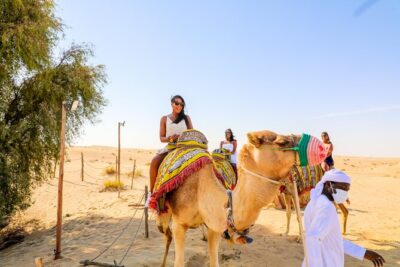
Dubai Red Dunes ATV, Camels, Stargazing & 5* BBQ Al Khayma Camp
Read our review →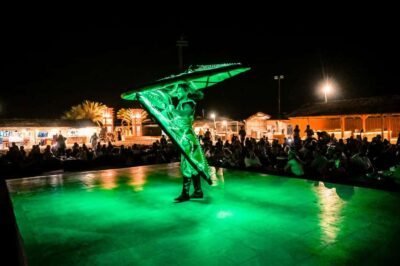
Desert Safari with BBQ Dinner & Quad Biking Options
Read our review →
Half-Day Desert Safari, Camel Ride, ATV & Dune Buggy
Read our review →
Desert Safari, Camel Ride, Sandboarding, Quad Bike
Read our review →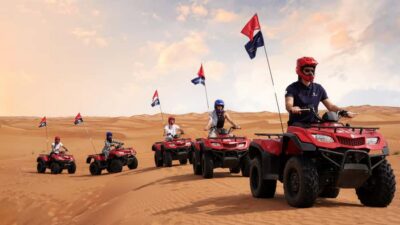
Dubai Desert Safari – Camel Ride, Sandboarding & 30 Min Quad
Read our review →Browse the lists this tour appears in