
Reviewed · BETHLEHEM TOURS
Hebron and Bethlehem Private Tour
The most striking part of this day is the way it joins sacred places with present-day life. You move from the Tomb of the Patriarchs in Hebron to Bethlehem’s Nativity Church, then on to glass workshops, olive wood carving, Aida Camp, and the separation wall. Ancient faith and modern politics share the same eight-hour itinerary.
I like the private format, especially for a politically sensitive region where you may want to ask direct questions and set the pace. I also like the local focus: Hazem is known for clear explanations, prompt communication, clean transport, and taking people to local restaurants and craft workshops. The main drawback is the early meeting arrangement: you must reach Bethlehem 300 Checkpoint yourself, and lunch, drinks, and transport outside Bethlehem are not included.
Key points at a glance
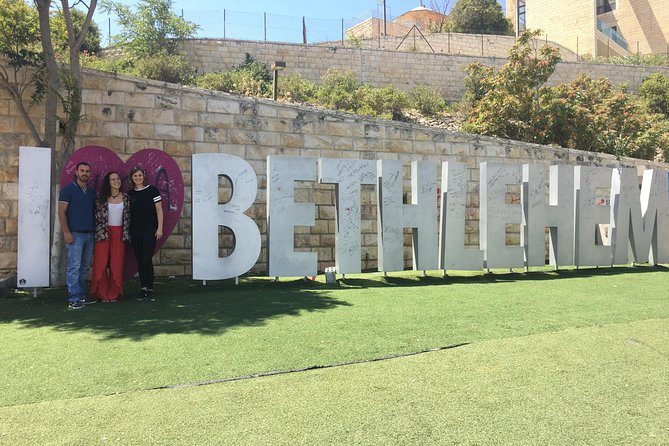
- Hebron’s Tomb of the Patriarchs: Visit the Abraham Mosque, one of the West Bank’s most important religious and political sites.
- Two major UNESCO sites: See the Tomb of the Patriarchs and Bethlehem’s Church of the Nativity in the same day.
- Local craft traditions: Watch Hebron glass and pottery work, then learn how Bethlehem olive wood carvings are made.
- A clear view of daily pressures: Aida Camp and the separation wall add present-day context to the historic sites.
- Private transport for up to four: The $550 group price works out to $137.50 per person for four people.
- A guide-led experience: Hazem’s strengths are history, religion, geopolitics, local life, and flexible conversation.
Why this day is different from a standard Bethlehem visit
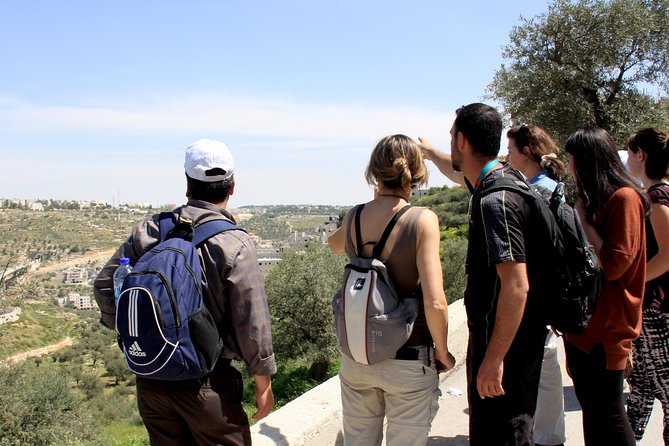
Many day trips to Bethlehem concentrate on religious landmarks and leave it at that. This one gives you a broader picture. You see holy places, but you also enter Hebron’s Old City, watch local artisans at work, and spend time with the physical signs of separation and displacement.
That mix is valuable because the region cannot be understood through churches alone. A guide can explain the Biblical traditions surrounding the sites, then help you read the modern streets, checkpoints, restricted movement, and divided communities around them.
The private setting matters here. You travel with only your own group, up to four people, in an air-conditioned vehicle. You can ask Hazem to explain a difficult point again, spend longer at a site that interests you, or keep moving if a workshop is not your thing.
Hazem receives especially strong praise for his communication and teaching style. He speaks English well, explains complicated subjects in a clear way, and brings humor into a serious day. His past tours have covered religion, geopolitics, the establishment of Israel, and ordinary Palestinian life, so you can expect more than a list of dates and names.
Still, this is not a carefree sightseeing loop. Hebron and Aida Camp deal with conflict, occupation, access restrictions, and displacement. You should book it because you want to understand those subjects, not because you want to avoid them.
A few more Bethlehem trips worth comparing
- From Tel Aviv: Jerusalem and Bethlehem Guided Day Trip
★ 4.3 · 1,316 reviews - Day Tour to Jerusalem and Bethlehem from Tel Aviv
★ 4.5 · 720 reviews - From Jerusalem: Half-Day Bethlehem Guided Tour
★ 4.7 · 568 reviews
Starting at Bethlehem 300 Checkpoint
The tour begins at Checkpoint 300 from the Bethlehem side, with a meeting point listed at Bethlehem Road in Jerusalem. This is the most important practical detail to settle before booking. The tour does not include hotel pickup outside Bethlehem, so you need to arrange your own way to the checkpoint.
Bring a current, valid passport. It is required on the day, and border and checkpoint arrangements can matter more than the printed schedule. Confirmation is provided at booking, and it is wise to keep the operator’s contact details handy in case you need help finding the meeting point.
The day lasts about eight hours, generally from 9 a.m. to 5 p.m. The vehicle is private and air-conditioned, which makes a real difference during a full day that combines driving and walking.
The tour operates in all weather. Wear practical shoes and clothing suited to the forecast. You will walk through an Old City, visit religious buildings, and spend time outdoors at the wall and refugee camp.
Two hours in Hebron’s Old City
The first major stop is Hebron, where you walk through the Old City and visit the Abraham Mosque, also known as the Tomb of the Patriarchs. The site is associated with Abraham, Isaac, Jacob, Sarah, Rebekah, and Leah, making it sacred to Judaism, Christianity, and Islam.
The building is also called the Cave of the Patriarchs. Its importance is not only religious. It is tied to the political division of Hebron and to the difficult access rules that shape daily life in the city.
Plan for about two hours here. That is enough time for a proper introduction rather than a quick photograph from outside. Your guide can place the mosque, the Old City, and the surrounding divisions into a wider story about faith, control, and contested space.
Dress respectfully for a religious site. Specific entry arrangements can change, so follow your guide’s advice on clothing, timing, and behavior. The visit may feel emotionally heavy, especially if you are new to the political situation. That is part of the value, but it is also why this stop suits people who want context rather than a polished sightseeing experience.
The walking portion is manageable for most people, but you should be comfortable on city streets and prepared for a long day on your feet. The tour description says most people can participate, yet the private format does not remove the ordinary demands of walking through an old urban district.
Hebron glass, pottery, and a working craft tradition
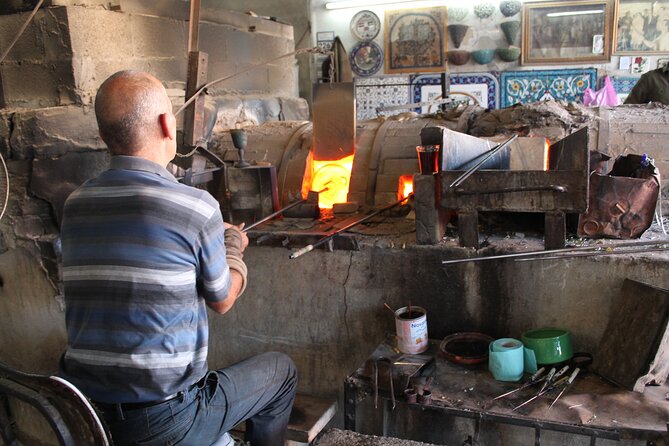
After the Old City, you visit a local glass and pottery workshop for about 20 minutes. Hebron glass and ceramics are traditional local crafts, and this short stop shows you how objects are made rather than placing finished souvenirs in front of you without explanation.
Do not expect a long formal class. Think of it as a close look at an established craft, with time to learn about the production process and browse if you wish. The visit is included, and there is no admission charge listed.
This is one of the day’s useful small details. Craft workshops connect the political discussion to ordinary livelihoods. You are not only hearing about the West Bank as a place of conflict. You are seeing the skill, trade, and local business that continue alongside it.
If you want to buy something, ask about prices and shipping before committing. The supplied details do not promise shipping services or set shopping time, so treat purchases as optional rather than part of the main tour.
A completely different sort of day out of Bethlehem:
- Jerusalem and Bethlehem Day Tour from Jerusalem
★ 4.5 · 258 reviews - Travel to Bethlehem Half Day Guided Tour from Jerusalem & TelAviv
★ 5.0 · 239 reviews - Ashdod Shore Excursion: Jerusalem and Bethlehem – for cruise ship guests only
★ 4.5 · 149 reviews - From Ashdod Port: Jerusalem and Bethlehem Day Trip
★ 4.0 · 111 reviews
Shepherd’s Field and Bethlehem’s Christian story
The next stop is the Shepherd’s Field Chapel, also called the Shepherd’s Sanctuary. The site is linked to the Gospel story in which an angel announces the birth of Jesus to shepherds.
You have about 30 minutes here. That is enough for a focused visit and explanation, though not a leisurely study of every feature. The chapel gives the day a quieter religious pause before the larger church complex in Bethlehem.
This stop works well for people interested in Christian pilgrimage, Biblical geography, or the way sacred traditions shape local identity. It also helps connect Bethlehem’s major church to the wider story of the Nativity.
Two hours at the Church of the Nativity
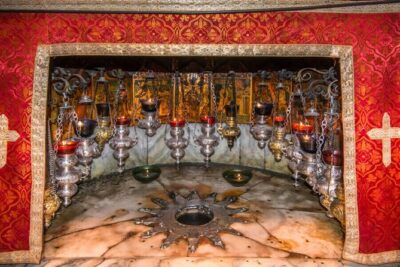
Back in Bethlehem, the central visit is the Church of the Nativity, the site traditionally identified as the birthplace of Jesus. It is UNESCO-listed and one of the world’s most important Christian pilgrimage destinations.
The two-hour block also includes Saint Catherine Church, Saint Jerome’s Cave, and the Milk Grotto Church. That makes this more than a quick look at the main basilica. You get time for several connected religious sites and for Hazem to explain their traditions and place in Bethlehem’s Christian life.
The Church of the Nativity can be busy, and the pace of the visit may depend on access and conditions at the site. The tour does not promise that every part will be equally quiet or that entry lines will disappear. That is worth remembering if you are planning a tightly timed onward journey.
Lunch is optional and not included. The suggested meal is traditional hummus and falafel at a local restaurant. I would budget for food and drinks separately, and I would welcome the chance to ask Hazem for a local recommendation. His past tours are praised for including local food places, but the meal itself remains your expense.
The church visit is the day’s strongest fit for pilgrims and anyone with a serious interest in Christian history. It is less suited to someone who wants only political context, though the later stops balance the religious focus.
Olive wood in Bethlehem
Bethlehem is famous for olive wood carving, and the next 20-minute visit takes you to an olive wood workshop. You learn how the wood is prepared and turned into local handicrafts.
The point is not simply to shop. Olive wood work is part of Bethlehem’s identity and economy, and a workshop visit lets you see the labor behind the small religious figures, ornaments, and other carved pieces commonly sold in the city.
Again, the stop is brief. If you enjoy craft traditions, you may wish it lasted longer. If shopping is not your priority, 20 minutes keeps it from taking over the day.
The workshop is also a practical place to ask questions about how the products are made and how to tell handwork from mass-produced goods. The tour specifically names Blessings Gift Shop and The Olive Wood Factory, so you know this is a defined stop rather than a vague promise of local shopping.
Banksy, the separation wall, and the Walled Off Hotel
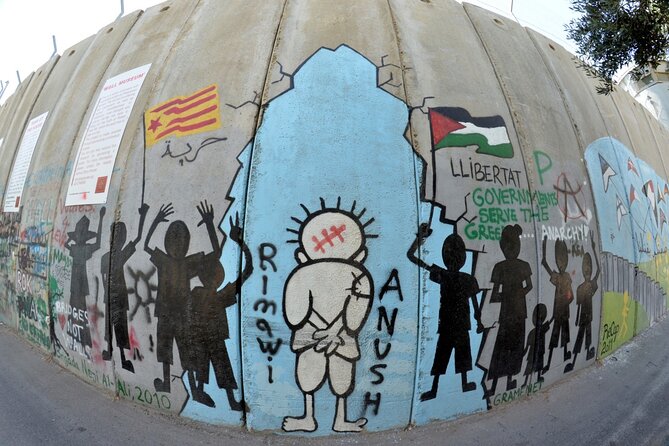
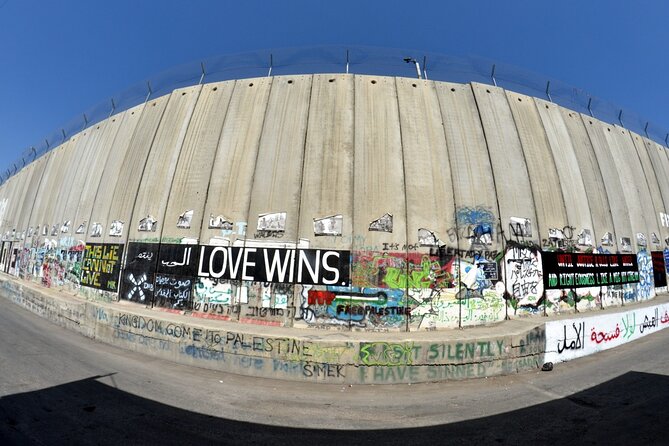
The final major portion turns to contemporary Bethlehem. You see the separation wall and Banksy’s political art, including the Walled Off Hotel, described as Banksy’s official hotel in Bethlehem.
This is not just a street-art photo stop. The purpose is to show how the wall affects local life and to give you a physical sense of the separation that shapes movement and neighborhoods. Banksy’s images are memorable, but the surrounding reality is the harder subject.
The visit includes about 40 minutes at the Walled Off Hotel area. Aida Camp is listed as a separate 30-minute stop, where you walk around a Palestinian refugee camp and learn about daily life there.
These stops require sensitivity. You are entering places where people live, not an outdoor theme park. Listen to local guidance, avoid treating private spaces as photo props, and ask before photographing people. The tour gives you access to a side of Bethlehem that a church-only visit cannot provide, but you should approach it with respect.
The political interpretation will naturally reflect a local Palestinian perspective. That does not make it unhelpful. It means you should listen carefully, ask questions, and remember that the conflict has competing narratives. Hazem’s strength, based on the details available about his guiding, is his ability to discuss geopolitics and everyday life in an educational, open way.
What the $550 private price gets you
The listed price is $550 per group of up to four people. For four, that is $137.50 each. For two people, it becomes $275 each, and a solo booking carries the full group cost unless the operator offers a different arrangement.
That price is easier to justify when you use the private format. It covers private vehicle transport and a local guide or driver for roughly eight hours, with several major sites and two cities in one day. You are not paying only for entrance tickets. You are paying for transport, local interpretation, flexibility, and the ability to discuss difficult subjects without a large group around you.
The value is strongest for a family or group of four. A clean car, working air conditioning, direct communication, and a guide who can explain the region in English all matter on a long day. The price is less attractive for a solo visitor comparing it with a shared bus tour.
Lunch and drinks are extra. Hotel pickup and drop-off outside Bethlehem are also excluded. Admission is included for the Church of the Nativity, while the other listed visits are shown without an admission charge or with no ticket included. Keep some cash available for food and optional purchases.
Who will get the most from this tour
I would choose this tour if you want a serious introduction to the West Bank through both sacred sites and current affairs. It is a good fit for:
- Couples, families, or friends who can share the private cost
- First-time visitors who want a local guide to explain context
- People interested in Christian pilgrimage and Biblical sites
- Anyone curious about Palestinian crafts and daily life
- Visitors who want to see Hebron, not just Bethlehem
- People comfortable discussing occupation, separation, displacement, and political history
I would think twice if you want a slow, purely religious day. The itinerary is full, and the political stops are central rather than decorative. I would also reconsider if you cannot manage walking, do not have a passport, or need pickup and drop-off outside Bethlehem.
Hazem’s communication style may be a major benefit. Several past experiences with him highlight prompt replies, clear English, flexibility, local food suggestions, a clean car, and a calm approach that helped people feel safe. Those details matter more than fancy presentation on a day like this.
Timing, clothing, and simple planning advice
Confirm the exact meeting instructions before the morning of the tour. The start is at Bethlehem 300 Checkpoint from the Bethlehem side, while the end is listed either at the checkpoint or at your Bethlehem hotel.
Carry your passport, water, and money for lunch and drinks. Wear modest clothing for religious sites and comfortable shoes for Old City walking and the camp visit.
The tour runs Monday to Friday hours as listed for the operating period, from 9 a.m. to 5 p.m., and operates in all weather. The stated opening information covers January 1 through December 31, 2025, so confirm current dates if booking for a later period.
Free cancellation is available up to 24 hours before the start time for a full refund. Cancellations or changes made less than 24 hours in advance are not refunded or accepted.
Should you book it?
Book this Hebron and Bethlehem private tour if you want more than postcard churches. Its best feature is the combination of the Tomb of the Patriarchs, the Nativity Church, traditional crafts, Aida Camp, and Banksy’s wall art, all explained by a local guide who can discuss faith and politics in the same conversation.
The $550 price makes the most sense for three or four people. For a group that size, private transport and a full day with Hazem offer solid value. For one person, the cost is high, but the access, personal attention, and difficult-to-arrange Hebron visit may still justify it.
The right question is not simply how many sights you can tick off. Ask if you want to leave Bethlehem with a clearer idea of how holy places, local work, checkpoints, and family life fit together. If that is your goal, this is a strong choice.
FAQ
How long is the Hebron and Bethlehem tour?
The tour lasts approximately eight hours, with operating hours listed as 9 a.m. to 5 p.m.
Where does the tour begin?
You meet the guide at Bethlehem 300 Checkpoint from the Bethlehem side. The meeting point is also listed at Checkpoint 300 on Bethlehem Road in Jerusalem.
Where does the tour end?
The tour ends at Bethlehem 300 Checkpoint or at your hotel in Bethlehem, according to the arrangements for the day.
Is transportation included?
Yes. Private vehicle transport and a local guide or driver are included. Hotel pickup and drop-off from outside Bethlehem are not included.
Is lunch included?
No. Lunch and drinks are not included. You have the option of eating traditional hummus and falafel at a local restaurant during the Bethlehem portion.
Do I need to bring a passport?
Yes. A current, valid passport is required on the day of the tour.
Is this a private tour?
Yes. Only your group participates, with a maximum of four people.
What is the cancellation policy?
You can cancel up to 24 hours before the start time for a full refund. Cancellations or changes made less than 24 hours before the experience are not accepted, and the amount paid is not refunded.
Newest Bethlehem trips on the site
- Private Day Tour: Jericho, Mount of Temptation, Hisham’s Palace and Bethlehem★ 5.0 · 28 reviews
- Private Day Tour: St. George’s Monastery, Wadi Qelt, Mar Saba, and Bethlehem★ 5.0 · 38 reviews
- Jericho and Bethlehem Private Tour★ 5.0 · 24 reviews
- Half Day Private Tour of Bethlehem★ 5.0 · 38 reviews
- Ashdod Port Shore Excursion: Jerusalem and Bethlehem Day Tour from Ashdod Port★ 3.5 · 31 reviews
- 2024 Jerusalem & Bethlehem from Ashdod Port Small Groups★ 5.0 · 30 reviews
- Private Day Trip of Jerusalem and Bethlehem from Amman★ 4.5 · 25 reviews
- From Jerusalem: Bethlehem Half-Day Tour★ 4.5 · 31 reviews
Bethlehem Tours, compared.
Day Tour to Jerusalem and Bethlehem from Tel Aviv
Read our review →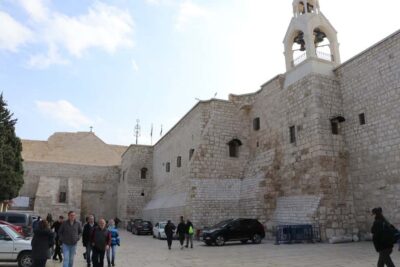
Jerusalem and Bethlehem Day Tour from Jerusalem
Read our review →
Travel to Bethlehem Half Day Guided Tour from Jerusalem & TelAviv
Read our review →
Ashdod Shore Excursion: Jerusalem and Bethlehem – for cruise ship guests only
Read our review →
From Ashdod Port: Jerusalem and Bethlehem Day Trip
Read our review →
Bethlehem, Jericho, and Qasr El Yahud Day Trip from Jerusalem
Read our review →Browse the lists this tour appears in