
Reviewed · RAS AL KHAIMAH TOURS
Ras al-Khaimah: House Of Pearls Tour
The most memorable part of this Ras Al Khaimah outing is the shift from a quiet boat ride through the mangroves to a live oyster opening, where there is only a 60 percent chance of finding a pearl. I like the old fishermen’s village setting at Al Rams Marina and the way the tour connects the water, the tools, the trade, and the science of pearl farming. The basic solar-powered farm also feels more genuine than a polished shopping showroom.
I especially like the guides’ storytelling. Taqi, Obaid, Bilal, and Othman Alblooshi have all led strong tours, keeping both children and adults involved. The main drawback is getting there: transport is not included, and first-time visitors to Ras Al Khaimah may find the marina difficult to locate. The dress code is modest, and the tour can stop at short notice if weather or other unseen conditions change.
Key things to know before you go
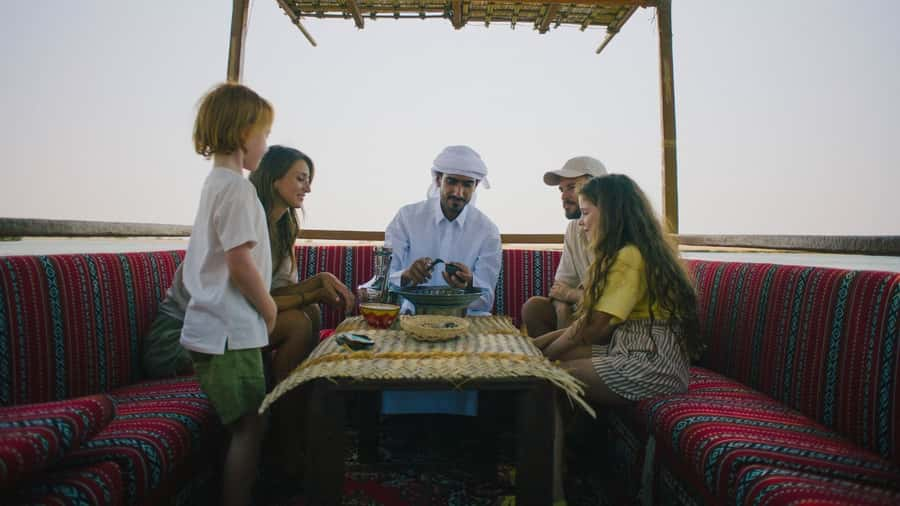
- The boat ride begins at Al Rams Marina, an old fishing village near the House of Pearls.
- The live oyster opening is the highlight, but finding a pearl is not guaranteed.
- Pearling history feels practical here, with old tools, trading objects, boats, and family stories.
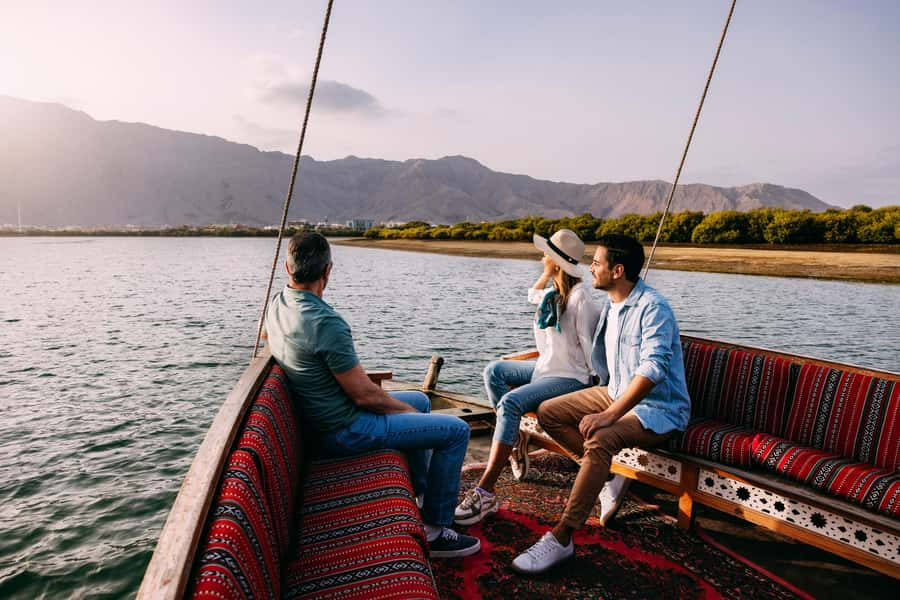
- Mangrove views and mountain scenery add a calm outdoor element before the indoor displays.
- Arabic coffee, tea, dates, fruit, water, soft drinks, and light snacks are included.
- A pearl can be purchased for AED 450 plus 5 percent, while lunch and any oysters or pearls are extra.
Why Ras Al Khaimah’s pearling story matters
Before oil transformed the Gulf, pearling shaped coastal life across the region. It provided work for boat builders, sailors, oyster openers, traders, and families who prepared supplies for long periods at sea. At Suwaidi Pearls, you get a direct look at that world without needing to piece the story together from a museum label.
The House of Pearls presents pearling as both a hard livelihood and a skilled trade. You learn how pearl collectors worked, what equipment they used, and how Arabian pearls moved through local and regional markets. The tone is less about luxury jewelry and more about the people and methods behind it.
That distinction matters. A pearl necklace can look simple in a shop window, but this visit shows the work, risk, patience, and trade networks behind the finished object. The story reaches back thousands of years, and the guide-led format makes it easier to understand than a display case full of unfamiliar tools.
You also get a useful modern comparison. The tour explains how natural pearls form and how cultured pearls are produced through controlled methods and careful marine management. It is a good fit if you want culture with some science, not just a scenic boat trip followed by shopping.
A few more Ras Al Khaimah trips worth comparing
- Ras Al Khaimah: Afternoon Desert Safari and BBQ Dinner
★ 4.4 · 558 reviews - Evening Desert Dune Bashing by 4*4 Vehicle
★ 4.6 · 270 reviews - Parasailing
★ 5.0 · 186 reviews
From Al Rams Marina to the mangroves
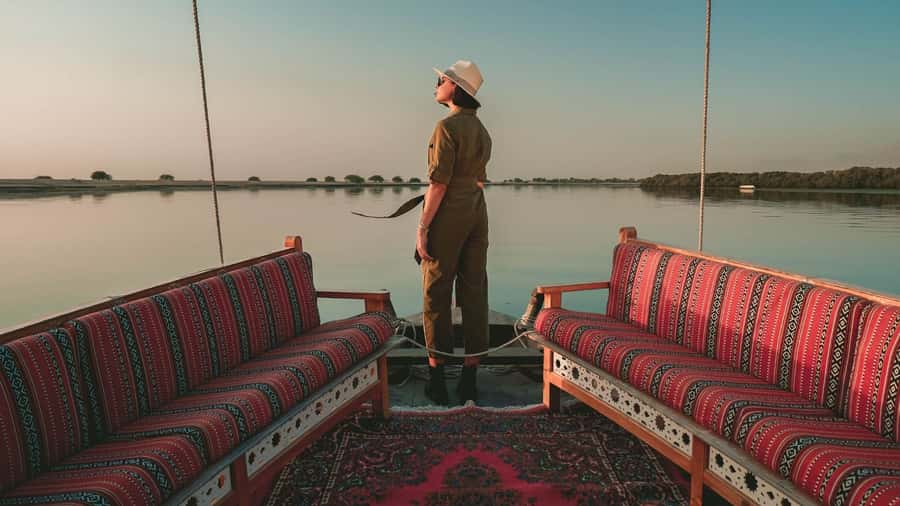
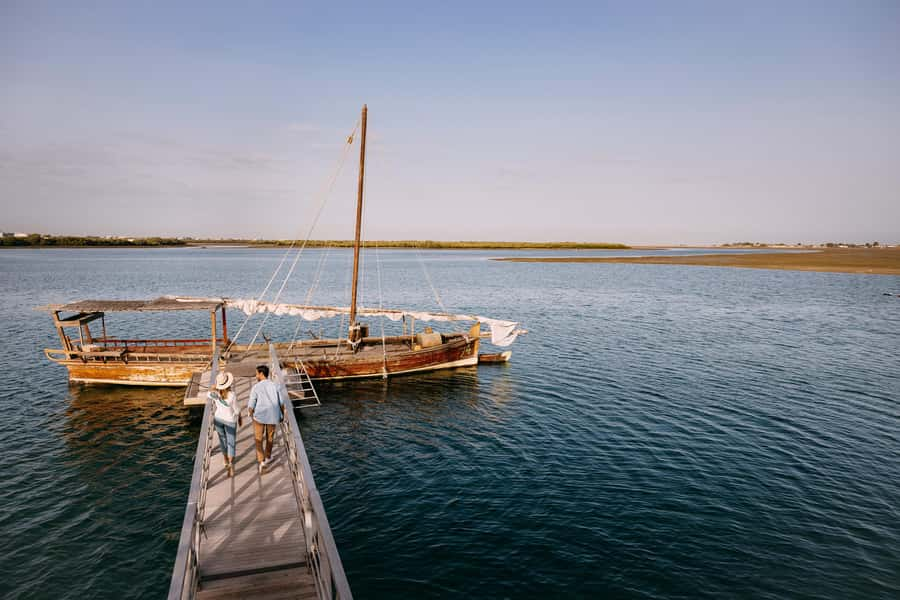
You meet at Suwaidi Pearls and should arrive 15 minutes before the scheduled start. The first part takes place on a traditional pearl boat leaving from Al Rams Marina, described as an old fishermen’s village. That beginning gives the outing a clear sense of place before the formal presentation starts.
The boat trip is gentle and scenic. You pass near natural mangroves and take in the surrounding water, with mountains visible in the distance. One particularly appealing departure time is 3 p.m., when the return journey may catch the sunset. Starting times vary, so check availability when booking.
The water is usually still, which helps if you are concerned about motion sickness. You may be asked to remove your shoes when sitting on the carpet, so comfortable sandals are practical even though the packing advice suggests comfortable shoes.
The boat is not the main event, but it sets the mood. You are not simply arriving at a farm by road. You are following the same coastal setting that made pearling possible, with the water, small islands, mangroves, and fishing settlements forming part of the lesson.
Bring sunscreen and insect repellent. The mangroves are attractive, but this is an outdoor coastal setting, so sun and insects are part of the bargain. Wear light, modest clothing rather than beachwear.
The House of Pearls and its simple setting
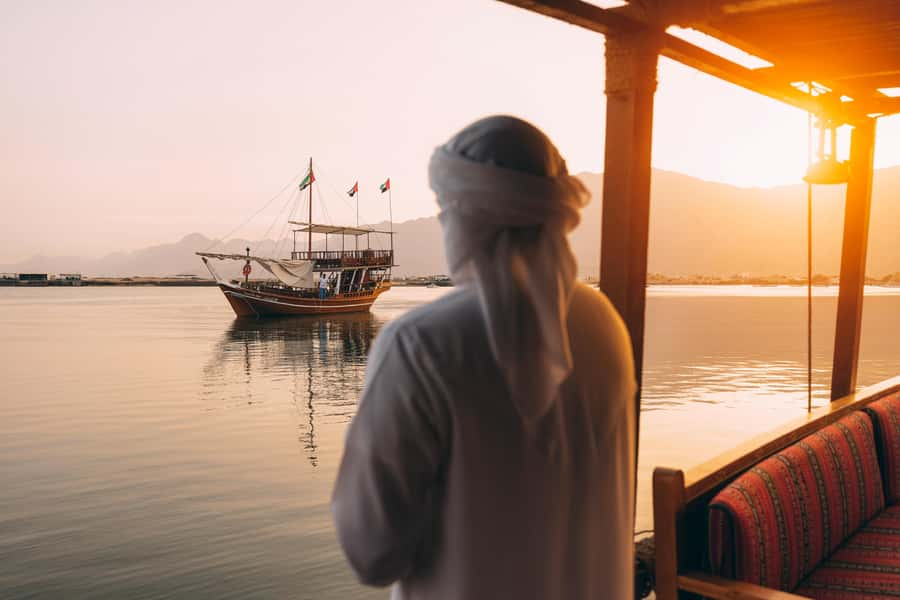
The farm is basic, authentic, and powered by solar panels. You should not expect an elaborate visitor center, air-conditioned museum, or luxury marina. The plain setting is part of its appeal, especially if you prefer working places and local traditions over a heavily staged attraction.
The site combines a farmhouse, a pontoon, display areas, and the working pearl operation. You have time to stroll around, enjoy the surroundings, and browse accessories or pearls. The facility also uses environmentally friendly systems intended to protect the marine environment.
That simplicity comes with practical limits. Shade, seating, and comfort may feel more modest than at a large commercial attraction. You should approach the visit as a working cultural site, not as a polished resort excursion.
On arrival, you may be offered dates, karak, Arabic coffee, water, soft drinks, and small snacks. Light refreshments are included, and fruit or chocolates may also be served during the outing. Lunch is not included, although an optional snack or lunch may be available for an additional cost.
The pearling tools tell the human story
The historical section is strongest when the guide explains the equipment rather than simply naming it. You see the tools used by pearl collectors, along with objects connected to traders and the old pearl market. These details help you picture the work as a coordinated business, not a solitary search underwater.
The traditional trader’s box, known as a Bish-Takh-Tah, is one of the more unusual objects on display. It gives the commercial side of pearling a physical form and helps show how valuable items were stored, carried, and presented.
The guides bring much of the display to life. Taqi has a lively style and adjusts his explanations for mixed-age groups. Obaid has led engaging presentations for children and adults, while Bilal has been praised for a welcoming, clear approach. Othman Alblooshi is particularly strong at explaining the long story of pearl collection and farming through interactive examples.
The best part is the chance to ask questions. The guides speak English and Arabic, and the tour is designed around explanation rather than silent viewing. If you have children with you, the tools, boat, and oyster demonstration give them something concrete to focus on while the historical details unfold.
A completely different sort of day out of Ras Al Khaimah:
- RAK Desert Safari and BBQ Dinner with RAK pick up
★ 4.5 · 179 reviews - Jet Ski Ride
★ 5.0 · 132 reviews - Ras al Khaimah: Jais Flight – World’s Longest Zipline Ticket
★ 4.8 · 110 reviews - RAK Hot Air Balloon Flight
★ 5.0 · 109 reviews
How oysters and pearls are formed
The next part moves to the pontoon, where the guide explains how oysters produce pearls. You learn about natural formation, cultured pearls, and the methods used in present-day farming.
This section adds useful context because many people know a pearl as a finished object but not as a biological process. The guide explains the conditions and actions that lead to pearl formation, then connects that knowledge to the farm’s working methods.
The science is presented for a general audience. You do not need a technical background, and the examples are accessible to children. At the same time, adults who already know a little about jewelry or marine life should find enough detail to make the stop worthwhile.
The cultured pearl discussion is especially useful if you are considering buying jewelry later. It helps you understand that cultured does not mean fake. It refers to a pearl formed with human assistance, while the oyster still does the biological work. The tour gives you a clearer basis for judging what you see in shops.
The live oyster opening
The live oyster opening is the moment most likely to stay with you. The guide opens an oyster in front of the group and explains what you are seeing. There is a 60 percent chance of finding the sought-after Arabian pearl, so the result is not guaranteed.
That uncertainty is important. This is not a staged promise that every person leaves with a pearl. The anticipation comes from watching a real oyster being opened and accepting that nature may or may not provide a prize.
If a pearl is found, you can take it for AED 450 plus 5 percent. Oysters and pearls are not included in the tour price, so treat this as an optional purchase, not a hidden part of the admission fee. Ask about the final cost before committing.
The demonstration also avoids turning the entire visit into a sales pitch. The focus remains on the process and the story, and the buying opportunity comes after you have seen how the pearl is found. If you are not interested in purchasing, you can still enjoy the presentation and continue with the tour.
A closer look at Arabian pearl collections
After the oyster demonstration, you see collections of Arabian pearls and the tools and treasures linked to the trade. This is where the earlier explanation begins to make sense. You can compare pearls, see their different qualities, and understand why color, size, luster, and origin matter.
The displays are not presented as a giant jewelry showroom. That is helpful if you want cultural context rather than a hard sell. You can browse accessories and pearls at your own pace, but there is no need to buy anything to get value from the visit.
The traditional trader’s box and related objects also help bridge the gap between raw oysters and finished jewelry. Pearls were not just found and worn. They were sorted, traded, valued, and carried through a network of coastal commerce.
Allow yourself time here. The formal guided portion lasts about 2.5 hours, but the pace includes conversation, refreshments, the boat journey, the demonstrations, and some free time around the farmhouse. Rushing through the displays would miss much of the point.
What the $57 price includes
At $57 per person, this is a fair value if you want a focused cultural outing in Ras Al Khaimah. The cost includes entrance, the traditional boat journey, the guided presentation, the live oyster opening, and refreshments such as water, soft drinks, dates, Arabic tea, coffee, and light snacks.
The price is less attractive if you are looking only for a short boat ride or a quick photo stop. Much of the value comes from the guide’s explanations and your interest in the subject. Without that curiosity, the simple farm and modest displays may feel limited.
Transport is not included, which is the main extra cost and planning issue. You need to arrange your own way to Suwaidi Pearls and Al Rams Marina. Give yourself time to find the place, especially if this is your first visit to the northern part of the emirate.
Lunch is also separate. The included refreshments should cover a light visit, but do not arrive expecting a full meal. If you plan to stay longer or need a substantial lunch, check what optional food is available.
Who will enjoy this tour most
I would choose this for anyone interested in Emirati culture, coastal livelihoods, traditional crafts, or jewelry. It offers more substance than a standard sightseeing cruise because the boat ride supports a clear story about the sea and the people who worked on it.
Families should also find plenty to hold their attention. Children can watch the boat crew, see the old tools, learn how oysters work, and wait for the live opening. The tour has worked well for children around school age, including groups with youngsters aged five to ten.
It also suits couples and solo visitors who want a quieter half-day away from the city. The water is calm, the setting is peaceful, and the 3 p.m. departure can add sunset views on the return.
I would think twice if you want luxury facilities, a large museum, a guaranteed pearl, or included hotel pickup. The site is intentionally simple, and weather can cause cancellation without prior notice. Modest clothing is required: avoid shorts, short skirts, sleeveless shirts, and similar beach clothing.
Practical tips for a smoother visit
Arrive 15 minutes early and keep your identification with you. A passport or ID card is required, and the tour is wheelchair accessible.
Wear comfortable clothes and bring sunscreen and insect repellent. Closed shoes are not essential for the entire visit, since footwear may be removed on the carpet, but bring something comfortable for walking around the farm and marina.
The tour is offered in English and Arabic. Specific guides may vary, but Taqi, Obaid, Bilal, and Othman Alblooshi have each led engaging presentations. If you have children or a mixed-age group, tell the guide what interests your party, since the best sessions make room for questions and different attention spans.
You can cancel up to 24 hours before the activity for a full refund, and reserve now while paying later. The operator may cancel at any time because of sudden weather changes or other unforeseen conditions, so keep your schedule flexible if this is your only planned activity that day.
Should you book the House of Pearls?
Book it if you want a personal connection with Ras Al Khaimah’s coastal past, a calm boat trip, and a clear explanation of how Arabian pearls are found, traded, and farmed. The mix of mangroves, old tools, live oyster opening, Arabic refreshments, and strong guides gives the visit real variety.
Skip it if you are seeking a luxury outing, hotel transportation, or a guaranteed pearl purchase. For most culturally curious visitors, though, the $57 fee offers a worthwhile half-day, provided you can reach the marina and appreciate a simple working setting. I would choose the 3 p.m. departure for the chance of sunset on the way back, and I would keep enough time afterward to browse without pressure.
FAQ
How long does the House of Pearls tour last?
The guided activity lasts 2.5 hours, including the boat ride, the pearling presentation, the oyster opening, and time at the farmhouse.
Where does the tour start?
The activity starts at Suwaidi Pearls, with pickup from Al Rams Marina, the old fishermen’s village.
Is transportation to the marina included?
No. You need to arrange your own transportation to the meeting point.
What languages are available?
The tour is offered in English and Arabic.
Is lunch included?
No. Light snacks, water, soft drinks, dates, Arabic tea, and coffee are included. Lunch is not included.
Can I buy a pearl during the tour?
Yes. If the oyster opening produces a pearl, you can take the Arabian pearl for AED 450 plus 5 percent. Oysters and pearls are not included in the tour price.
Is finding a pearl guaranteed?
No. There is a 60 percent chance of finding a pearl during the live oyster opening.
What clothing should I wear?
Wear light, modest clothing in keeping with local culture. Shorts, short skirts, sleeveless shirts, and similar clothing are not allowed.
Can I cancel the booking?
Yes. You can cancel up to 24 hours in advance for a full refund. The operator may also cancel because of weather or other unforeseen circumstances.
Newest Ras Al Khaimah trips on the site
- Ras Al Khaimah: Guided Quad Bike Tour★ 4.6 · 35 reviews
- Parasailing★ 5.0 · 186 reviews
- Private Donut Ride Experience in Ras al Khaimah★ 5.0 · 52 reviews
- Jet Ski Ride★ 5.0 · 132 reviews
- Dine in the Desert Dinner Experience at Bedouin Oasis – Ras al Khaimah★ 5.0 · 72 reviews
- Ras Al Khaimah: Afternoon Desert Safari and BBQ Dinner★ 4.5 · 91 reviews
- RAK Desert Safari and BBQ Dinner with RAK pick up★ 4.5 · 179 reviews
- Evening Desert Dune Bashing by 4*4 Vehicle★ 4.6 · 270 reviews
Ras Al Khaimah Tours, compared.


RAK Desert Safari and BBQ Dinner with RAK pick up
Read our review →



Browse the lists this tour appears in