
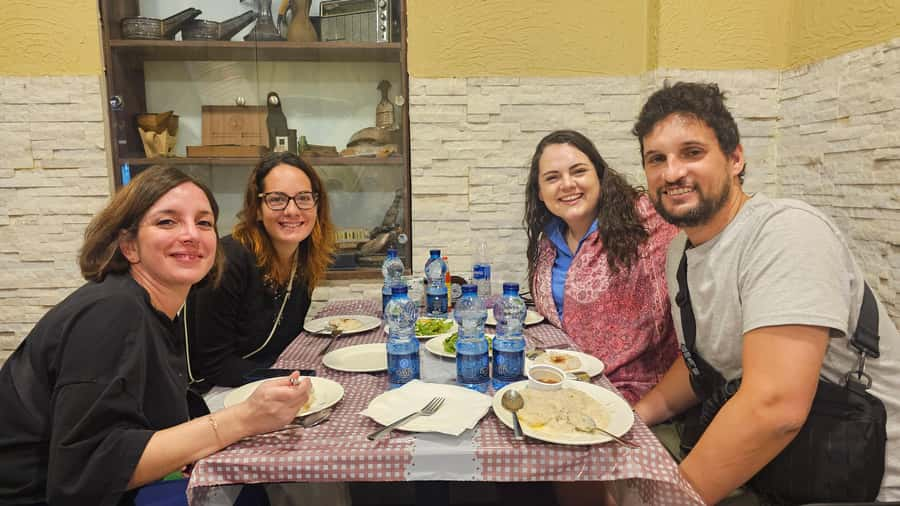
Reviewed · FOOD TOURS
Muscat: Omani Food Tour with Shuwa & Halwa
Muscat’s best food lesson may begin with meat that has spent hours underground. This small-group tour takes you through several local stops for shuwa, saffron-scented halwa, Zanzibar-style snacks, Omani bread, karak tea, and grilled mishkak. Guides such as Hisham and Yousef add family stories and explain how each dish fits into daily life.
I like the mix of food and culture, especially the short videos showing how dishes are prepared for family celebrations. I also like the practical hotel pickup, comfortable car, and small group capped at six. The main consideration is simple: this is a lot of food in 150 minutes, so come hungry and tell the guide about allergies or dietary needs before you book.
Key points to know before you go
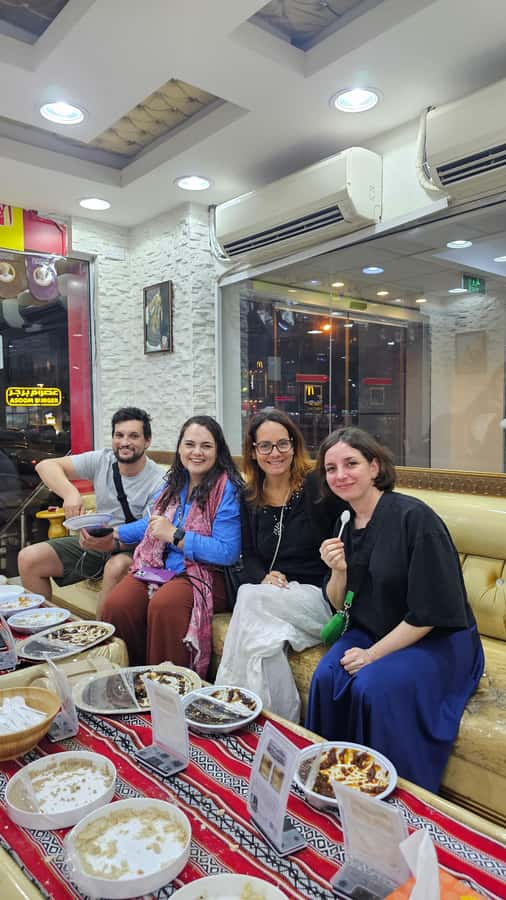
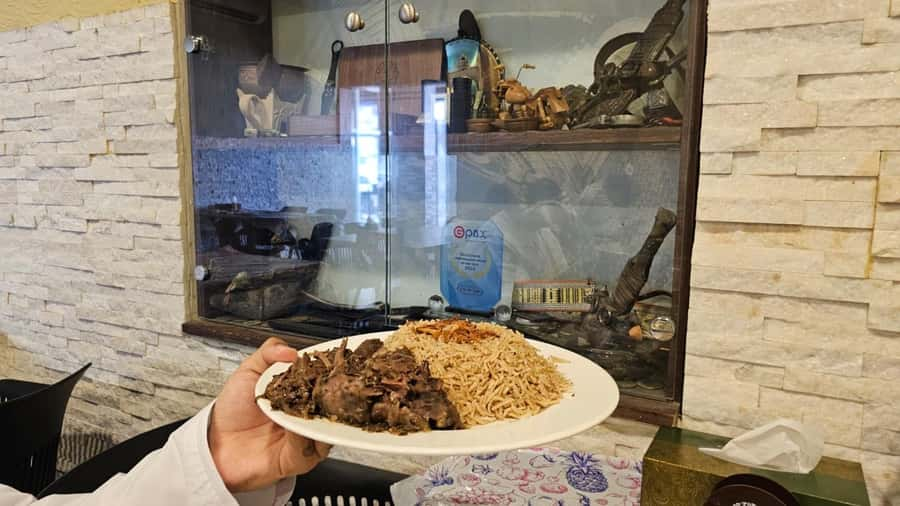
- Shuwa is the centerpiece: Meat or chicken is wrapped with spices, buried underground for 8 to 24 hours, and served with Qabuli rice.
- Five food stops make the evening varied: You move from a main meal to sweets, Zanzibar snacks, bread, tea, and grilled mishkak.
- The guides add personal context: Hisham, Yousef, Yusef, Amin, and other team members explain food preparation, customs, and family traditions.
- Come with a serious appetite: Portions are generous, and the tour covers both savory and sweet dishes.
- Hotel pickup keeps things easy: The tour includes transport, and groups are limited to six people.
- Vegetarian adjustments are possible: Meat or chicken can be replaced with fish or salad, but people with food allergies should not book.
Why this food tour works well on a first evening in Muscat
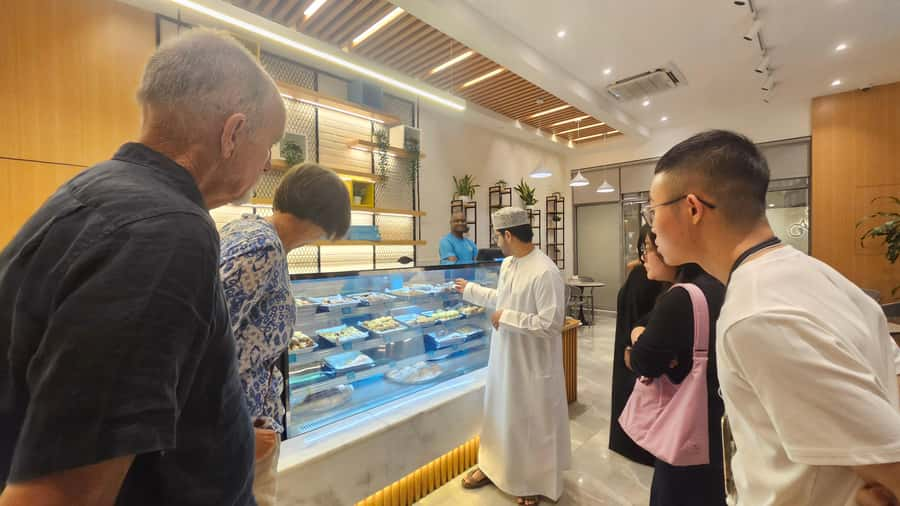
I like food tours that help you order with confidence for the rest of a trip. This one gives you a useful introduction to Oman in a short time, without asking you to research unfamiliar dishes or guess which local restaurant will offer a good first meal.
The tour lasts 150 minutes and usually moves through five different food stops. That structure matters. You are not sitting in one restaurant for the whole evening. Instead, you get a quick look at several eating styles, from a full plate of shuwa and rice to roadside-style grilled meat and sweet, sticky halwa with coffee.
The small group size is another real advantage. With no more than six participants, you have a fair chance to ask questions and hear the explanations. The guides are also willing to talk about Oman beyond food. Hisham and Yousef are frequently named as warm hosts, while Amin, Hanieh, Yusef, and other team members may also lead or assist the experience.
If you are visiting Muscat alone, this setup can be especially useful. You can sample several dishes without ordering a full portion of everything by yourself, and the shared car ride gives you an easy way to meet the other people in the group.
More Food Tours in Muscat:
- Dubai: Old Town, Creek, Museums, Souks, & Street Food Tour
★ 4.8 · 10,816 reviews - Dubai: Old Town, Souks, Street Food, Guided Tour & Abra Ride
★ 4.9 · 7,170 reviews - Dubai: Old Town, Souks, Street Food, Guided Tour & Abra Ride
★ 5.0 · 1,664 reviews
Shuwa and Qabuli: the main taste of Oman
The most distinctive dish on the tour is shuwa. It is prepared with meat or chicken, spices, and a long cooking process that is closely tied to Omani celebrations.
The meat is wrapped in banana leaves and cooked underground for roughly 8 to 24 hours. The description also refers to a fermentation period of more than 40 days, which helps explain why this is not a quick weekday dish. It is food connected to planning, family gatherings, and special occasions.
You receive the shuwa with Qabuli rice, which is cooked using meat spices. The result should appeal to you if you enjoy tender meat, fragrant rice, and seasoning that builds gradually rather than relying only on heat.
This stop is valuable because the guide can explain the work behind the plate. Hisham and Yusef have used short videos to show how food is prepared for family celebrations, giving you a clearer picture than a menu description alone.
There is one practical point here. Shuwa is a meat-centered dish, so vegetarian participants should arrange the fish or salad alternative in advance. The tour is not suitable for people with food allergies, and the variety of dishes makes careful allergy communication important.
Halwa with coffee, a sweet pause with plenty of flavor
After the main course, the tour turns sweet with Omani halwa and coffee. This is not a light, plain pudding. The ingredients include nuts, honey, saffron, ghee, cardamom, and a few secret additions.
The halwa is dense, fragrant, and designed to be eaten in small amounts with coffee. Saffron and cardamom give it a perfumed flavor, while honey and ghee make it filling. If you have already eaten a full serving of shuwa, a small taste may be enough.
This pairing also gives your guide a natural opening to explain Omani hospitality. Coffee and sweets are important when welcoming people, and the experience presents them as part of a social custom rather than a stand-alone dessert.
I would pay close attention to the coffee service. The tour description specifically includes Omani halwa with coffee, while the wider tasting also brings in tea and karak. If you enjoy cardamom, saffron, and warm spices, this part may be one of your favorite stops.
Zanzibar snacks show Oman’s Indian Ocean connections
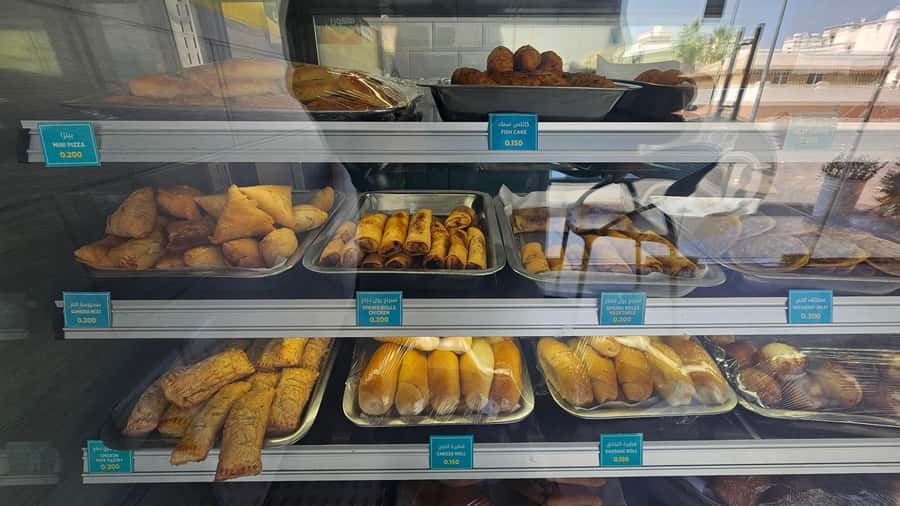
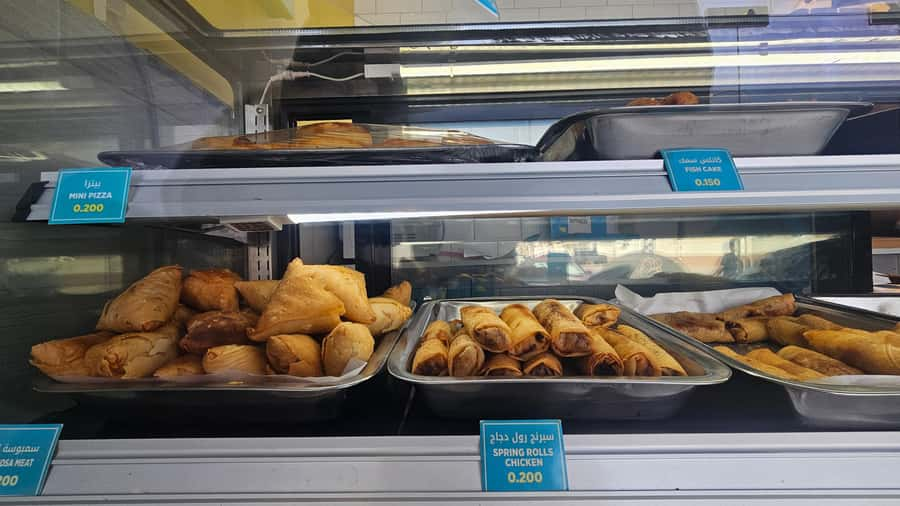
The next group of dishes reflects Oman’s long links with East Africa, especially Zanzibar. You may try samosas, mandazi, kachori, and katlisi.
These are light meals, but do not confuse light with insubstantial. Samosas and kachori bring crisp pastry and savory fillings, while mandazi offers a softer, slightly sweet bite. Katlisi adds another variation to the plate.
This section makes the tour more than a simple sampling of classic Omani dishes. It shows how movement across the Indian Ocean has shaped what people eat in Oman. The guide can explain where these foods came from and how they became part of local eating habits.
I like this stop for another reason: it offers familiar points of entry. If you have eaten samosas elsewhere, you can compare the local version. If mandazi or katlisi are new to you, the guide can explain what to expect before you take a bite.
Portions are generous across the evening, so you do not need to finish every piece at once. Pace yourself. The grilled course and bread are still ahead.
A few more Muscat trips worth comparing
- Muscat: Daymaniat Islands Snorkeling Trip with Brunch
★ 4.7 · 2,317 reviews - Muscat: Half-Day Sightseeing Essentials Tour and Audio Guide
★ 4.2 · 598 reviews - Muscat: Daymaniat Islands Snorkeling Tour with Refreshments
★ 4.7 · 426 reviews - Daymaniyat Island: Snorkelling Tour with Tasty Lunch
★ 4.8 · 403 reviews
Omani bread arrives in several forms
The bread stop gives you a chance to try the same basic idea with different toppings and flavors. Options may include cheese, honey, date juice, eggs, potatoes, or thyme.
That range makes this part especially useful for understanding everyday eating. Instead of treating bread as a side dish, the tour shows how it can become a quick savory meal, a sweet snack, or something flavored with local ingredients.
I would try at least one savory and one sweet version if your appetite allows. Cheese, egg, or potato gives you a more filling bite, while honey or date juice shifts the bread toward dessert.
This is also one of the easier sections to adapt. If you do not eat meat, the bread choices may give you more flexibility, although you should still explain your dietary needs before the food is served.
Spiced tea and karak in the car
Tea appears as part of the final stretch of the food tour. It may be mixed with ginger, saffron, cardamom, cinnamon, and milk. The result is warm, sweet, and strongly spiced.
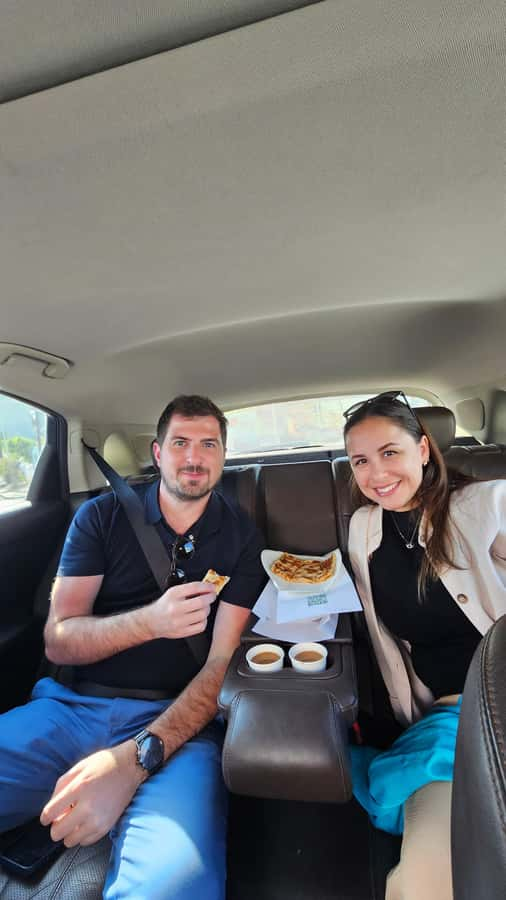
Several people particularly enjoy the karak tea element, including the local custom of ordering and drinking it in the car. That detail gives the experience a casual, everyday feel. You are not only being served a formal tasting menu. You are also seeing how a popular drink fits into an ordinary evening in Muscat.
The tea can be surprisingly filling after the earlier courses. If you are sensitive to caffeine, ask the guide what is being served. The provided information does not specify caffeine-free alternatives.
I also like this part because the car ride creates space for conversation. Guides have shared advice about Oman, answered questions about daily life, and sometimes made a short detour, such as a mosque visit or a view over the city. These extra moments are not guaranteed as a fixed feature, so think of them as possible additions rather than promised stops.
Mishkak closes the meal with smoke and tamarind
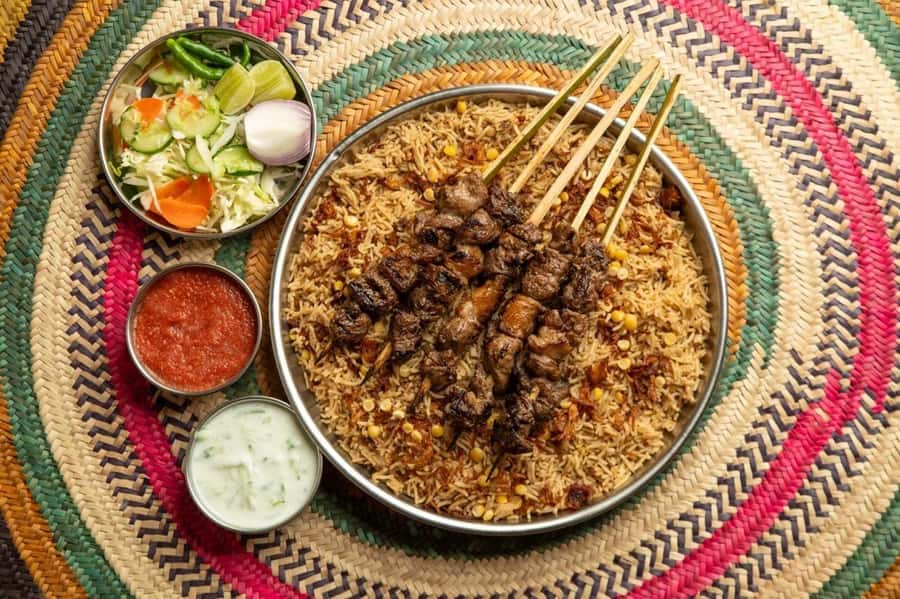
The final featured dish is mishkak, grilled pieces of meat, chicken, or squid served with a tamarind-like sauce and traditional Omani spices.
This is a good closing course because it brings a sharper, grilled flavor after the softer bread, sweet halwa, and milky tea. You can choose from different proteins, subject to what is available and your dietary needs.
Mishkak is the kind of food that makes more sense when eaten fresh and hot. The sauce adds a sour-sweet note, while the spices keep the flavor firmly connected to the region.
If you are replacing meat or chicken with fish, confirm the arrangement ahead of time. The tour allows fish or salad in place of meat or chicken for vegetarian participants, but the details of each stop can vary.
By this point, you may be completely full. The advice to arrive hungry is not marketing fluff. The food is spread over several stops, and the portions are not described as tiny tasting bites.
What the guides add beyond the food
The strongest part of this experience is the human side. Hisham and Yusef are described as friendly hosts who explain how food is made, where it comes from, and why it matters. Hanieh, Amin, and other guides may also be involved depending on the departure.
The guides do more than name the dishes. They answer questions about Oman, share stories from their own families, and explain communal eating customs. One private group even received a short visit to the Grand Mosque, while another group made a brief mosque detour on the way. Again, do not book expecting a sightseeing tour, but you may get useful local conversation and a glimpse beyond the usual visitor route.
This flexibility suits curious people who want context. It may be less appealing if you want a tightly timed restaurant crawl with no conversation between courses.
Communication is in English. The guides have been praised for patience, including with slow eaters, and the timing can run a little longer when a group eats slowly and talks. That is worth knowing if you have another fixed booking immediately afterward.
Transport, group size, and the real value of $77
The price is $77 per person. That includes hotel pickup and drop-off, the shuwa meal, halwa with coffee, East African snacks, flavored Omani bread, spiced tea, and mishkak.
I consider the price reasonable if you value convenience and variety. You are paying for a meal spread across several locations, transportation, a guide, and the chance to taste foods that could be difficult to find or order intelligently on your own. The small group also adds value because the guide can answer questions without competing with a large crowd.
It is less attractive if you want one inexpensive dinner and already know Muscat’s food scene. Fresh juices and personal expenses are not included, so budget separately if you want extra drinks or purchases.
Pickup is included from hotels in the service area. If your hotel is outside that area or is not listed, you should choose the Royal Opera House as the meeting point and get there independently. Be ready in the hotel lobby at the stated pickup time.
The tour is wheelchair accessible, and smoking, pets, and alcoholic drinks in the vehicle are not allowed. Free cancellation is available up to 24 hours before the experience, and you can reserve now and pay later.
Who should book this Muscat food tour?
I would choose this tour for your first or second evening in Muscat, especially if you want a quick introduction to local food before setting out on your own. It is also a good fit for solo visitors, couples, and small families who want a social evening without joining a large bus group.
You should book if you enjoy trying several foods, asking questions, and learning how dishes connect to family and culture. The tour suits adventurous eaters, but you do not need to be a serious food expert. Even people who are not especially interested in food can get value from the stories about Oman and the chance to see less tourist-focused parts of Muscat.
I would hesitate if you have food allergies, need a highly controlled meal, dislike shared group experiences, or prefer a quiet dinner with one dish at a time. The menu is broad, and the evening is designed around tasting many foods.
Final call: book it hungry
Book this tour if you want a friendly, filling introduction to Oman rather than a formal restaurant meal. The combination of underground-cooked shuwa, Zanzibar snacks, Omani bread, halwa, karak, and mishkak gives you a useful range in only 150 minutes.
The best reason to go is the guide. Hisham, Yousef, Yusef, Amin, and their colleagues bring family stories, food preparation tips, and practical conversation about life in Oman. Just leave room in your schedule, arrive very hungry, and communicate dietary needs before setting off.
FAQ
How long does the Omani food tour last?
The tour lasts 150 minutes.
What food is included?
The experience includes Omani shuwa, Qabuli rice, Omani halwa with coffee, East African snacks, flavored Omani bread, spiced tea, and mishkak.
Is hotel pickup included?
Yes. Hotel pickup and drop-off are included if your hotel is within the pickup area.
What should I do if my hotel is outside the pickup area?
Choose the Royal Opera House as the meeting point and arrive there independently.
Can vegetarians join the tour?
Yes. Meat or chicken can be replaced with fish or salad for vegetarian participants. Tell the provider about your preference in advance.
Is the tour suitable for people with food allergies?
No. The experience is listed as unsuitable for people with food allergies.
How many people are in the group?
The tour is limited to six participants and is led in English.
Newest Muscat trips on the site
- Muscat: Omani Traditional Dhow Sunset Cruise★ 4.4 · 53 reviews
- Private Half-Day Muscat City Tour★ 4.6 · 50 reviews
- Oman: Private City Tour of Muscat with pick up/drop off★ 4.4 · 88 reviews
- Oman: Snorkeling Trip at Daymaniyat Islands★ 4.9 · 38 reviews
- Muscat: Big Bus Hop-On Hop-Off Sightseeing Tour★ 3.8 · 100 reviews
- Muscat Tour – Half day★ 4.7 · 27 reviews
- Muscat Oman: Snorkeling adventure to Daymaniyat Island★ 4.9 · 53 reviews
- Muscat: Private City Guided Tour★ 5.0 · 91 reviews
Food Tours, compared.
Old Town, Creek, Museums, Souks, & Street Food Tour
Read our review →
Old Town, Souks, Street Food, Guided Tour & Abra Ride
Read our review →Old Town, Souks, Street Food, Guided Tour & Abra Ride
Read our review →
Old Town, Street Food, Creek, Souks, & Emirati House
Read our review →
Dubai’s Best Desert Safari: Live Show & Gourmet BBQ Dinner
Read our review →
Dubai Harbour Super Yacht Experience with gourmet & Drinks
Read our review →
Dubai Premium Desert Safari with Live shows & Gourmet Dinner
Read our review →
Old Dubai: Premium Guided Tour with Street Food & Abra Ride
Read our review →Browse the lists this tour appears in